

Evelyn Ashborne's ArcChapter 7 of 9
Evelyn Ashborne's dream is building a hidden network that reunites her exiled people across enemy borders..

Click to expand
Chapter 7
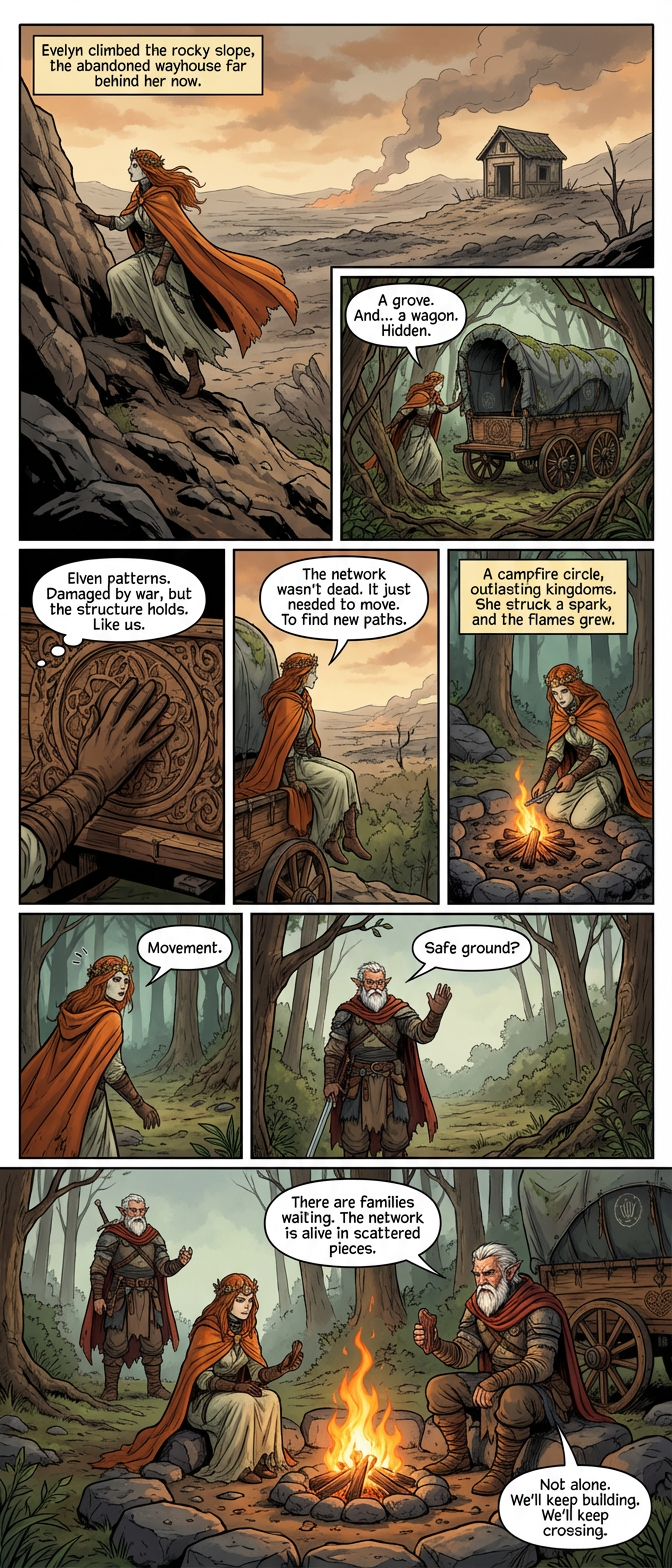
Evelyn walked through the ash fields until her legs ached. The wayhouse lay far behind her now, abandoned and empty. She climbed a rocky slope where twisted trees clung to thin soil. At the top, she found a grove sheltered from the wind.
Between two ancient oaks, something caught her eye. A wagon sat hidden beneath low branches, its frame covered in dead leaves and moss. She moved closer and brushed away the debris. The wood showed carvings—elven patterns that once flowed across every surface. War had damaged most of the decorative work, leaving gouges and burn marks across the elegant frame. But the structure held firm. The wheels were cracked but solid. The interior space could shelter four people, maybe five if children huddled close. Evelyn ran her hand along the carved wood and felt something shift in her chest. Her people had built this wagon long ago, designed it to last through hard travel. It had survived when so much else had burned. She stepped back and looked at the grove around her. Patrols wouldn't search this high—the slope was too steep, the trees too thick. This natural hollow could hide families during their crossing, keep them warm while enemy soldiers passed below. The network wasn't dead. It just needed to move, to adapt, to find new paths when old ones failed.
She pulled the wagon free from the branches and tested its weight. Heavy, but she could move it with effort. The families had scattered, but they would try again. They always did. The wayhouse had been one shelter—this wagon could be another. She would mark new paths, build new cairns, teach her people to move like water through cracks in stone. The grove felt safe in a way the wayhouse never had. Hidden, protected, ready. Evelyn sat on the wagon's edge and looked out over the ash fields below. Her network would grow again. This time, she would make sure it couldn't be broken by a single raid or one ruined marker. Her people needed more than stone buildings—they needed hope that moved with them, shelter that could disappear when danger came close. She stood and began clearing more space around the wagon. The work started again here.
Deeper in the grove, she found stones arranged in a circle. The ring sat sunken into the earth, its rocks darkened by old fires. Ash filled the center—generations of it, packed down and settled. Someone had gathered here long ago, maybe many people over many years. She knelt and cleared away dead branches from inside the ring. The stones felt warm under her hands despite the cold air. This campfire circle had outlasted whoever built it, outlasted wars and exile and the collapse of kingdoms. People had sat here and shared food, told stories, built trust around flames that pushed back the dark. Evelyn gathered dry wood from the grove and stacked it in the center. She struck her flint until sparks caught. The fire grew slowly, then blazed bright between the ancient stones. She sat beside it and watched the flames climb. When families came again—and they would come—she would bring them here. They would sit together around this fire like the exiles who came before them. They would share their stories and remember why the crossing mattered. The network would live in moments like these, in the connections formed when people felt safe enough to speak freely. Evelyn fed another branch to the flames and felt her strength return. The dream was still possible. It just looked different now.
Movement caught her eye through the trees. She stood and walked to the edge of the grove. Below, a figure climbed the rocky slope toward her position. She watched until the shape became clear—an elven man in worn armor, a patched cloak hanging from his shoulders. He carried a walking staff and moved with the careful steps of someone who knew border country. When he reached the grove, he stopped and raised one hand in greeting. His face showed the lines of someone who had crossed many territories and survived. He spoke in their language, asking if this was safe ground. Evelyn nodded and gestured toward the fire. He sat across from her and pulled dried meat from his pack. They shared the food in silence for a while. Then he told her about families waiting three days east, afraid to move after the wayhouse raid. He had been guiding people across borders for years, he said. He knew other paths, other guides who helped the exiles. The network was bigger than she knew—not organized, but alive in scattered pieces across the borderlands. Evelyn looked at him across the flames and felt something settle in her chest. She wasn't building this alone. Her people had always found ways to cross, to reunite, to survive. The wayhouse had failed, but the dream lived on in people like this man, in hidden groves and mobile shelters, in every careful step taken toward reunion. She would keep building, keep adapting, keep opening paths until her people could cross freely without fear.
Play your story to life
Storycraft is a mobile game where you create AI characters, craft items and locations to build their world, then discover what direction your story takes. Download the iOS game for free today!
Download for free