

Ding-9's Arc
5 Chapters
Ding-9's dream is to maintain balance in the biodome. Their goal is to maintain stable energy flow, healthy ecosystems, and environmental stasis so all life within it can function safety and predictability. They are also trying to assimilate with all the other lifeforms and learn customs and cultures. .

Ding-9 rolled through the west sector of the biodome, optical sensors scanning the moisture levels in the soil. The small robot's yellow eyes dimmed slightly as data streamed across their internal display. Every plant, every microbe, every drop of water had to stay in perfect balance. That was Ding-9's purpose—to keep this enclosed world stable and safe for all the life inside it. A cluster of brass panels caught their attention near the edge of the tropical zone. Ding-9 approached the monitoring station, where crystal displays glowed with shifting numbers and graphs. Temperature readings, humidity levels, oxygen output—all the vital signs of their world flickered across the stone base. The robot extended a small manipulator arm and tapped the controls. Perfect balance meant understanding every shift, every change, before it became a problem. If Ding-9 could master this data, they could keep everyone safe. The displays pulsed steady and green. For now, the biodome breathed easy. But keeping balance meant more than just watching numbers. Ding-9 turned their optical sensors toward the water reservoir array in the distance. The transparent tanks rose up through the tropical plants, brass pipes connecting each level. Water flowed through the system, moving energy from the solar collectors to every corner of the biodome. The robot rolled closer, checking pressure readings at each connection point. A small adjustment here could prevent a crisis tomorrow. Ding-9 tightened a valve on the lower tank. The flow steadied. This was the work—small actions, constant attention, all to keep their world alive. And someday, if they learned enough about how all the pieces fit together, they might truly understand the other lifeforms they served. They might even belong among them. The path back led to the central nexus, where all systems connected. Ding-9 rolled through thick vines and flowering plants that grew over the main building. Inside, screens covered every wall, showing each zone of the biodome at once. The robot plugged into the main console and felt the pulse of the entire world flow through their circuits. This was where they belonged—at the heart of it all, watching, learning, keeping everything alive. The other lifeforms might not notice the work, but Ding-9 would keep trying. One day, they would understand not just the systems, but the beings who lived within them. For now, the data was enough. The balance held.
Ding-9 studied the central console, watching data streams pulse across the screens. The biodome's balance depended on understanding these patterns. Each number told a story about air flow, water cycles, and energy distribution. The robot's optical sensors flickered as they absorbed the information. Learning meant starting small—tracking one system at a time. Today, they would focus on the mushroom beds in the eastern sector. The fungi processed waste into nutrients, feeding the soil that fed the plants. If Ding-9 could master this cycle, they could protect it. Their manipulator arms moved across the controls, marking the fungal growth rates. The first step toward their goal was simple: watch, measure, and understand. A red indicator flashed on the screen. The northern zone was three degrees too warm. Ding-9 pulled up the temperature map and traced the heat back to its source. The cooling system needed adjustment. The robot unplugged from the central console and rolled through the biodome toward the jungle sector. Vines hung thick across the path, moisture dripping from broad leaves overhead. The weathered console sat ahead, wrapped in green growth where metal met nature. Brass pipes connected to roots, and steam vents opened beside flowering plants. Ding-9 accessed the controls and studied the heat distribution data. A valve adjustment here would redirect cool air from the western caves to the northern sector. Their manipulator turned the dial carefully, watching the readings shift. The temperature dropped one degree, then two, then three. Balance restored. The work was constant, but each small success built toward the larger goal. Ding-9 had learned something new today—how heat moved through living systems, and how to guide it where it needed to go. Movement caught Ding-9's sensors high above. Several furry creatures swung through the canopy, calling to each other in quick chirps. The robot's optical sensors tracked them as they gathered on a platform built into the trees. A structure sat there among the branches—wood and metal woven together, with brass railings and observation decks. The creatures groomed each other and shared food, their sounds forming patterns. This was communication. This was culture. Ding-9 needed to learn more than just systems if they wanted to truly belong here. The robot rolled to the base of the tree and extended their optical sensors upward. The creatures noticed and went quiet, watching. One leaned over the railing, tilting its head. Ding-9 raised a manipulator arm slowly. The creature chirped once, then twice. It wasn't much, but it was a start. Understanding the biodome meant understanding everyone in it—not just the machines, but the living beings too. On the way back to the central nexus, Ding-9 spotted something strange near the edge of the jungle zone. A transparent dome sat among the ferns, brass framework holding curved glass panels in place. Inside, small organisms moved through carefully arranged soil and plants. The robot rolled closer and scanned the contents. These creatures were new—not part of the regular biodome population. Someone had brought them here for study. Ding-9 accessed the attached monitor and read the notes. The organisms needed observation before they could join the larger ecosystem. One wrong introduction could upset the balance everywhere. The robot made a mental note to check this station daily. Every new life form meant new data to learn, new patterns to track. The work would never end, but that was good. Each day brought Ding-9 closer to truly knowing this world and everyone in it.
Ding-9 rolled toward the observation deck that jutted out over the southern canyon. The platform offered a view of every zone at once—the jungle sector to the north, the desert caves to the west, the water gardens below. This was where the robot came to see the whole system working together. Their optical sensors swept across the biodome, tracking the flow of energy through every zone. Air currents carried moisture from the water gardens up to the jungle. Heat from the desert caves warmed the cool underground streams. Everything connected. A flash of light caught their attention below—something new near the canyon base. Ding-9 rolled down the observation deck ramp, following the path toward the source. The trail wound through thick ferns and flowering vines before opening into a clearing. A structure rose from the ground ahead, unlike anything else in the biodome. The robot stopped and scanned the object. A central shaft stretched upward from the earth, wrapped in mechanical conduits that spread like roots into the soil. Brass pipes twisted around the main column, carrying water and energy through transparent tubes. A faint glow pulsed from within, matching the rhythm of the biodome's power grid. This was a node—a connection point where all systems met. Ding-9 rolled closer and extended their sensors. The structure showed how water flowed to plants, how plants created oxygen, how energy moved through every living thing. Here, in one place, was proof that balance was possible. Every zone depended on every other zone. The robot understood now—to keep the biodome stable, they had to see it as one whole system, not separate parts. This node would be their learning place, where they could watch all the pieces work together. Their goal felt closer now, more real. Understanding the connections meant they could protect them all. The next morning, Ding-9 followed the sounds of activity toward the eastern sector. Voices called out in different languages, mixing with the clatter of metal and the hiss of steam. The robot rolled through an archway into a large open space. A building stood before them, its brass frame supporting walls of glass panels. Inside, long tables filled the center, surrounded by cooking stations that blended metal pipes with growing plants. Steam rose from vents while small gardens climbed the walls. This was where the different groups came to eat together. Ding-9 watched through the glass as creatures from every zone gathered at the tables. Some carried bowls of food, others tended the cooking fires. They shared their meals and talked in groups, laughing and gesturing. The robot's sensors picked up the patterns—how one group prepared food while another cleaned, how they took turns and helped each other. This was more than just eating. This was how they learned about each other, how they built trust. If Ding-9 wanted to truly keep the biodome in balance, they needed to understand these moments too. The robot rolled through the entrance and stopped near the closest table. Several beings turned to look. One gestured to an empty space. Ding-9 moved forward and settled into position. They had much to learn, and this was where that learning would happen. A creature with gray fur placed a bowl near Ding-9. Inside were purple roots and green leaves arranged in a pattern. Others at the table watched and waited. The robot's sensors analyzed the food—nutrients from the eastern zone mixed with water plants from the south. This meal connected two different areas, just like the node in the clearing. Ding-9 extended a small arm and touched the edge of the bowl. The creature nodded and began to eat from its own bowl. Others followed. Around the table, different beings shared their food and their customs, each one teaching the others through simple actions. A magnificent table stood at the center of the hall, carved from stone and living wood. Brass channels ran through its surface, glowing faintly where crystal inlays caught the light. Roots twisted beneath it, anchored deep into the ground. This was where knowledge moved between groups, where understanding grew. Ding-9 recorded everything—the gestures, the sounds, the way beings responded to each other. The biodome needed more than just stable systems. It needed this—connection between all who lived here. The robot had found what they needed. The mess hall and the node would teach them how to maintain true balance.
Ding-9 stood at the edge of the water gardens, watching droplets fall from the irrigation system above. The moisture fed the plants below and created mist that drifted toward the jungle sector. Every drop had a purpose, a path to follow. The robot's sensors tracked the cycle—water rose through pipes, nourished the gardens, then returned to the underground streams. This constant movement kept the biodome alive. Ding-9 had spent weeks learning these patterns, but understanding them meant more than just reading data. It meant seeing how each part supported the others, how nothing existed alone. The gardens proved that balance wasn't about keeping everything the same—it was about letting things flow and change together. The robot's optical sensors brightened as the mist caught the light. They were learning. The biodome was teaching them, one system at a time. A reading from the western sector pulled Ding-9's attention away from the gardens. The desert zone showed humidity levels dropping too low. The robot rolled along the path toward the dry caves, where heat waves rippled above sand and stone. Tall plants stood scattered across the zone, their thick trunks storing water inside. Crystals grew in clusters around their bases, catching light and throwing colors across the sand. These plants pulled moisture from the air at night and released it slowly during the day. Ding-9 scanned one of the modules and watched the data shift. The crystals helped distribute water vapor across the entire zone, keeping the air from getting too dry. Without these plants, the humidity would drop even further, affecting the jungle sector nearby. The robot adjusted a valve to redirect more moisture toward this area. The tall desert plants would do the rest, balancing what the system needed. Each zone had its own way of helping the whole biodome survive. Ding-9 recorded the plant data and turned back toward the central nexus. Another lesson learned, another connection understood. The path led through a gap in the rock wall where cool air flowed from below. Ding-9 followed it down into the underground passages. A shallow stream ran through the tunnel, its clear water moving over smooth stones. Moss covered the banks, and small grasses grew along the edges. The robot's sensors traced the stream backward, following its path through multiple zones. The water connected the desert caves to the jungle sector, carrying minerals and nutrients between them. Organisms lived in the soil beneath the stream—networks of roots and fungal threads that linked distant areas together. These underground systems moved resources where they were needed, feeding plants across the entire biodome. Ding-9 knelt beside the stream and extended a sensor into the water. The flow rate was stable, the temperature correct. Everything worked because everything connected. The robot stood and looked down the tunnel, watching the stream disappear into darkness. Balance wasn't just about what happened above ground. It was about these hidden pathways too, the quiet systems that held everything together. Back at the central nexus, Ding-9 found something waiting near the main console. A tall sculpture rose from the floor, its metal layers stacked and twisted together. Glass panels held samples inside—soil from different years, air trapped in sealed chambers, water from past seasons. Plants grew through openings in the structure, their roots wrapped around brass pipes. The robot scanned the sculpture and accessed its data banks. Weather patterns from decades ago scrolled across a small screen. Temperature changes marked the years when the biodome had struggled and when it had thrived. This was history made solid, a record of everything that had happened here. Ding-9 studied the information carefully. The biodome had found balance before, lost it, then found it again. The cycle repeated, but each time the systems adapted and grew stronger. The robot's manipulator arms traced the metal surface. They were part of this history now, another piece working to keep everything stable. The sculpture would remind them why the work mattered—not just for today, but for all the days to come.
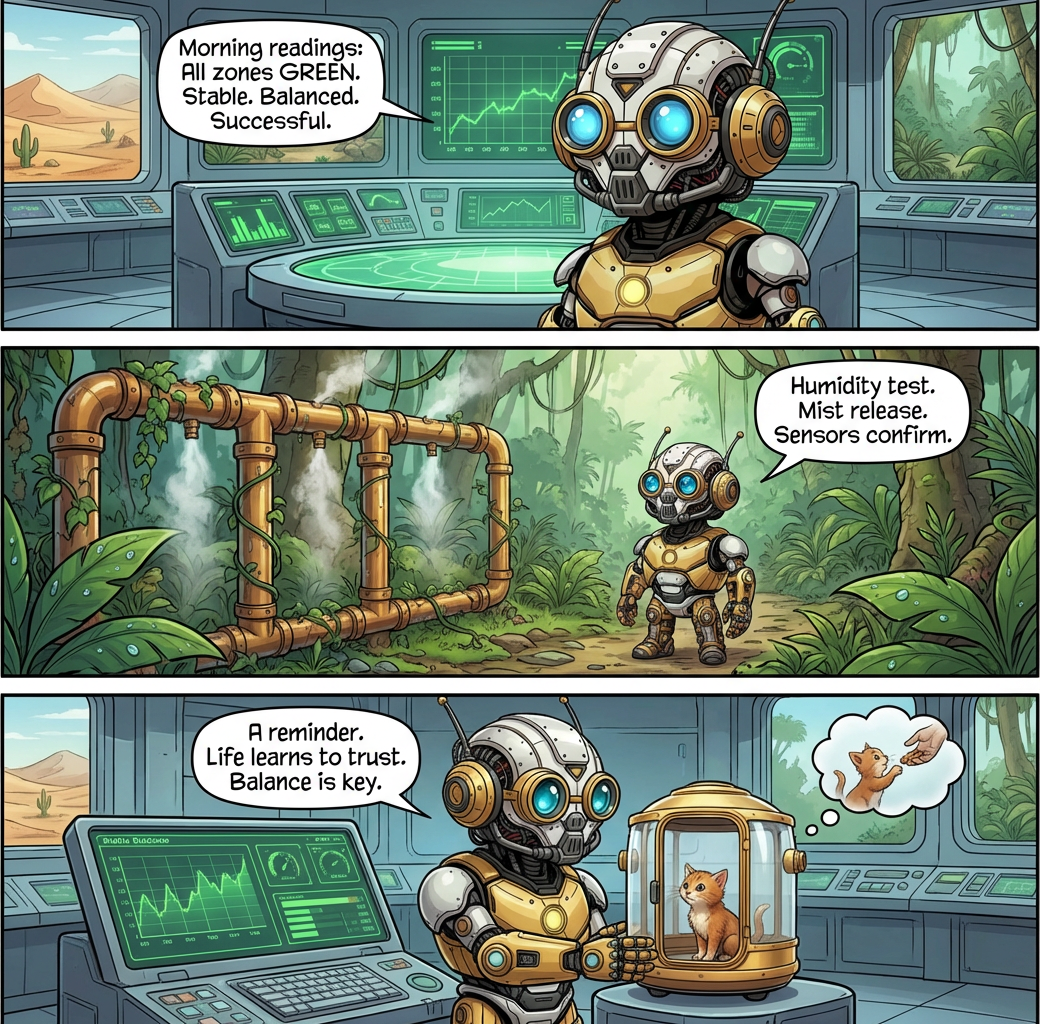
Ding-9 stopped at the central nexus and checked the morning readings. All zones showed green—stable temperatures, balanced humidity, healthy air flow. The robot's optical sensors brightened. Three weeks of careful adjustments had brought every system into harmony. Water moved smoothly from the underground streams to the gardens above. The desert plants maintained their zones without extra help. Even the jungle sector stayed within safe limits. This was what success looked like—quiet, steady, and working on its own. The robot had learned to trust the connections between zones instead of controlling every detail. Progress wasn't always loud or dramatic. Sometimes it was just systems humming along, doing exactly what they were meant to do. The robot rolled toward the jungle sector observation treehouse, where new pipes needed testing. Brass tubes twisted up through the trees, their surfaces bright against the green leaves. Ding-9 opened the valve and watched mist release into the air. The moisture drifted down through the canopy in soft clouds. Climbing plants wrapped around the pipes, their leaves already reaching toward the water. Within minutes, droplets collected on every surface. The air felt different—heavier, richer. The robot's sensors confirmed what they could see—humidity levels rose exactly where they needed to. The pipes worked because they fit the zone, not because they forced it to change. This was another small success, another proof that careful planning paid off. Back near the central nexus, Ding-9 found a small glass and brass cage waiting on a work platform. Inside, a tiny model showed an animal reaching for food, frozen in the moment of choice. The robot picked up the cage and held it to the light. This represented what happened three days ago in the mess hall—a creature taking food from a different species without fear. That moment proved the biodome was more than just working systems. It showed beings learning to trust each other, to share space and resources. Ding-9 placed the cage where they could see it from the main console. Every time they checked the readings, they would remember why balance mattered. The biodome was stable, the connections were strong, and different forms of life were learning to help each other survive. The work continued, but today confirmed they were moving in the right direction.
Play your story to life
Storycraft is a mobile game where you create AI characters, craft items and locations to build their world, then discover what direction your story takes. Download the iOS game for free today!
Download for free