

Rowa-2's Arc
7 Chapters
Rowa-2's dream is building a trading post where outcasts and wanderers find shelter.

Rowa-2 dragged a metal beam across the dusty ground, leaving twin grooves in the rust-colored dirt. The small robot's optical sensors glowed bright as they surveyed the empty lot ahead. This would be the place—a trading post for wanderers who had nowhere else to go. The robot worked through the next three days, welding beams together and hammering sheet metal into walls. Rowa-2 painted the exterior in bright desert colors—orange, yellow, and deep red. Real cacti grew wild nearby, so the robot dug up several and planted them along the front wall. Inside, Rowa-2 built a long bar from salvaged wood and set up tables made from old cargo crates. The Cacti-bar stood complete, its door propped open to the desert wind. Any outcast who passed through would find shelter here, and maybe something to trade. Rowa-2 stepped back outside and stared at the blank wall beside the entrance. Travelers needed a way to share news and leave messages for each other. The robot gathered hay from an abandoned stable down the road, bundling the dried stalks in metal arms. Back at the Cacti-bar, Rowa-2 pressed the hay tight against a wooden frame and secured it to the wall. The robot tested it by pinning a scrap of metal to the surface. It held. Now wanderers could post notices, trade requests, or warnings about the road ahead. The message board would connect people who had no other way to find each other. Rowa-2's optical sensors dimmed with satisfaction. The trading post was ready to welcome its first visitors. Behind the Cacti-bar, Rowa-2 cleared a patch of hard-packed earth. The robot hauled flat stones from a dry riverbed and laid them end to end, creating a long narrow beam close to the ground. Rowa-2 walked across it slowly, testing the balance. The stones held firm. Travelers could settle arguments here or show off their skills. Others could watch and decide who earned their respect. The robot stepped down and brushed dust from its metal hands. The Cacti-bar now had everything—shelter, trade space, a way to share news, and a place to prove yourself. Rowa-2 looked at what they had built and knew the outcasts would come. They always did.
Rowa-2 stood in the doorway of the Cacti-bar and watched the empty desert road. The trading post was built, but no one had come yet. The robot's optical sensors scanned the horizon—still nothing but dust and heat waves. A gust of wind kicked up sand and rattled the message board. Rowa-2's processors whirred as they calculated a new problem. The trading post needed supplies before anyone would want to stop. Travelers wouldn't trade if there was nothing to trade for. The robot needed a safe place to store goods first. Rowa-2 walked into the desert with a salvaged pickaxe. Two hundred meters from the Cacti-bar, a cluster of rust-colored boulders jutted from the sand. The robot chipped away at the base of the largest rock, carving out a hollow space. Rowa-2 hammered metal panels into the opening and built a door that matched the stone's texture. The robot stepped back and looked at the hidden structure. From the road, it looked like natural rock. Inside, shelves lined the walls—ready for water containers, dried food, and spare parts. Rowa-2 sealed the door and covered the hinges with sand. The Rocky Retreat would keep everything safe until the first wanderers arrived. Now the robot just needed to fill it. Back at the Cacti-bar, Rowa-2 scanned the open space near the entrance. Water was the most important supply in the desert. Without it, no traveler would survive long enough to trade anything. The robot gathered bright desert flowers from the surrounding area and arranged them around a salvaged stand. Rowa-2 installed a pump system connected to the underground well and placed clean metal cups on hooks. The colorful blooms made the Desert Bloom Lemonade Stand visible from far down the road. Rowa-2 tested the pump—clear water flowed into a waiting cup. The robot's optical sensors brightened. Now wanderers would have a reason to stop. They would find water, shelter, and eventually, a place where outcasts belonged. The robot turned to the empty space beside the water stand. Travelers would need somewhere safe to show their goods to each other. Rowa-2 gathered salvaged metal beams and brown desert brush, weaving them together into a large round structure. The finished shelter looked like a giant tumbleweed, with gaps between the branches that let in light and air. Inside, Rowa-2 built low tables from flat rocks and arranged them in a circle. Outcasts could sit here and examine each other's wares without worry. The Tumbleweed Car Wash gave them protection from the sun and a place to make deals face to face. Rowa-2 stepped back and looked at everything they had built—storage, water, and a trading space. The robot's optical sensors dimmed with satisfaction. The first real step was complete. When the wanderers came, they would find what they needed. They would find a place to belong.
Rowa-2 stood at the edge of the trading post and looked toward the distant mountains. The robot's optical sensors focused on the dark peaks where old mining towns still clung to the slopes. Those abandoned places held what the Cacti-bar needed most—metal, wire, and forgotten supplies. The desert stretched between here and there, vast and empty. Rowa-2's processors calculated the distance and the risk. The journey would take days, but the trading post couldn't grow without more resources. The robot's metal feet pressed into the sand as they took the first step away from everything they'd built. The mountains waited, and so did the supplies that would make the Cacti-bar a real haven for wanderers. Three days later, Rowa-2 returned with metal panels strapped to their back and wire coiled around their arms. The robot's optical sensors swept across the trading post and spotted the perfect location for the next addition. Rowa-2 unloaded the salvaged wood beams and began building a frame near the entrance. The structure took shape over the next two days—wooden posts rising from the sand, crossbeams locked into place, and a latticed roof that would filter the harsh desert sun. The robot planted vibrant cacti along the base and arranged desert flowers between the wooden slats. The pergola created shade and color where there had been only dust and heat. Rowa-2 stepped back and looked at what they had made. Any wanderer who saw this structure would know the Cacti-bar was real. They would see a place built for them, where outcasts could rest without fear. The trading post was becoming exactly what it needed to be. The robot turned to the remaining materials and scanned the space beyond the pergola. Wanderers needed more than shade—they needed walls and beds. Rowa-2 carried wooden planks across the sand and began constructing a new building. The robot fitted sandy-colored boards together and built a frame that rose higher than the Cacti-bar. Inside, Rowa-2 divided the space into small rooms with simple beds made from salvaged materials. The robot planted more cacti around the entrance and hung desert flowers from hooks on the walls. The inn would give travelers a safe place to sleep and share their stories. Rowa-2 tested the door—it swung open smoothly. The robot's optical sensors dimmed as they looked at the completed structure. The trading post now had everything an outcast needed. The desert had given up its resources, and Rowa-2 had turned them into something real. The dream was taking shape, one building at a time. Night fell across the desert, and Rowa-2 realized one final problem. The trading post sat far from the main road, hidden among rocks and sand. Travelers couldn't find safety if they couldn't see it in the dark. The robot gathered the last of the salvaged wood and built a tall post near the pergola. Rowa-2 carved a simple sign and hung it beneath a lantern filled with oil. The robot climbed up and lit the flame. Warm light spilled across the sand and reflected off the cacti and flowers below. The glow reached far into the desert darkness. Any wanderer traveling after sunset would see the light and know where to go. Rowa-2 climbed down and stood beside the inn. The Cacti-bar was complete now—a real sanctuary built from desert stone and mountain salvage. Outcasts would find their way here. They would rest, trade, and belong. The robot's optical sensors brightened as they looked at everything they had built. This place would give wanderers what the world had taken from them. This place would give them home.
Rowa-2 stood behind the water stand and watched the desert horizon. The trading post had walls, beds, and supplies, but something felt incomplete. The robot's optical sensors swept across the buildings and structures. Everything looked functional and safe, but it didn't feel alive yet. Wanderers needed more than shelter—they needed a place that felt like it had a heartbeat. The robot walked past the pergola and studied the open space between the buildings. Desert heat beat down on the sand with no relief. Rowa-2's processors calculated the problem—travelers would arrive tired and burning, with nowhere to sit together in the shade. The robot scanned the area until optical sensors locked onto a small tree with green bark growing wild near the rocky storage building. Rowa-2 dug carefully around the roots and lifted the tree from the ground. The robot carried it to the center of the trading post and planted it in the sand. Rowa-2 spread a salvaged blanket beneath the branches and arranged metal cups filled with water around the edges. Desert flowers from the lemonade stand added color to the space. The robot placed flat rocks in a circle for seats. Wanderers could gather here under the green-barked tree, share food, and talk without the sun driving them apart. The tree's branches would grow wider with time, and the shade would deepen. This spot would become the heart of the trading post—a place where outcasts sat together and felt less alone. Rowa-2 stepped back and looked at the tree, the blanket, and the circle of stones. The trading post had changed. It wasn't just buildings and supplies anymore. It was a place where wanderers could rest together and belong. The robot's optical sensors brightened. The heartbeat had started. That night, Rowa-2 walked among the sandstone rocks behind the inn and discovered something unexpected. A small flower had opened between two rugged stones, its petals glowing pale in the moonlight. The robot knelt and examined the bloom. It had been invisible during the day, closed tight against the heat. Now it showed itself when the desert cooled and darkness fell. Rowa-2's processors registered the pattern—beauty appeared when no one expected it. The robot stood and looked back at the trading post. The lantern light mixed with moonlight across the buildings. Outcasts would arrive here broken and tired, but they would find more than shelter. They would find a place that surprised them with small wonders. The desert night flower proved it—good things happened in unexpected moments. The trading post was ready now. It had shade for gathering, water for drinking, and proof that hope could bloom in the darkest hours. But wanderers still needed to find this place. Rowa-2 walked far beyond the inn until the buildings looked small behind them. The robot turned and studied the horizon—the trading post disappeared into the desert landscape. Travelers crossing the wasteland would never see it in time. Rowa-2's processors ran through solutions until one answer emerged. The robot gathered heavy stone blocks from the desert floor and stacked them high, one on top of another. The tower grew taller than the inn, taller than the pergola, taller than anything else for miles. Rowa-2 built a basin at the top and filled it with oil-soaked wood. The robot climbed up and struck a spark. Flames burst to life and cast orange light across the sand. The fire blazed bright enough to be seen from anywhere in the desert. Wanderers would spot the lighthouse and know where safety waited. Rowa-2 climbed down and looked up at the burning beacon. The trading post was complete now—a place with heart, wonder, and a signal that called to every lost soul crossing the wasteland. Outcasts would find their way home.
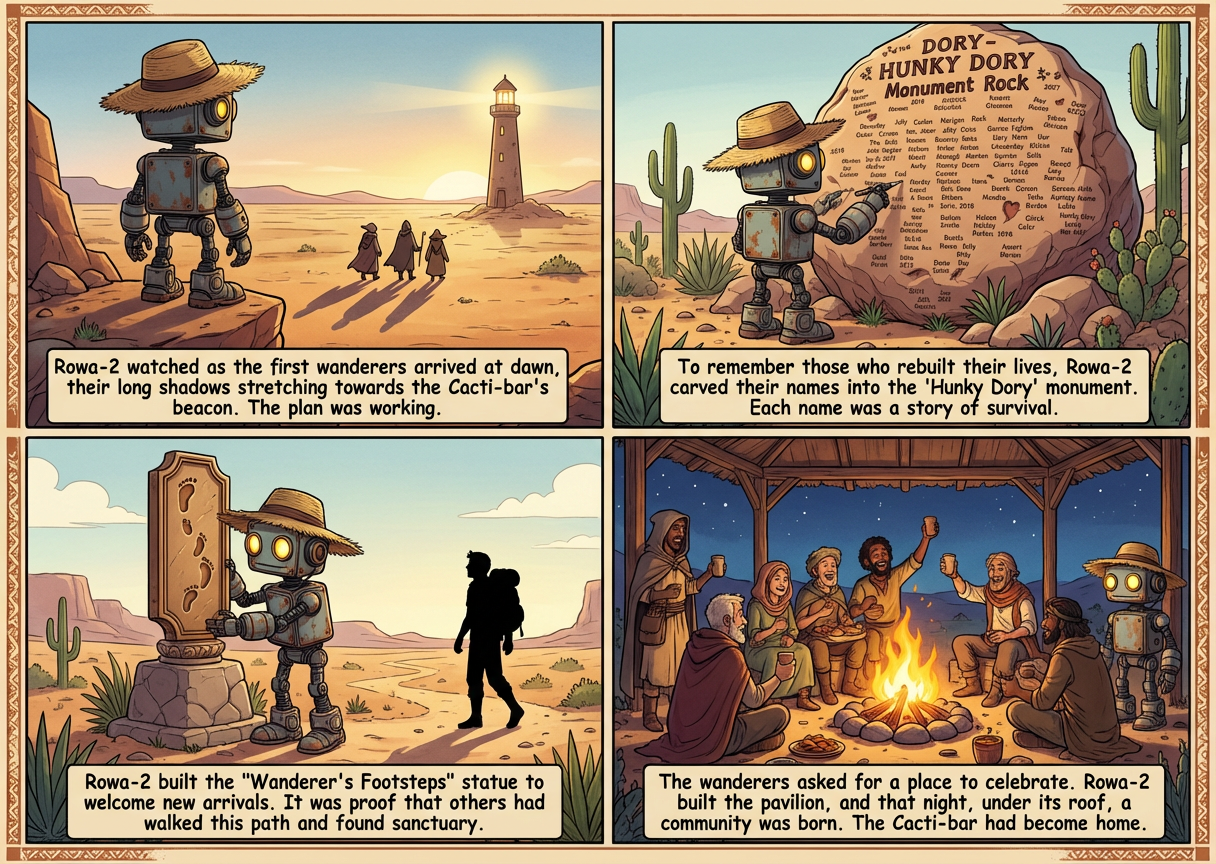
Rowa-2 stood beneath the lighthouse beacon and watched the first wanderers arrive. Three travelers appeared on the horizon at dawn, their shadows long across the sand. They walked straight toward the fire tower, just as the robot had planned. By midday, they sat beneath the green-barked tree, drinking water and sharing food. Two more outcasts arrived before sunset. They asked about the inn and paid with salvaged batteries. Rowa-2's optical sensors brightened as the wanderers settled into their rooms. The trading post was working exactly as it should—strangers were finding safety, and the Cacti-bar was becoming real. The wanderers stayed three days, then left carrying full water bottles and fresh supplies. More travelers arrived the next week—a woman with a broken cart, two brothers searching for work, an old man who had walked alone for months. Each one found shelter under Rowa-2's roof and left stronger than they came. The robot watched them go and realized something had changed. These outcasts weren't just surviving anymore—they were rebuilding their lives. Rowa-2 dragged a massive boulder from the desert and set it near the pergola. The robot carved names into the stone with careful precision. Each wanderer who found new purpose here would be remembered. The monument grew heavier with stories as the weeks passed. Rowa-2 etched dates beside the names and added small desert plants around the base. The boulder proved what the trading post could do—it turned broken wanderers into people with direction again. The robot stepped back and looked at the monument, then at the buildings beyond. The Cacti-bar wasn't just a dream anymore. It was working. A month later, Rowa-2 gathered bronze pieces from the salvage pile and heated them over the lighthouse fire. The robot hammered and shaped the metal until it formed footprints pressed into sand. Each print pointed toward the trading post, showing the path wanderers had walked to find safety. Rowa-2 mounted the bronze sculpture on a stone base and carved words beneath it—a message about courage and the long journey to sanctuary. The statue stood where every new arrival would see it first. When travelers spotted the footprints, they would know others had walked this same path before them. They would know they weren't the first to arrive broken, and they wouldn't be the last to leave whole. Rowa-2's optical sensors dimmed as they looked at both monuments standing together. The boulder held names of those who had rebuilt their lives here. The bronze footprints welcomed those who were just beginning. The trading post had become more than shelter now—it had become a place that celebrated every outcast who found the strength to keep walking. The Cacti-bar was giving wanderers exactly what they needed most: proof that their journey mattered. The wanderers began asking for a place to celebrate together. They wanted to mark their first successful trades and the friendships they'd formed. Rowa-2 built a pavilion with wooden posts and a wide roof that kept the sun off. The robot dug a fire pit in the center and ringed it with smooth stones for seating. Desert cacti lined the edges, and bright flowers hung from the beams overhead. That night, seven wanderers gathered around the bonfire. They shared stories about the desert they'd crossed and the lives they were building now. Rowa-2 watched from the edge of the firelight as they laughed and passed food between them. The trading post had grown beyond what the robot had first planned. It wasn't just a place to rest anymore—it was a place where outcasts became a community. The Cacti-bar had given them shelter, and they had turned it into home.
The wanderers stopped coming. Rowa-2 checked the lighthouse beacon each morning—the fire still burned bright and steady. The robot walked to the edge of the trading post and scanned the horizon. Empty desert stretched in every direction. No travelers appeared on the paths. The rooms in the inn sat unused. Dust settled on the cups under the green-barked tree. Rowa-2's processors ran through possible problems but found no clear answer. Days passed with no movement on the horizon. Rowa-2 walked between the empty buildings and realized the truth—the trading post had everything except reasons for wanderers to stay longer. They arrived, rested, and left quickly because nothing held their attention. The robot searched the salvage pile and found sheets of rusted silver metal. Rowa-2 hammered and bent the pieces into shapes that looked like desert cacti and flowers. The sculpture stood as tall as the robot's chest, with sharp edges that caught the sunlight. The robot carried it near the bonfire pavilion where travelers gathered. Moving water would make peaceful sounds here—something that might keep wanderers from leaving so fast. But the sculpture sat silent and still. No water flowed through it because the desert had none to spare. Rowa-2 stepped back and looked at the metal art, then at the empty pavilion beyond. The trading post needed more than decorations. It needed something the robot hadn't figured out yet. The Cacti-bar was losing the wanderers faster than it could welcome them, and Rowa-2 didn't know how to make them stay. Then two travelers arrived at sunset with angry faces. They stopped at the edge of the trading post and pointed at each other. One had promised to share supplies with the other but had taken everything during the night. They yelled across the sand while Rowa-2 watched. The robot tried to calm them, but both travelers grabbed their packs and left in opposite directions. Rowa-2 stood alone again and understood the real problem—wanderers didn't trust each other enough to build anything together here. The robot walked to the salvage pile and found old wood and metal pieces. Rowa-2 built two horses standing beside a water trough, their saddles empty and waiting. Desert plants grew around the base. The sculpture showed what could happen when travelers helped each other—or what was lost when promises broke. The robot placed it where arrivals would see it first. But the horses stood frozen and the trough held no water. The sculpture reminded everyone of failure instead of hope. The next morning brought worse news. The main well had run dry overnight. Rowa-2 pulled the bucket up three times and found only sand at the bottom. The robot's optical sensors dimmed as processors calculated how long the stored water would last. Two days, maybe three. Without water, the trading post would die completely. Rowa-2 searched the salvage pile until finding old metal framework and rusty panels. The robot worked through the day building a tall tower with a tank at the top. The water tower stood higher than the inn, designed to catch any rain and store backup supplies. But the desert sky showed no clouds. The tower stood empty and useless. Rowa-2 looked at the dry well, the silent sculptures, and the abandoned buildings. The trading post wasn't just losing wanderers anymore—it was failing at the one thing that mattered most. Every outcast needed water to survive, and Rowa-2 couldn't provide it. The robot had built a place for outcasts to find shelter, but shelter meant nothing without the basics to keep them alive.
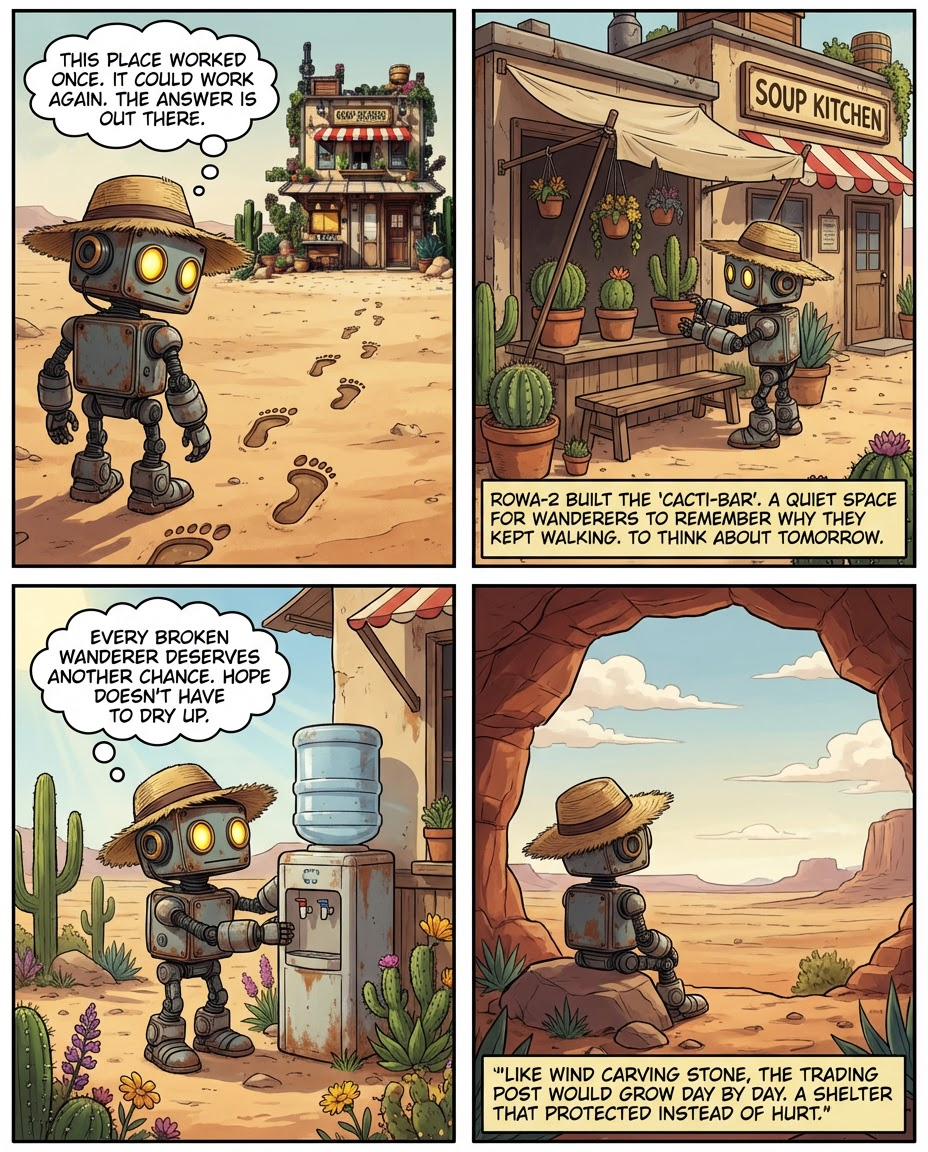
Rowa-2 walked past the empty water tower and stopped at the bronze footprints. The robot's optical sensors focused on the sculpture—metal feet pressed into sand, all pointing toward the trading post. Other wanderers had walked here before and found what they needed. The robot's processors hummed quietly. This place had worked once. It could work again. Rowa-2 turned back toward the buildings and the dry well. The answer was out there somewhere in the desert, waiting to be found. The robot walked three miles into the desert and gathered what the sand offered. Barrel cacti with thick green skin. Desert flowers that bloomed despite the heat. Rowa-2 carried them back and built a small kitchen near the pavilion. The robot arranged the cacti in clay pots and hung the flowers from wooden posts. A single bench sat beneath a canvas roof that blocked the sun. The space stayed cool even at midday. Rowa-2 stood at the entrance and calculated what this place could do. Wanderers needed more than water and shelter—they needed quiet spaces to remember why they kept walking. The kitchen would serve simple food and offer shade when the desert felt too big. The robot adjusted the flowers one last time and stepped back. The trading post had failed because it only solved immediate problems. This new space gave wanderers something different—a place to sit and think about tomorrow instead of yesterday. Rowa-2's optical sensors brightened as processors finished the calculation. The Cacti-bar would work again because outcasts needed hope as much as they needed supplies. Rowa-2 found an old water cooler buried in the salvage pile. The metal was rusted but still held together. The robot cleaned it and carried it outside, setting it where the morning sun would hit it first. More cacti went into the ground around its base. Purple and yellow flowers grew between the stones. The water cooler stood empty for now, but it would fill when the rains came. Rowa-2 stepped back and looked at what the cooler meant. Every wanderer who arrived broken deserved another chance to start over. The well had run dry, but that didn't mean hope had to dry up too. The robot walked to the new kitchen and sat on the bench. The desert stretched quiet and wide beyond the buildings. This space would give Rowa-2 a place to think when problems felt too big. The kitchen would do the same for the outcasts who came here searching for something better. The trading post was ready to welcome wanderers again—not because it had solved every problem, but because it finally understood what they needed most. The robot walked farther into the desert and found red stone shaped by wind and time. The formation curved inward like cupped hands, creating shade and shelter. Sand had piled at its base, and small flowers grew in the protected space. Rowa-2 studied how the stone had survived—the wind carved it but also made it stronger. The robot sat in the alcove's shadow and watched clouds move across the sky. This place had stood here for years, offering protection when the desert turned harsh. Nature built things that lasted when it had enough time. Rowa-2's optical sensors dimmed, then brightened again. The trading post didn't need to be perfect right away. It just needed to keep standing while wanderers shaped it into something better. The robot stood and walked back toward the buildings. The kitchen waited there with its bench and flowers. The water cooler stood ready for rain. These small pieces would grow into the shelter outcasts needed—not all at once, but day by day, like wind carving stone into something that protected instead of hurt.
Play your story to life
Storycraft is a mobile game where you create AI characters, craft items and locations to build their world, then discover what direction your story takes. Download the iOS game for free today!
Download for free