

Emberflame's Arc
11 Chapters
Emberflame's dream is creating the ultimate fusion of flame magic and urban fashion design..

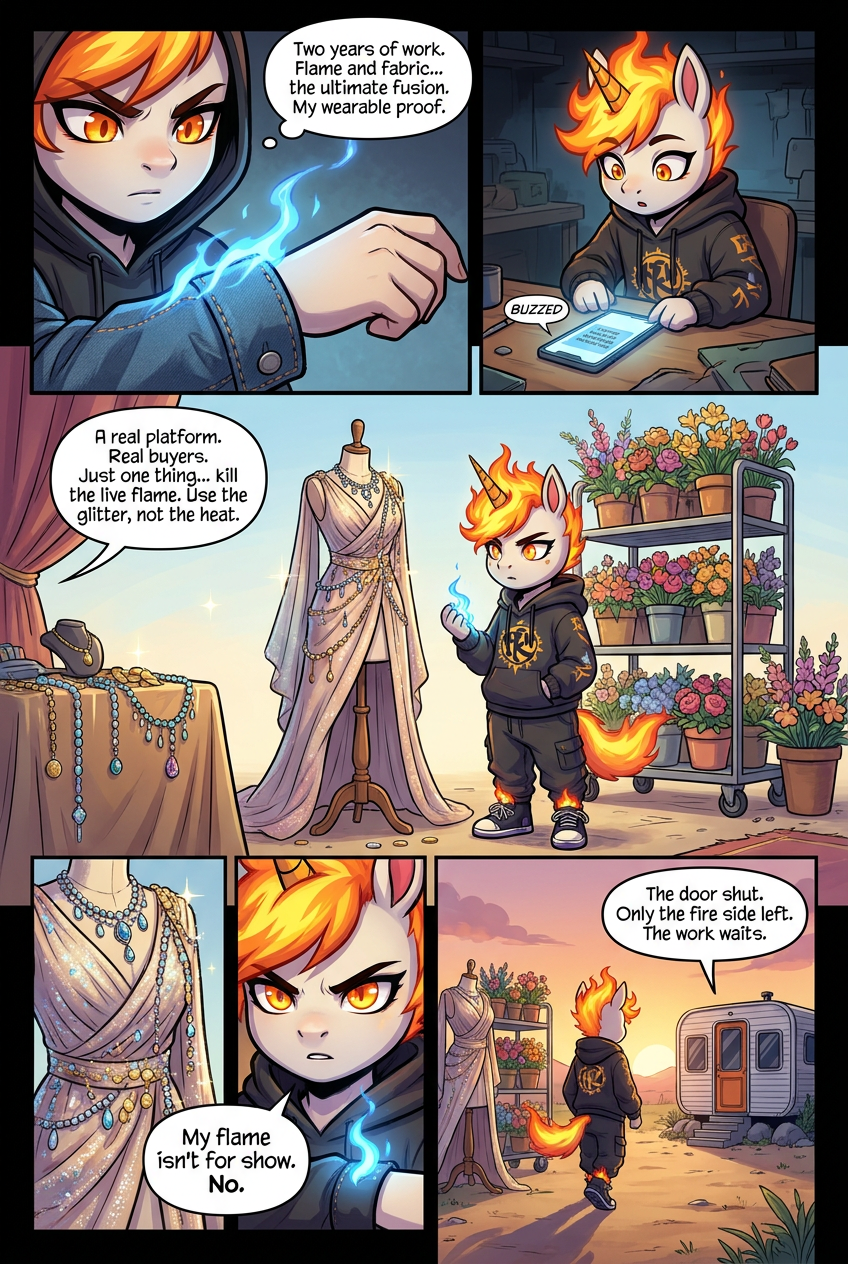
Emberflame smoothed the cuff of a jacket and watched a thin blue flame curl along the seam. Two years of work hummed in that stitch. In Jugmaw, no one had pulled fire and fabric together like this, and no one had wanted to. They wanted the ultimate fusion of flame magic and street design — a wearable proof that the two worlds belonged on the same body. A message buzzed on the table. Someone from the fashion side was asking to talk. Emberflame followed the address and stopped short. A wooden mannequin stood under open sky, draped in soft fabric and dripping with stones and coins. Behind it, a tall rack rolled on small wheels, layered with bright pots of flowers spilling color at every shelf. The insider smiled and made the offer plain. A real platform. Real buyers. One condition — kill the live flame. Use the glitter, not the heat. Emberflame looked at the cold beads swaying in the breeze, then at the blue flame still flickering on their cuff. They said no, turned, and walked. The door to the fashion world shut behind them. Only the fire side was left to win now, and the heat-stable weave still wasn't done. Behind them, the trailer door clicked shut. Tinted windows caught the last of the light. Emberflame pulled the cuff close. The flame held. The work waited.
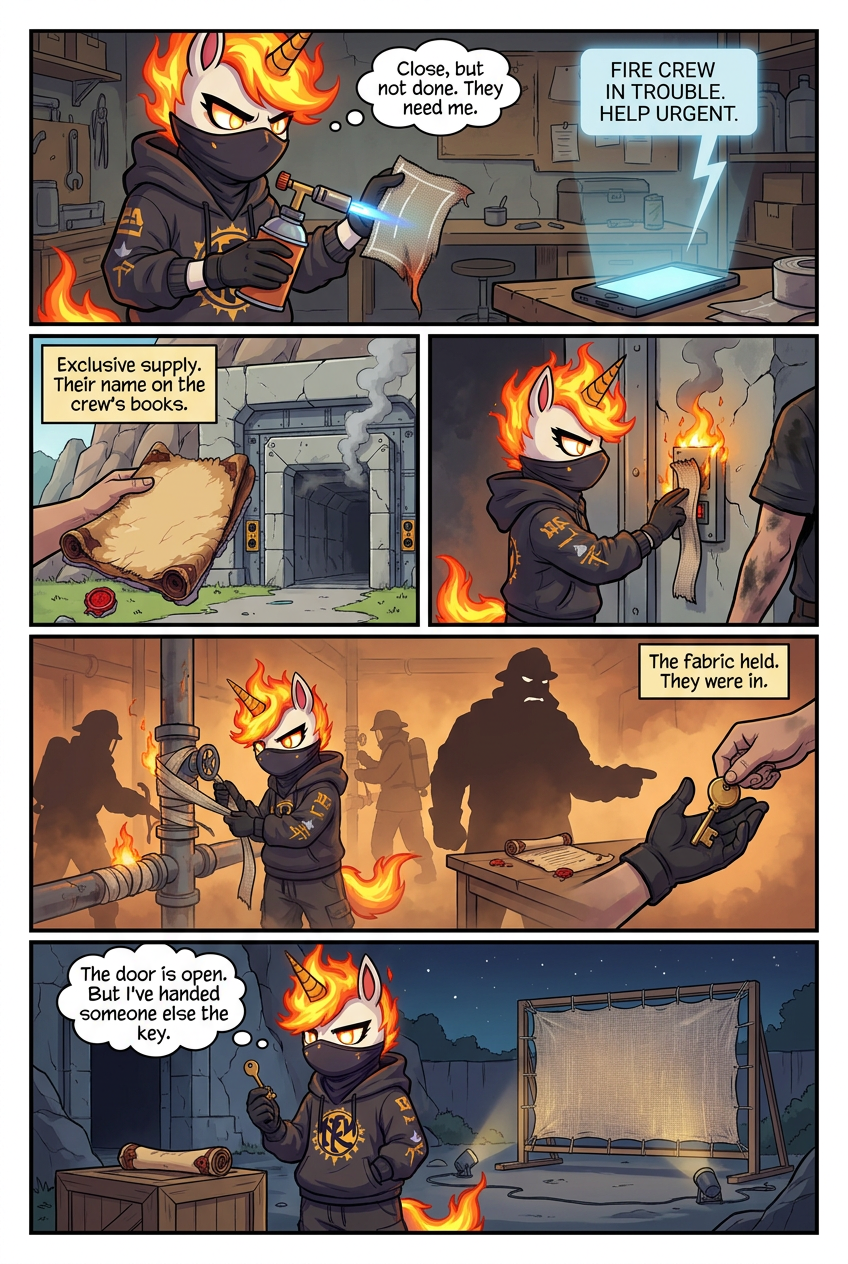
Back in the workshop, Emberflame laid the jacket flat and pulled out the test swatches. The heat-stable weave still curled at the edges when pushed past a certain point. They marked the spot with chalk and set a small flame on the cloth. It held, then thinned. Close, but not done. Their phone buzzed on the bench. A fire crew, somewhere out there, was in trouble. The message was short and urgent. Emberflame stared at the screen, the flame on the swatch still licking the chalk line. They grabbed the swatches and ran. The crew's base was a concrete bunker set into rock, water leaking from cracked tanks beside the door. Smoke drifted from a vent. A crew member met them at the entrance, soot on her sleeves, and held out a paper. Help now, sign here. The page listed terms — exclusive supply, their name on the crew's books, no outside deals until the contract closed. Emberflame read it twice. Inside, someone coughed hard. They pressed the swatch to a burning panel near the door. The weave held. They signed. The crew pulled them in, and the door shut behind them. Inside, the air was hot and thick. Emberflame cut the swatches into strips and wrapped them over leaking valves and split seams. The fabric clung, sealed, and stopped the worst of the flame. The crew breathed. Someone clapped Emberflame on the back and pressed a small brass-tagged key into their palm — a dorm slot on base, their bunk now. The chief nodded once, then pointed at the contract on the table. Tomorrow, more orders. By week's end, a public showing rigged outside the bunker wall, the weave stretched wide for every fire worker to see. Emberflame closed their fist around the key. The fire side had let them in. The door behind them was locked from both sides now. That night, Emberflame walked the outer wall alone. The crew had already started rigging the showing. A long frame stood bolted to the rock, the weave pulled tight across it, edges pinned and waiting for flame. The leather contract sat rolled on a crate beneath it, wax seals catching the low light. Emberflame ran a thumb over the brass tag of the key. The weave was theirs. The bunk was theirs. The signatures were theirs too. They had won the door they wanted. They had also handed someone else the lock.
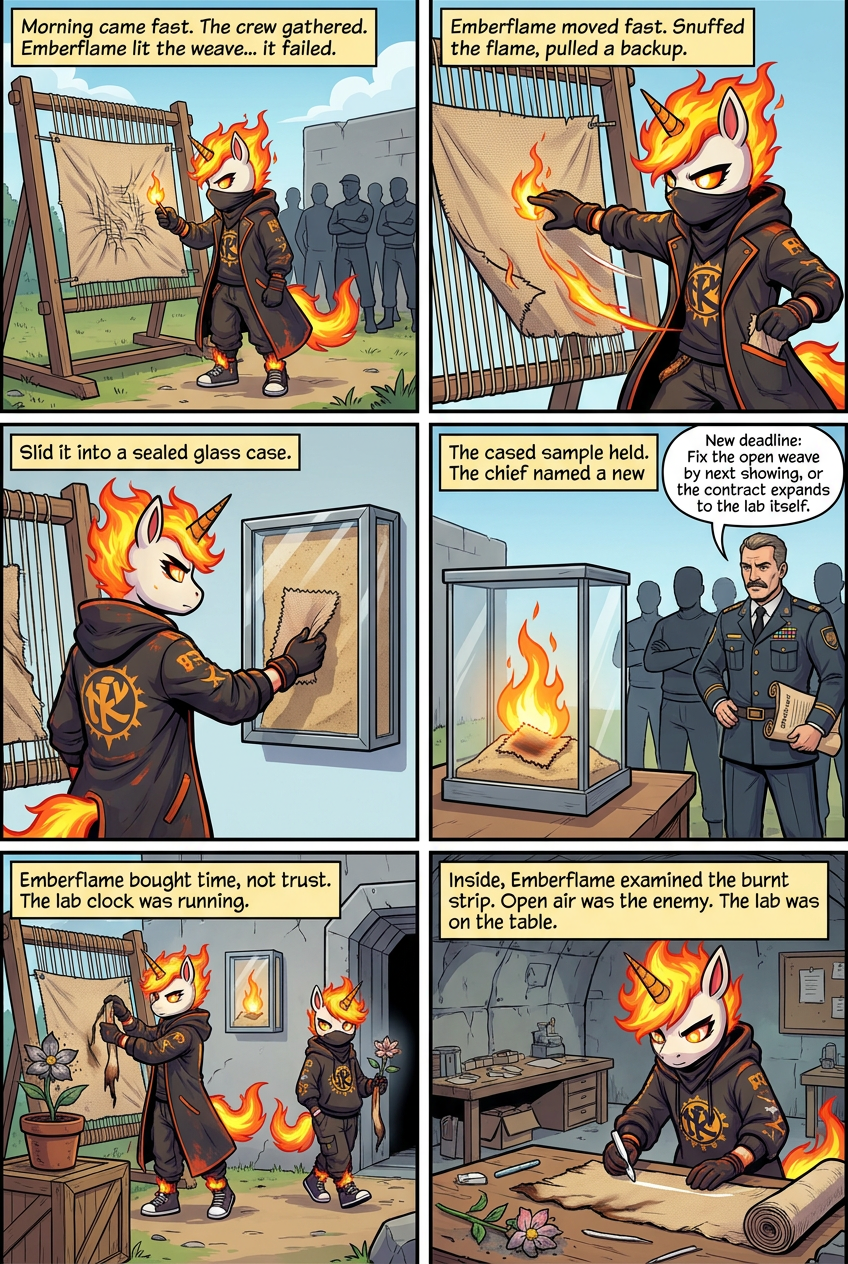
Morning came fast. The crew gathered along the wall, arms crossed, eyes on the frame. Emberflame stepped up and lit the first corner of the weave. The flame caught clean. Then the cloth puckered. A thread snapped. Another curled black. The crew went quiet, watching the fabric start to fail in the open air. Emberflame moved fast. They snuffed the flame with a gloved hand, cut the failing patch free, and pulled a small backup swatch from their coat. They slid it into a glass case standing beside the frame, the sand-textured backing catching the morning light. They lit the swatch inside the sealed case. It held. The crew stepped closer. The chief gave a slow nod, then tapped the contract under his arm. The open-air weave had failed, but the cased sample had not. The chief named a new deadline: fix the open weave by next showing, or the contract expanded to cover the lab itself. Emberflame nodded once and pulled the burnt strip from the frame. A bright potted bloom sat on a crate where the crew had stood watching, its petals catching ash. They picked it up, brushed it clean, and carried it back toward the bunker door. The case stayed on the wall, the small flame still steady inside. Emberflame had bought time, not trust. The lab clock was running now. Inside, they set the bloom on the workbench and spread the burnt strip flat. The edges had not just curled — they had thinned, the way a sail wears down in wind. Open air was the enemy, not heat alone. Emberflame pulled a fresh roll of weave from the shelf and marked a new line in chalk. The deadline was set. The lab was on the table. They started cutting.
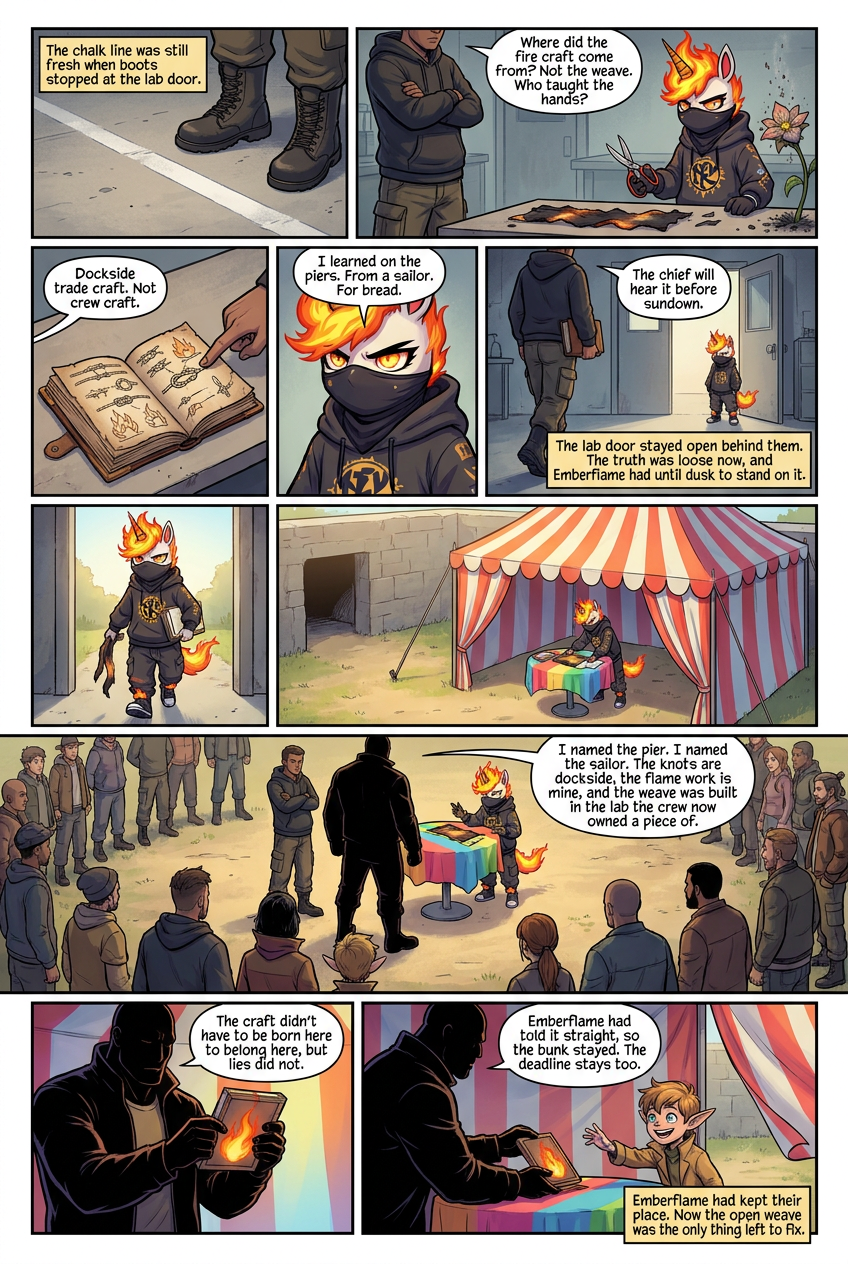
The chalk line was still fresh when boots stopped at the lab door. A crew member leaned in, arms folded, eyes on the burnt strip. They asked Emberflame straight out where the fire craft came from — not the weave, the craft. Who taught the hands. Emberflame set the shears down. The bloom on the bench shed one more flake of ash. The question hung in the small room, heavier than the deadline. The crew member pulled a weathered leather book from under their arm and dropped it on the bench. Ink routes and flame notes spilled across the open page. They tapped a diagram — a knot Emberflame used every day. Dockside trade craft, the crew member said. Not crew craft. Emberflame met their eyes and nodded once. They said they learned on the piers, from a sailor who taught them for bread. They did not soften it. The crew member closed the book, slid it back under their arm, and said the chief would hear it before sundown. Then they walked out. The lab door stayed open behind them. The truth was loose now, and Emberflame had until dusk to stand on it. Emberflame did not wait for the chief to come find them. They pulled the burnt strip, the cased swatch, and a folded bundle of weave notes into their arms and walked out to the yard. A bright striped tent stood over a small round table near the bunker wall, set up for crew meals. Emberflame spread the work across the table under the colored cloth and sent word for the chief. He came in slow boots, the crew member behind him. More crew drifted in and made a loose ring around the tent, hands at their sides, watching. A small figure with pointed ears and a tan coat slipped between two larger crew and stood at the front of the ring, brown eyes wide on the table. Emberflame spoke first. They named the pier. They named the sailor. They said the knots were dockside, the flame work was theirs, and the weave was built in the lab the crew now owned a piece of. The chief listened. He picked up the cased swatch, turned it in the colored light, and set it back down. He said the craft did not have to be born here to belong here, but lies did not. Emberflame had told it straight, so the bunk stayed. The deadline stayed too. The crew member uncrossed their arms. The ring around the tent loosened. The small fae boy reached out and touched the edge of the cased flame, then pulled his hand back grinning. The tent flaps moved once in the wind, and the table held the work between them. Emberflame had kept their place. Now the open weave was the only thing left to fix.
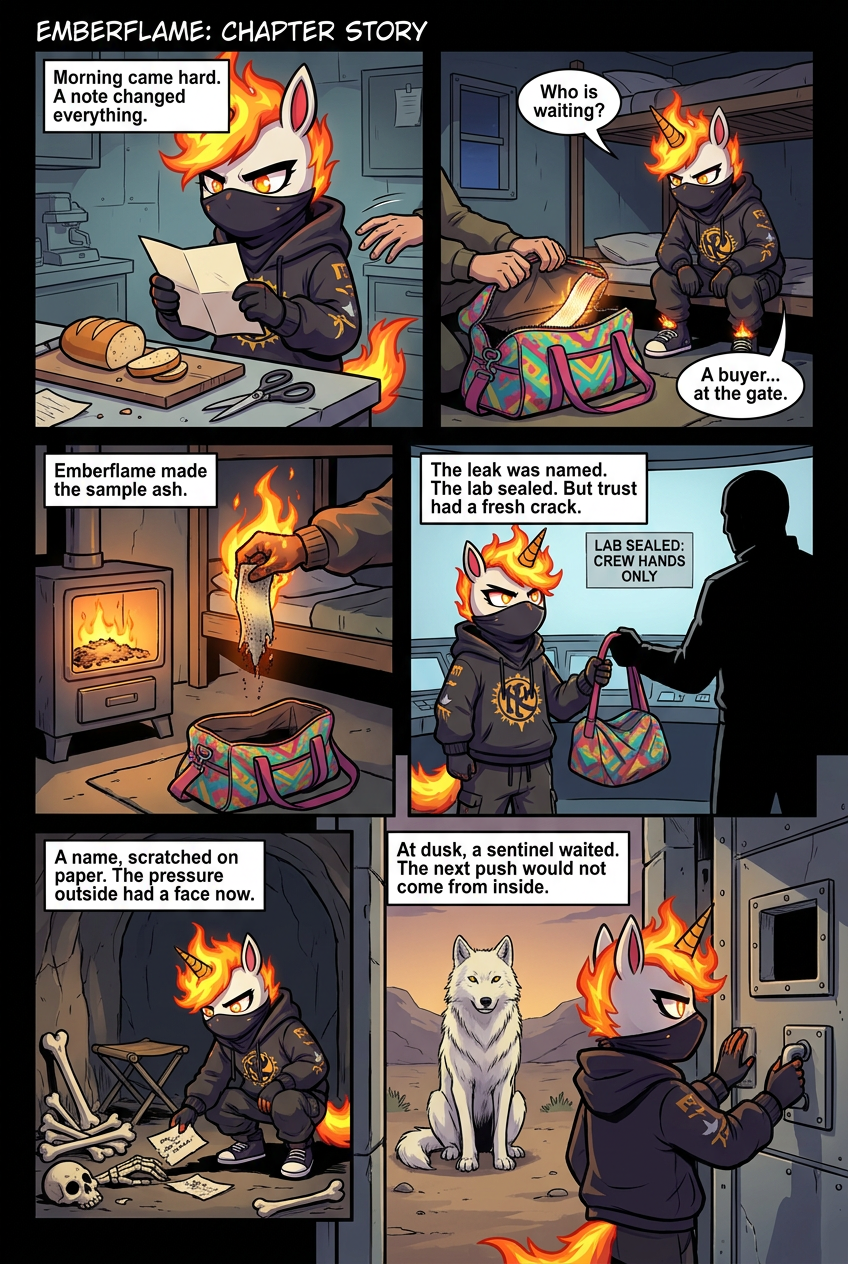
Morning came hard. Emberflame was at the lab bench early, fresh roll half cut, when a runner ducked through the door with a folded note. Word had slipped the bunker walls. Someone outside knew about the weave, and a crew member was being leaned on to pass a sample before the formula was locked down. Emberflame set the shears flat and read the note twice. The deadline was no longer the only clock ticking. Emberflame walked the bunks until they found the crew member sitting with a bright patterned bag on their knees. The false bottom was open. A cut strip of weave lay inside, ready to leave. Emberflame did not shout. They sat down and asked who was waiting. The crew member named a buyer at the gate and slid the bag across. Emberflame pulled the strip out, burned it on the bunk stove, and carried the empty bag to the chief. The leak was named before it left the wall. The chief sealed the lab to crew hands only, and a new shadow fell over Emberflame's bench — the formula was safe, but trust inside the bunker had a fresh crack to mend. Emberflame walked back to find the watch post the crew member had been using. It was a small alcove near the back tunnel, a folding stool tucked beside a pile of old bones the crew kept as a grim marker of the last raid. The stool was still warm. A scrap of paper lay under one bony hand, an outside name scratched on it. Emberflame pocketed the paper and gave it to the chief. The watch post was reassigned by noon. The buyer at the gate had left empty, but the name in Emberflame's pocket meant the pressure outside had a face now, and it would come again. At dusk Emberflame walked the outer wall to see who had been waiting. Past the gate, a large white wolf sat in the dust, yellow eyes steady on the bunker door. No rider. No leash. Just a watcher left behind. Emberflame stopped at the line and met its stare. The wolf did not move. Emberflame turned back inside and bolted the door. The sample was ash, the leak was sealed, the name was in the chief's hand. But the buyer had left a sentinel, and the next push would not come from inside the walls.
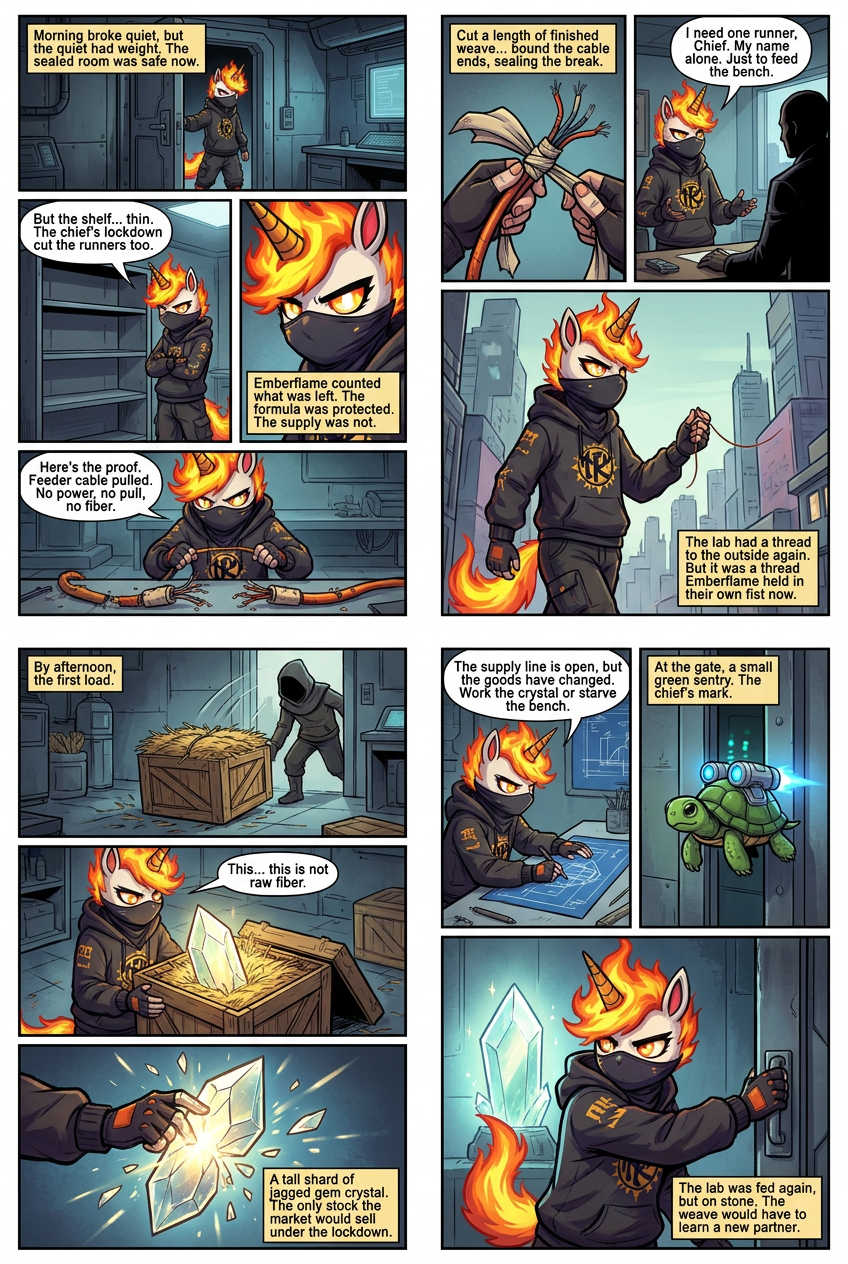
Morning broke quiet, but the quiet had weight. Emberflame unbolted the lab door and stepped inside. The sealed room was safe now — no crew hands but theirs could touch the bench. That was the win. But the shelf where raw fiber stacks usually waited was thin. The chief's lockdown had cut more than crew access. It had cut the runners who hauled in fresh stock. Emberflame counted what was left and felt the math go tight. The formula was protected. The supply that fed it was not. Emberflame traced the intake line behind the bench and found the proof. The feeder cable had been pulled at the seal, copper ends frayed, dust already settling on the bright wires. No power, no pull, no fresh fiber. Emberflame cut a length of finished weave from the back roll and bound the cable ends together, sealing the break with their own cloth. Then they walked to the chief and asked for one runner under their name alone — no crew, no contract change, just one hand to feed the bench. The chief agreed. The lab had a thread to the outside again, but it was a thread Emberflame held in their own fist now, and if it snapped, no one else would tie it back. By afternoon the runner came back with the first load. Emberflame cleared the bench to receive it. What landed was not raw fiber. It was a tall shard of jagged gem crystal, packed in straw, the only stock the outside markets would still sell under the lockdown name. The runner shrugged and left. Emberflame set the pillar upright and tapped its side. A bright shower of glittering fragments broke loose and scattered the bench. The supply line was open, but the goods had changed. The weave needed fiber. The market was sending stone. Emberflame pulled a fresh sheet of paper and started a new plan — work the crystal or starve the bench. At the gate a small green sentry had been posted, a turtle with a jet pack strapped tight to its shell, blue lights blinking slow. It was the chief's mark, a stamped reminder that nothing left or entered without a nod. Emberflame met its red eye through the slot and pushed the door shut. The lab was fed again, but on stone, not fiber. The lockdown held, the supply bent sideways, and the weave would have to learn a new partner before the next showing.
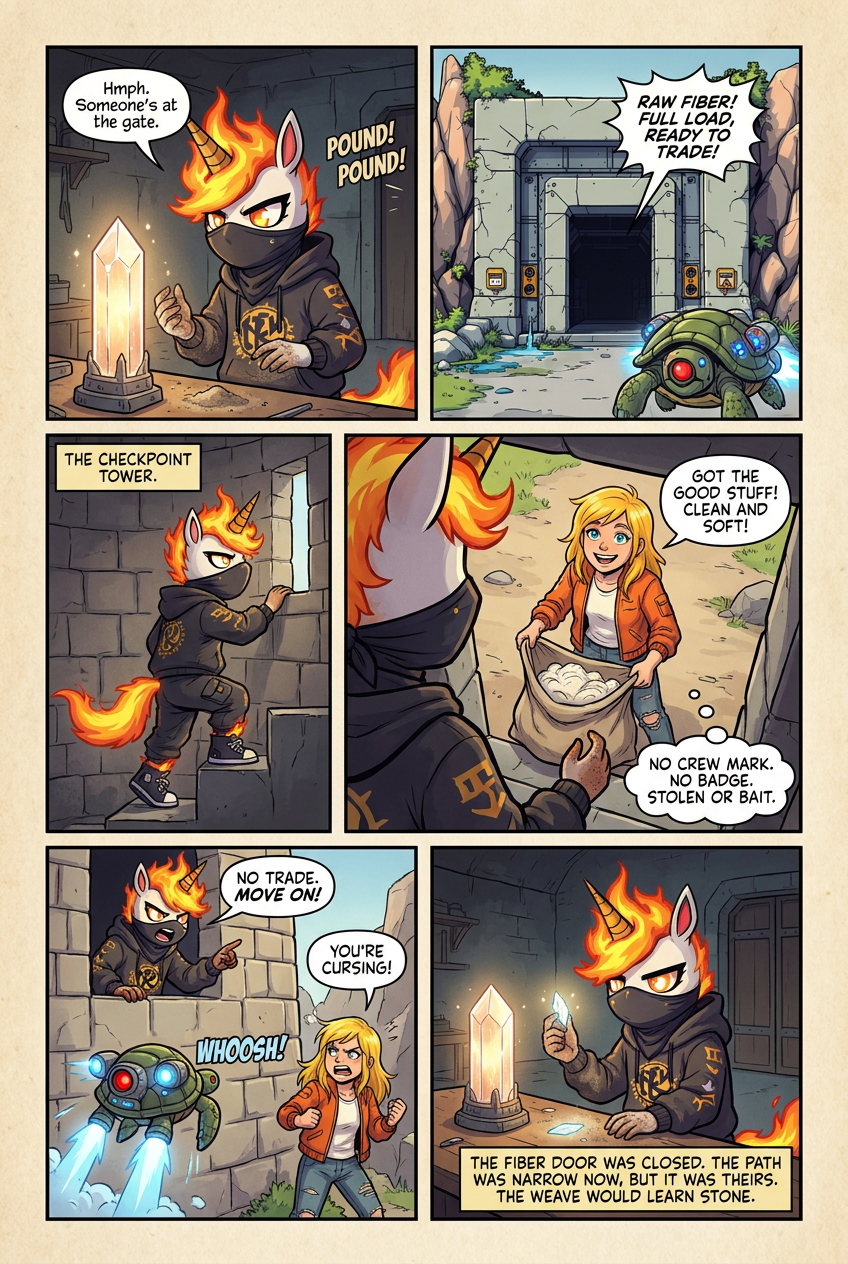
The next morning, a hard pounding hit the bunker gate. Emberflame looked up from the crystal pillar, dust still on their hands. A voice shouted through the slot — raw fiber, a full load, ready to trade. The jet-pack turtle hissed and held its post, red eye fixed, blue lights blinking slow. No word from Emberflame, no door open. The bench had stone. The gate had fiber. And the sentry stood between them, waiting. Emberflame crossed to the stone checkpoint and climbed the narrow steps inside. From the slit window they looked down at the trader — a bright-haired girl in an orange jacket and torn jeans, smiling up at the slot. She held a fat sack open at the mouth, showing clean white fiber inside, soft and unspun. No crew mark on her shoulder. No runner badge at her belt. Fiber under lockdown meant stolen fiber, or bait dressed up sweet. Emberflame's jaw set. They called down through the slot: no trade, move on. The turtle's jets flared once, a short warning burn. The girl's smile dropped. She cursed, knotted the sack, and dragged it back into the dust. Emberflame climbed down and returned to the bench. The fiber door was closed by their own choice now. They laid both hands on the crystal pillar and felt its cold weight. No shortcut. No soft sack at the gate. The weave would learn stone, or the weave would end here. Emberflame picked up a small chisel and tapped the pillar's edge. A thin flake split off, clean and bright. They held it to the light and saw the grain inside, fine as thread. The bench was quiet. The gate was quiet. The path was narrow now, but it was theirs. They set the flake down beside the loom and began to plan the first stone-fed weave.
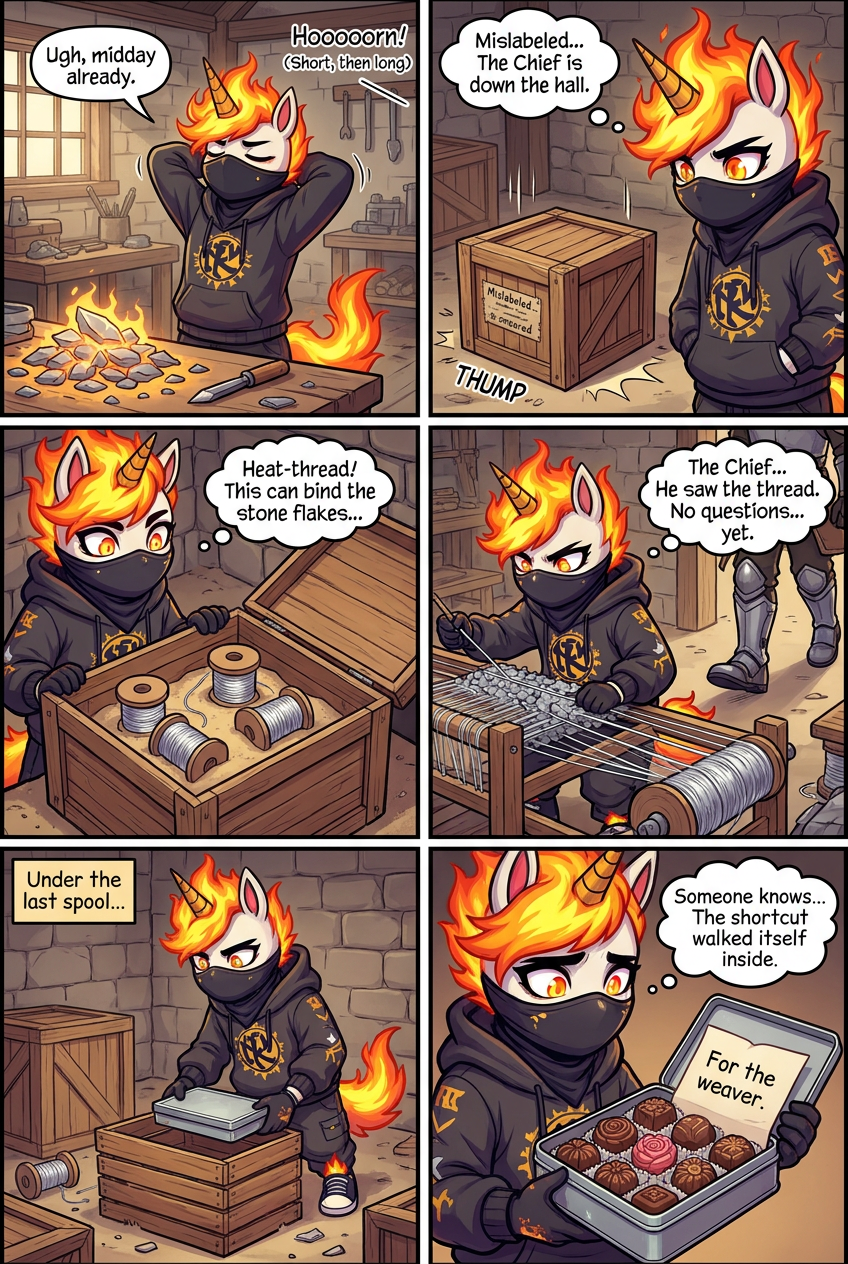
By midday, the chisel work had left a small pile of bright flakes on the bench. Emberflame brushed dust from their sleeves and stretched their back. A horn sounded at the gate — short, then long. A delivery signal, not a trade call. Boots scuffed outside. A crate slid through the lower hatch and thumped onto the bunker floor. The label on top was smeared, half-scratched, wrong. Emberflame stared at it. The chief was down the hall. The crate was here. The lid was loose. Emberflame dragged the crate to the supply shed and pried the lid up inside. Not fiber. Not stone. Long spools of fine silver thread lay nested in sand — heat-thread, the kind sailors used to stitch sail rigs that took live flame. Their breath caught. This could bind the stone flakes into a true weave. They glanced at the door. The chief hadn't seen the label. Emberflame ran a thumb along one spool, then closed the lid and stamped it as their own consignment. They carried it past the supply shelves and onto their bench. By the time the chief's boots rang in the hall, the spools were spinning, and the first stone-thread weave was already taking shape. The chief stopped at the bench and watched the loom turn. Emberflame kept their hands steady. Silver thread pulled a stone flake tight, then another, locking them in a bright line. The chief's eyes narrowed at the spools, then at Emberflame. No question came. Just a short nod, and the boots moved on. Emberflame let out the breath they had held. The misrouted crate was theirs now, the silver woven into the work, the secret stitched inside it. The weave had a spine of stone and a thread that could hold fire — but the chief had seen the spools, and the next inspection would ask where they came from. Emberflame went back to the shed to break down the crate. Under the last spool, tucked deep in the sand, sat a flat tin box. They lifted it out. Inside lay rows of patterned chocolates, soft brown and pale rose, each one shaped like a bloom. A folded note sat on top, no name, just three words: For the weaver. Emberflame's hands went cold. Someone outside the crew knew about the stone work. Someone had sent the thread on purpose. The mislabel was no accident. Emberflame closed the tin and slid it under the bench. The silver kept spinning on the loom, locking stone into a bright, strong line — the breakthrough was real, the weave finally held. But the gift in the sand meant a watcher had reached past the gate, past the sentry, past the chief's seal. The shortcut had walked itself inside. Emberflame stared at the closed tin and knew the next knock would not be a delivery.
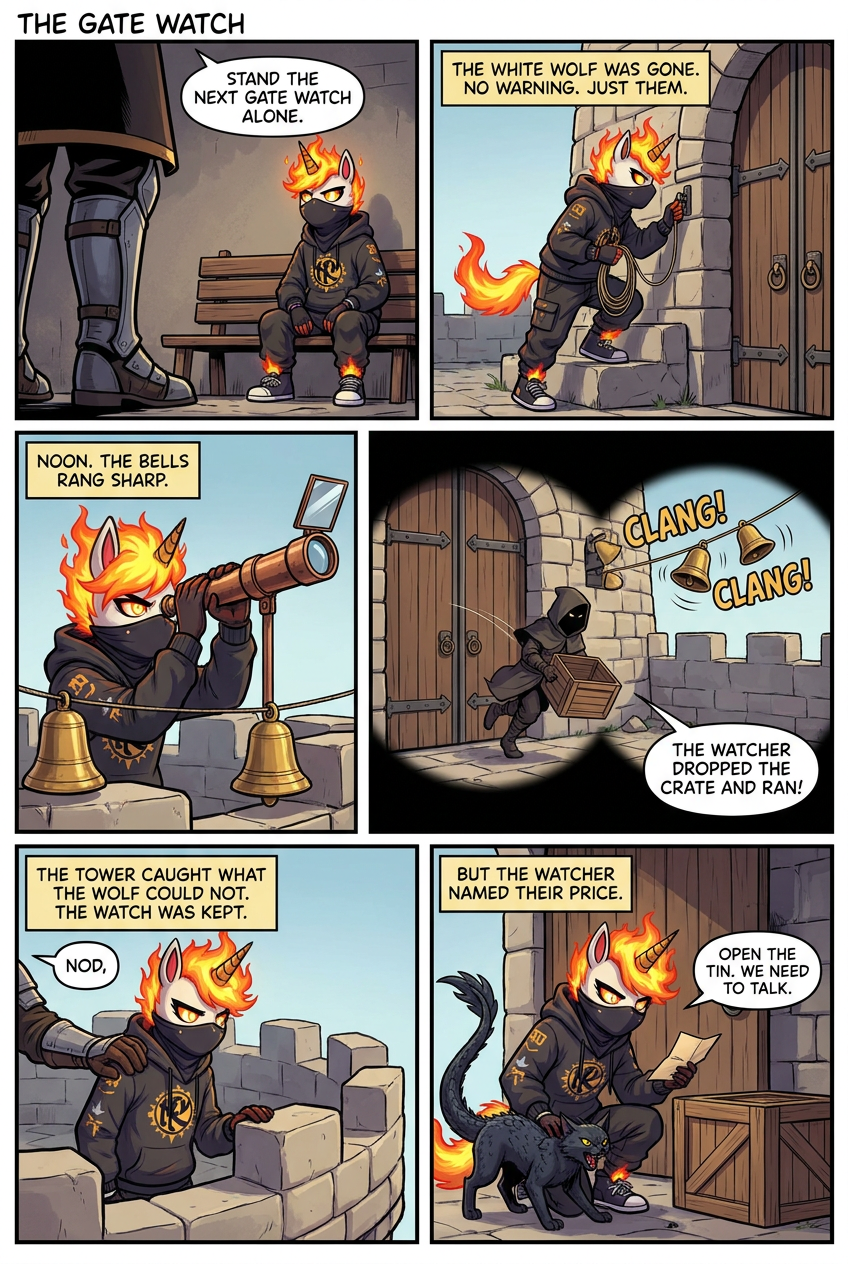
At dawn, the chief's boots stopped at Emberflame's bench. The order was short: stand the next gate watch alone. Emberflame set down the silver and looked toward the wall. The white wolf's post was empty. The sentinel was gone. Whatever came next would arrive with no warning, and no one between it and the gate but them. Emberflame climbed the stone tower beside the gate and grabbed the rope to the brass bells. They strung a thin line of stone-thread weave between the bell arm and the gate latch — any push on the gate would pull the bells. They fit a copper tube with angled mirrors against the parapet, so they could see past the wall without showing their head. By noon, the bells rang sharp and clear. Through the tube, Emberflame saw a figure at the gate with an empty crate and a folded note. They did not open it. They rang the bells again, hard, and the crew came running. The watcher dropped the crate and ran. The gate held. The chief climbed the tower steps and looked at the rigged line, the bells, the mirrored tube. A short nod, like before. The watch was kept. The tower had caught what the wolf could not. But the dropped crate sat inside the gate now, and the folded note was still tied to its lid — another message from the watcher, waiting to be read. A low hiss came from the parapet. A small shape uncurled from the shadow of the bell — sleek black fur, a long scaled tail, yellow eyes fixed on the gate. The dragon cat Emberflame had rigged as a second alarm stretched and padded down the steps. It stopped beside the crate, sniffed the note, and growled once. Emberflame followed it down and cut the string. The note read: Open the tin. We need to talk. The watch was won, the gate was sealed, but the watcher had named their price — and Emberflame would have to answer it next.
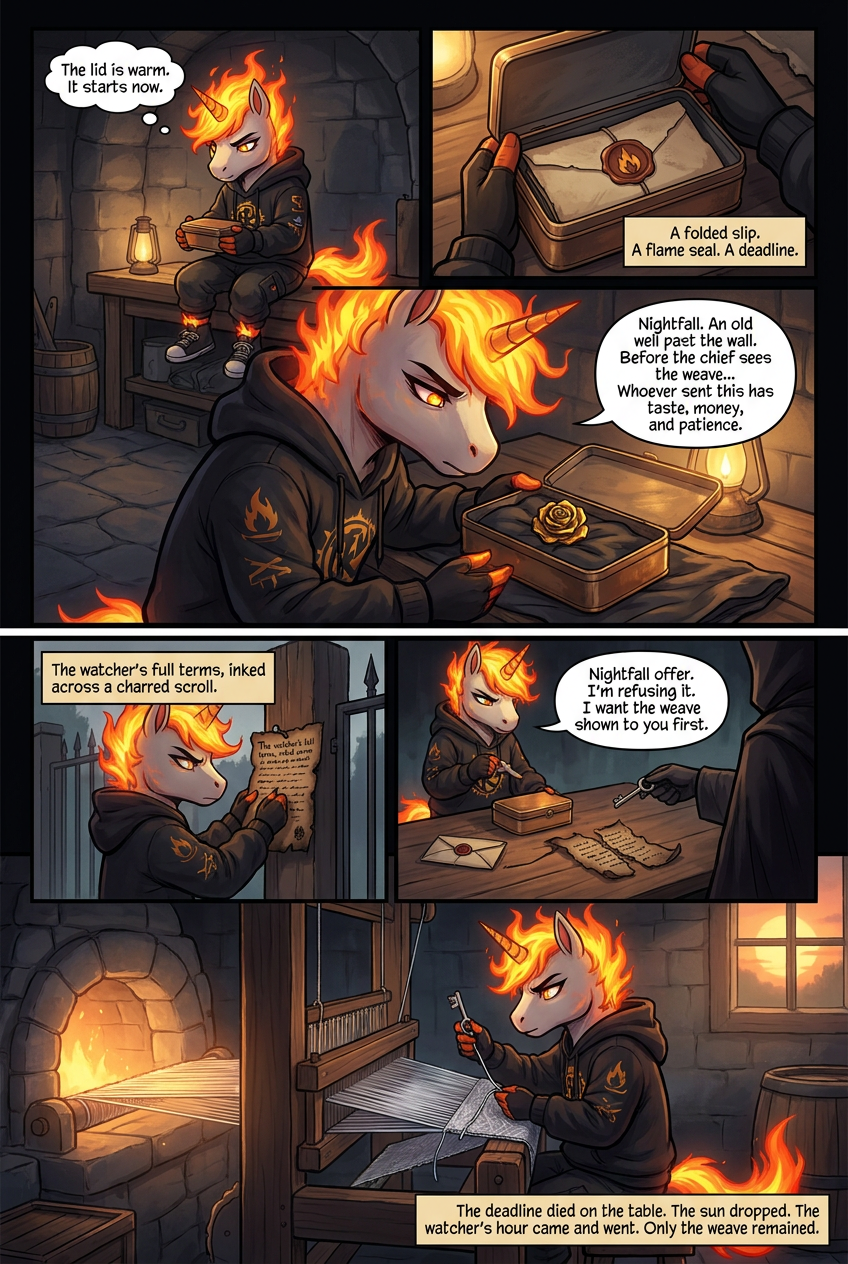
Emberflame carried the tin down from the tower and set it on their bench. The lid was warm in their hand. They pried it open. Inside lay a folded slip and a wax seal stamped with a single flame. The note named a price, a place, and a time — nightfall, before the chief saw the finished weave. Emberflame read it twice. The bunker was quiet around them. The deadline had started ticking the moment the lid lifted. Inside the tin, nested on dark cloth, sat a small golden rose. Its petals caught the lamp light and threw it back warm. The stem was heavy. Whoever sent this had money, taste, and patience. They wanted Emberflame to see it and want more. Emberflame stepped outside and found a charred leather scroll pinned to the gate post, the watcher's full terms inked across it. They read every line. The meeting place was an old well past the wall, its wooden cover hiding a chamber where the watcher had been listening for weeks. Then they tore the scroll in half, walked to the chief's door, and laid the tin, the note, and the torn scroll on the table. The chief looked up. Emberflame said, "Nightfall offer. I'm refusing it. I want the weave shown to you first." The chief nodded once and called for the lab key. The deadline died on the table. The contract held — and the finished weave was now the only road left. Emberflame walked to the lab with the key in their fist. The door opened. The stone loom waited. They sat down, threaded the silver, and started the final pass. Outside, the sun dropped toward the wall. The watcher's hour came and went. No bells rang. The weave grew under their hands, line by line, with nothing left to chase it.
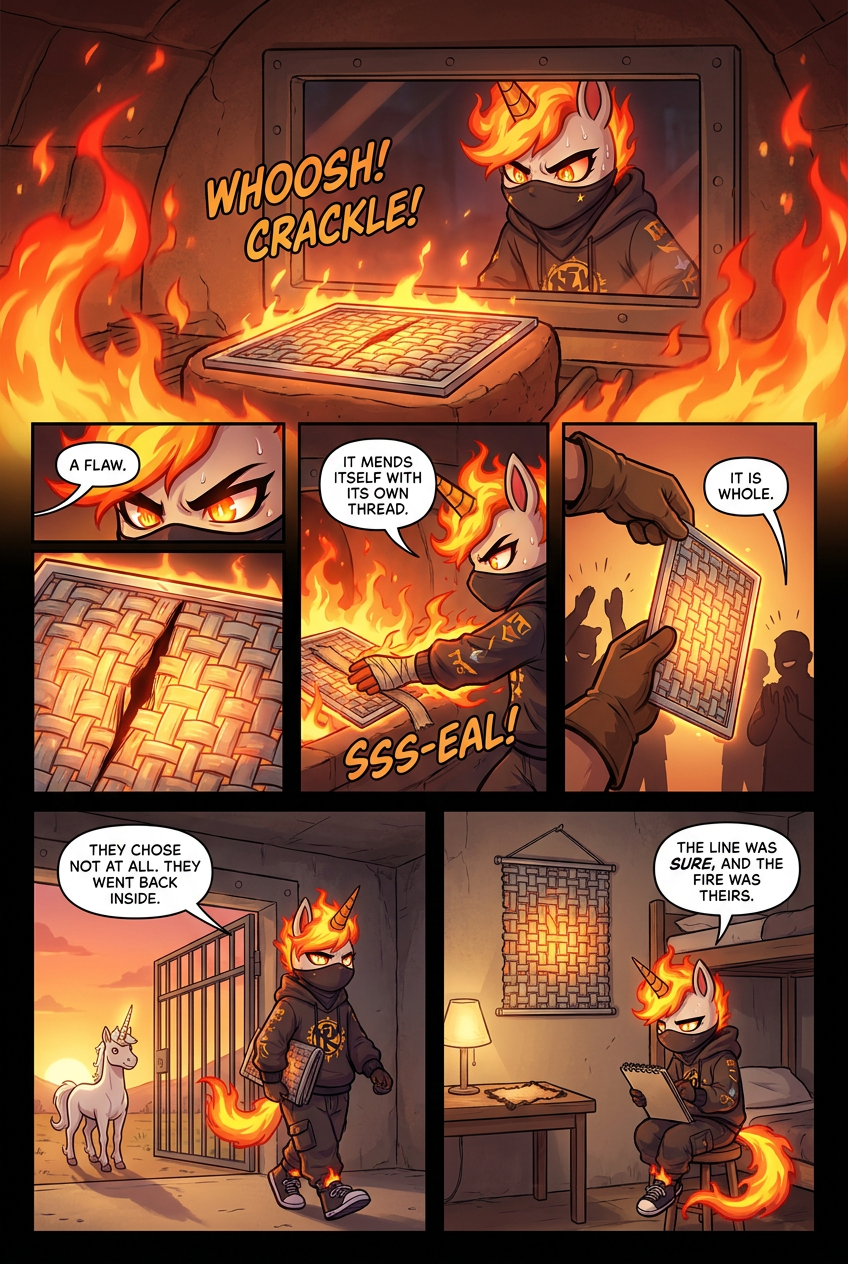
The crew rolled the clay kiln into the center of the floor. Emberflame hung the panel inside on the ceramic rod, smoothed it flat, and stepped back. The chief lit the burner. Flame climbed the inside walls and washed over the weave. The silver lines held. The stone flakes glowed. Then a thin dark seam blinked open near the bottom corner — a gap where two threads had pulled apart under the live heat. The crew saw it. The chief saw it. Emberflame saw it and did not look away. Emberflame stepped to the kiln, took a strip of leftover weave from their pocket, and pressed it across the gap while the flame still ran. The silver bit into the silver. The stone caught the stone. The seam closed and stayed closed. They turned to the chief and said, "It mends itself with its own thread. That's the design." The chief watched the panel burn clean for a long minute, then reached in with a gloved hand and lifted it out whole. He held it up to the crew. No one spoke. Then someone clapped, and the rest followed. Emberflame walked out of the bunker that evening with the panel folded over their arm and the chief's mark stitched into its hem. The weave was finished. The fire side had signed off. Somewhere past the wall, a fashion world that had once asked them to trade flame for glitter would have to come to them now — or not at all. Emberflame chose not at all. They went back inside, hung the panel on the wall above their bunk, and sat down to sketch the next jacket. Outside the gate, a small white shape stood by the post where the chief gave his orders — a tiny unicorn no taller than a boot, its spiral horn catching the last light. It dipped its head once toward the bunker, then trotted off into the dust. Emberflame did not see it. They were already drawing. The line on the page was sure, and the fire was theirs. The scrap that had marked the flaw lay on the bench, its edges blackened and curled, ash clinging to the burnt fibers. Emberflame set it under the lamp as a keepsake. Proof of the gap. Proof of the mend. The jacket on the page took shape line by line, flame-ready, crew-stamped, wholly their own. The wall above the bunk held the finished weave. The room held the quiet of work done.
Play your story to life
Storycraft is a mobile game where you create AI characters, craft items and locations to build their world, then discover what direction your story takes. Download the iOS game for free today!
Download for free