

John Cabrera's Arc
6 Chapters
John Cabrera's dream is exposing the full truth behind the boarding house serial murders.

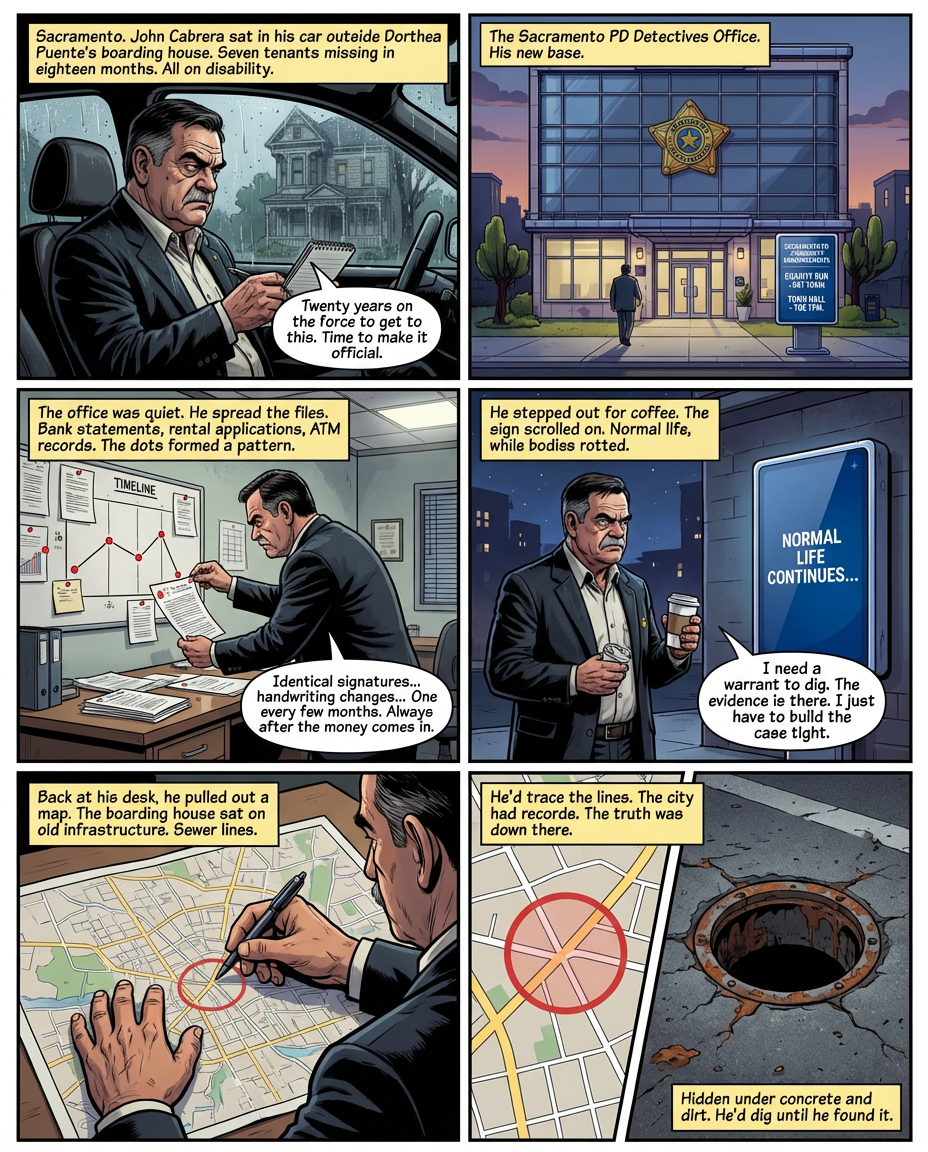
John Cabrera sat in his car outside the boarding house, scanning his notes one more time. Seven tenants missing in eighteen months. All on disability checks. All gone without a trace. He'd spent twenty years on the force to get to this moment—exposing the truth about what Dorothea Puente was really doing to those people. He turned the key and pulled away from the curb. The Sacramento Police Department Detectives Office would be his base now. Time to make this official. The office was quiet when he arrived, just the hum of fluorescent lights overhead. Cabrera spread his files across the desk in neat rows. Bank statements showing identical signatures that changed after disability increases. Rental applications with handwriting that shifted midstream. ATM records for people who'd supposedly moved to Mexico. He pinned a timeline to the wall, marking each disappearance with a red dot. The dots formed a pattern—one every two to three months, always after money came in. His gut had been right all along. Now he just needed to prove it. He stepped outside for coffee and spotted the electronic sign near the station entrance. Bright LED letters scrolled community announcements across the display. A charity run. A town meeting. Normal life continuing while bodies rotted somewhere under Puente's garden. Cabrera crushed his cup and headed back inside. He'd need a warrant to dig up that property. The evidence was there—in the files, in the signatures, in the money trail. He just had to build the case tight enough that no judge could say no. Twenty years had taught him patience, but this was different. Every day he waited meant Puente could disappear. Or find another victim. Back at his desk, Cabrera pulled out a street map and circled the boarding house location. The property sat above old infrastructure—water mains, gas lines, access pipes corroded from decades of use. If Puente had buried bodies, she'd need soft ground, places already disturbed. He traced the sewer lines with his finger, noting where they ran beneath her yard. The city had records of every pipe, every access point. He'd request those tomorrow, add them to his case file. The truth was down there somewhere, hidden under concrete and dirt. He'd dig until he found it.
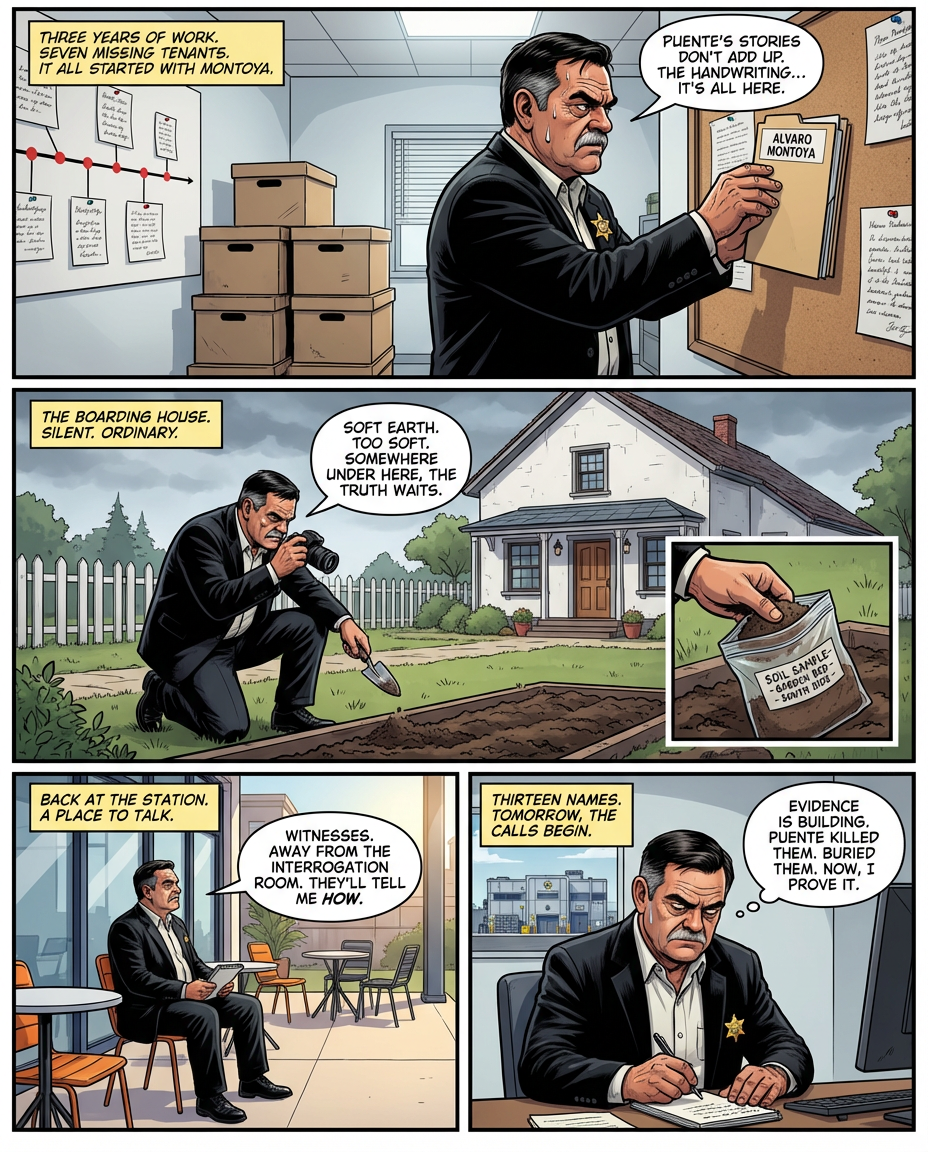
Cabrera pulled the first box from his trunk and carried it up the station steps. His arms strained under the weight—three years of documentation, all leading to this moment. He set it down on his new desk with a thud. The fluorescent lights buzzed overhead as he started unpacking. Bank statements went in one pile, rental applications in another. He'd need to organize everything before he could brief the captain. His fingers found the file on Alvaro Montoya first—the man who started it all. Three weeks gone, four different stories from Puente about where he went. Cabrera opened the folder and smoothed out the papers inside. The handwriting samples told the real story. He pinned them to the board above his desk, then stepped back to look. This was just the beginning. He had six more boxes in the car. By noon, all seven boxes lined the wall behind his desk. Cabrera stood in the center of his workspace and studied what he'd built. The timeline stretched across the wall, red dots marking each disappearance. Below that, the handwriting samples for all seven missing tenants. He needed to see the boarding house again—the white single-story building where it all happened. His gut told him the evidence was there, buried somewhere on that property. He grabbed his keys and headed for the door. The captain could wait. First, he needed to walk the grounds one more time, map out where the soft earth was, where someone could dig without being seen. The building sat quiet when he arrived, its white exterior clean and ordinary. Nothing about it suggested death. Cabrera walked the perimeter slowly, noting the garden beds, the back patio, the narrow strip of yard along the fence. Somewhere under his feet, the truth waited. He paced the length of the boarding house three times, measuring distances with his steps. The garden bed on the south side was freshest—dark soil, recently turned. He crouched and pressed his palm against the earth. Soft. Too soft for a garden that hadn't been planted in weeks. He took photos from six angles, then sketched the layout in his notebook. When he got back to the station, he'd need somewhere secure to store physical evidence once the warrants came through. The Sacramento PD had an evidence storage building he could access. He'd reserve space there tomorrow. Right now, he needed samples—soil, measurements, anything that would hold up in court. Cabrera pulled plastic bags from his jacket and filled three with dirt from different spots along the fence line. He labeled each one with the date and location. This was how cases got built—one piece at a time, each detail documented and locked down. He stood and brushed the dirt from his hands. The boarding house stared back at him, white and silent. Soon it would give up its secrets. Back at the station, Cabrera found a covered patio behind the building. Chairs and tables sat empty in the afternoon sun. He'd need this space soon—a place to interview neighbors, former tenants, anyone who'd seen something at that boarding house. People talked more freely outside, away from the pressure of interrogation rooms. He tested one of the chairs, solid metal. Good. He'd bring witnesses here, one at a time, and fill in the gaps. The paper trail told him what happened, but witnesses could tell him how. He walked back inside and made a list in his notebook—thirteen names of people who'd lived near the property during the disappearances. Tomorrow he'd start making calls. The evidence was building, piece by piece. Three years of work, all pointing to one truth. Puente had killed those tenants, buried them somewhere on that property, and kept cashing their checks. Now Cabrera just had to prove it.
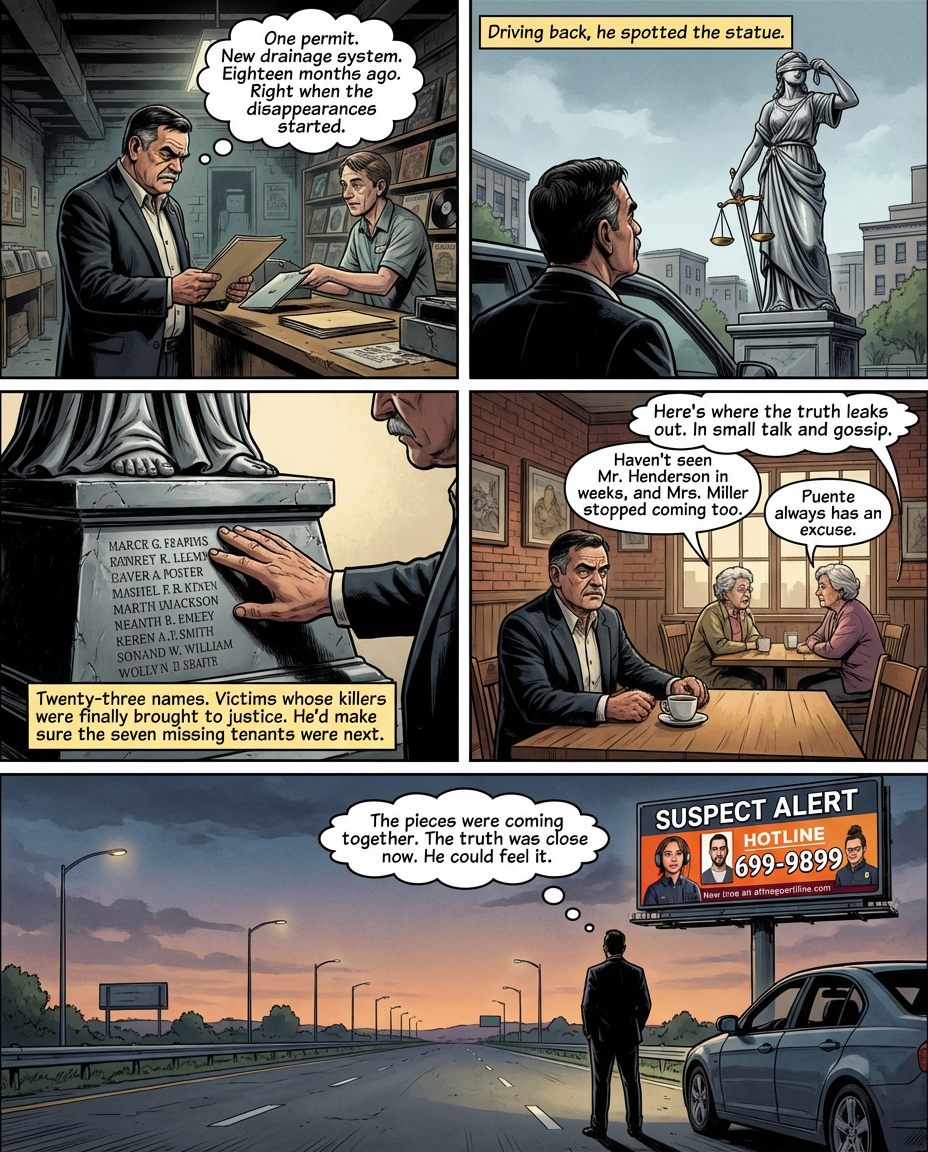
Cabrera stood at the records counter in the basement of City Hall, waiting for the clerk to return. He'd requested every permit filed for the boarding house in the past five years—plumbing, electrical, anything that required digging. The clerk appeared with a thin folder and slid it across the counter. Cabrera flipped it open. One permit, eighteen months ago, for a new drainage system in the backyard. Right when the disappearances started. He photographed every page, then headed back to the station. Sacramento kept everything on file, every pipe and wire that ran under the city. That's what he needed—proof that Puente had access to disturbed ground, places where bodies could be hidden without leaving obvious signs. The city's infrastructure gave him the map. Now he just had to match it to the bodies. He drove past the courthouse on his way back, then slowed when he spotted the statue. A metal figure of Lady Justice stood in the plaza, but something was different about this one. She was lifting her blindfold with one hand, looking down at names engraved on the base. Cabrera pulled over and got out. He walked closer and read the inscription—victims whose killers had been brought to justice after years of investigation. The names stretched around all four sides. He counted twenty-three. Each one represented someone who'd refused to let the truth stay buried. That's what separated good cases from closed cases—someone who wouldn't quit digging. Cabrera touched the cold metal base, then walked back to his car. The boarding house had bodies somewhere. The permit proved Puente had dug up that yard right when tenants started vanishing. Tomorrow he'd pull the infrastructure maps and mark every access point, every soft spot where ground had been disturbed. Then he'd get his warrant. Those seven missing tenants would get their names on a list too—not as victims who disappeared, but as proof that someone finally exposed the truth. Cabrera needed more than permits and paperwork. He needed voices. People who'd seen things, noticed changes at the boarding house. The community center sat three blocks from the station, brick walls with wide windows facing the street. He parked and went inside. The place smelled like coffee and old wood. A bulletin board covered one wall, stuffed with notices and flyers. Tables filled the main room, some occupied by residents eating lunch and talking. Cabrera grabbed coffee and sat near two older women discussing neighborhood news. One mentioned the boarding house—said tenants used to visit the center every week, then stopped coming. The other nodded and said Puente always had an excuse. Cabrera listened, memorizing details. This was where he'd find the gaps in Puente's stories. He finished his coffee and stood. The community center would be his second office now—a place where the truth leaked out in small talk and gossip, where people remembered what they'd seen before they forgot it mattered. Back at the station, Cabrera made calls for the rest of the afternoon. He needed more eyes on this case, more people willing to step forward. By evening, he'd arranged for a billboard to go up on the main highway. Large photos of the missing tenants would cover the display, with a metal hotline number bolted across the bottom. Anyone who'd seen something could call in. The department resisted at first—said it would draw attention before they had solid evidence. Cabrera pushed back. Attention was exactly what he needed. Someone out there knew something, saw Puente digging at odd hours, noticed tenants who stopped coming to the community center. The billboard would shake those memories loose. He hung up the phone and looked at his timeline again. The pieces were coming together—permits, witnesses, financial records. Sacramento had given him everything he needed to build this case. The infrastructure maps would arrive tomorrow. Then he'd mark every disturbed section of ground on that property and get his warrant. The truth was close now. He could feel it.
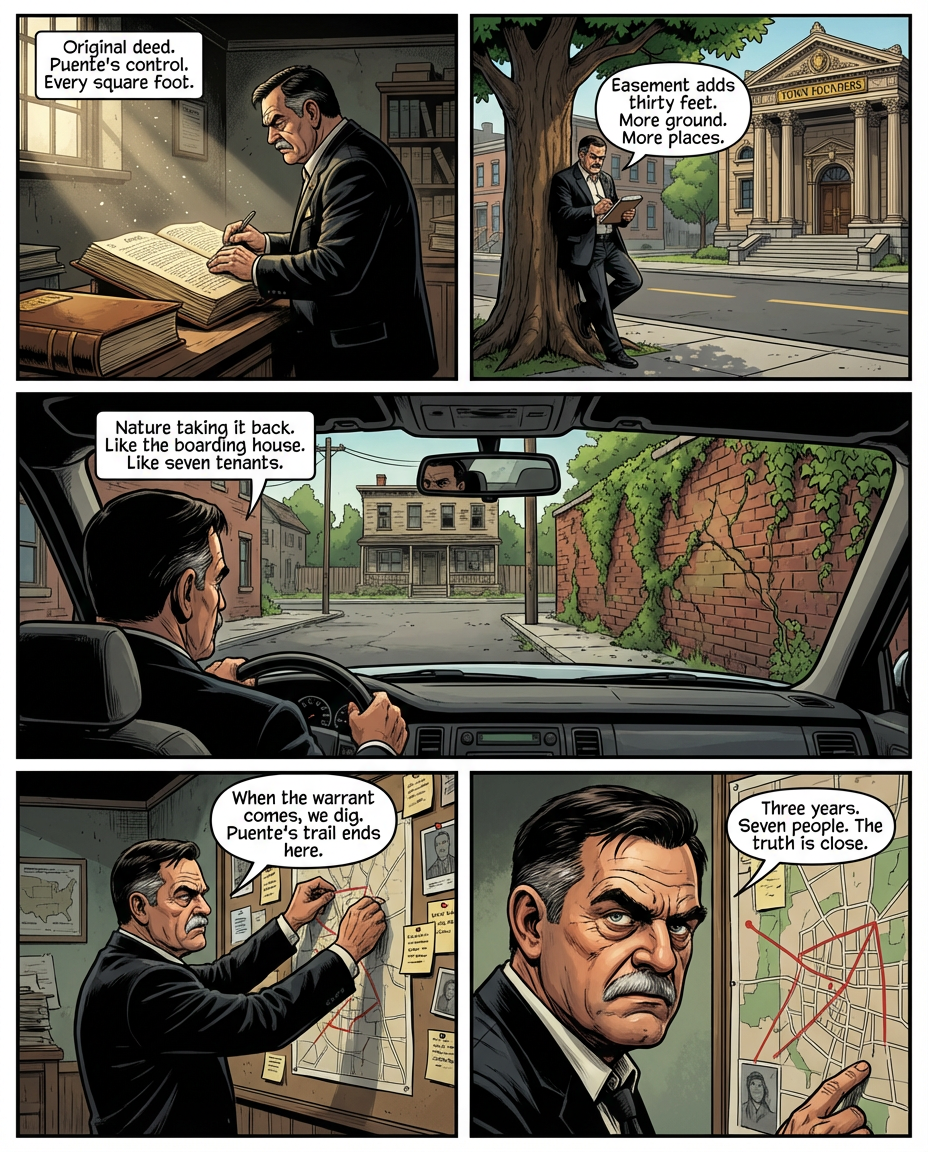
Cabrera drove to the property records office on J Street, parked, and walked inside. The building smelled like dust and copier toner. He requested the original deed for the boarding house and waited at the counter. The clerk returned with a leather-bound book, pages yellowed with age. Cabrera flipped through until he found what he needed—the property lines, exact measurements, every square foot Puente controlled. He pulled out his notebook and copied the dimensions. The yard was bigger than it looked from the street, extending past the fence line into an easement the city had abandoned years ago. More ground to search. More places to hide bodies. He photographed the deed pages, closed the book, and slid it back across the counter. Now he knew exactly where to dig when the warrant came through. Outside, Cabrera stood on the sidewalk and studied his notes. A tree stretched overhead, its branches thick enough to block the afternoon sun. He leaned against the rough bark and reviewed the property measurements again. The easement added another thirty feet to the search area. That meant more time, more manpower, more resistance from the captain. He circled the dimensions in his notebook. The courthouse stood across the street, its tall columns and wide steps crowding the block. A brass plaque gleamed near the entrance. Cabrera had walked past it a hundred times but never stopped to read it. Now he crossed the street and climbed three steps to get closer. The plaque honored the town's founders—names and dates from a century ago. People who built something that lasted. That's what this case needed to be. Something that lasted beyond headlines and politics. He walked back to his car and sat behind the wheel. The boarding house was eight blocks away. He could see it one more time before heading to the station. The route took him down a side street where brick walls rose on both sides. Ivy covered one section, green tendrils pushing through cracks in the mortar. The building looked abandoned, windows dark and doors locked. Nature was taking it back, one vine at a time. Cabrera slowed and looked closer. The ivy had split the bricks in places, roots working into gaps the city never bothered to fix. That's what happened when people stopped paying attention—things fell apart quietly, piece by piece. The boarding house was the same. Seven tenants gone, and nobody noticed until he started asking questions. Back at the station, Cabrera pinned the property measurements to his timeline. The easement changed everything. It gave Puente space to work without neighbors watching. The yard extended into ground the city forgot about years ago—no foot traffic, no maintenance crews, just dirt and weeds. He marked the area on his map with red ink. When the warrant came through, that's where they'd start digging. The infrastructure maps would arrive tomorrow, and he'd match them against the deed. Every pipe, every drainage line, every section of disturbed earth. Puente thought she was careful, but she'd left a trail. The permits, the signatures, the ground itself. Cabrera closed his notebook and looked at the wall. Three years of work, seven missing people, and finally a clear picture of where the bodies were buried. The truth was close now. He just had to keep pushing until it broke through.
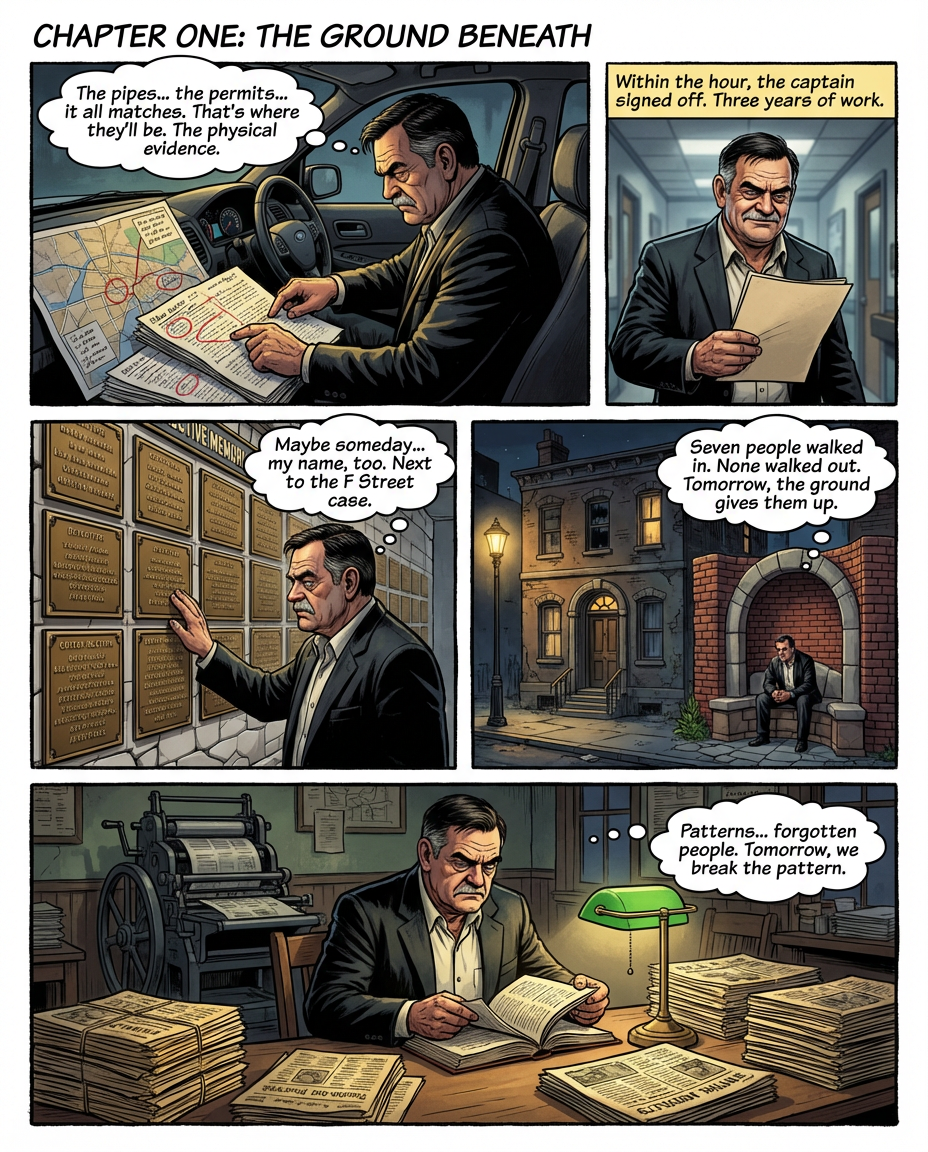
Cabrera sat in his car outside the station and opened the envelope from the city's infrastructure department. The maps had arrived early. He spread them across his steering wheel, tracing the drainage lines with his finger. Every pipe matched the permit dates—new lines ran exactly where Puente had requested work eighteen months ago. He pulled out his property measurements and laid them beside the infrastructure maps. The easement lined up perfectly with the new drainage system. She'd dug up that entire section of ground right when the first tenant disappeared. He circled three intersecting points where the pipes met. That's where they'd find the bodies. Cabrera photographed everything, then tucked the maps back into the envelope. This was it—the physical evidence linking Puente's construction work to the missing tenants. He started the engine and headed back inside. The captain would have to approve the warrant now. The captain signed off within the hour. Cabrera walked back to his desk with the approved warrant, feeling lighter than he had in months. Three years of work had finally paid off. He made the calls—forensics, ground-penetrating radar, a full excavation team for tomorrow morning. Every piece was falling into place. On his way out, he passed the memorial wall in the lobby. Bronze plaques covered the stone surface, each one marking a detective who'd cracked a case everyone else had given up on. Names etched into metal, cases that seemed impossible until someone refused to quit. Cabrera stopped and read a few. Most took years to solve, same as his. He touched the cold bronze, then walked outside. Tomorrow they'd dig. Tomorrow they'd find the bodies. And maybe someday his name would be up there too, next to a case about seven tenants who disappeared from a boarding house on F Street. He drove to the boarding house one last time before everything changed. The excavation would draw news crews and crowds, turn the place into a spectacle. Tonight it was still quiet. He parked across the street and sat watching the windows. A curved stone seat sat near the entrance, tucked into a corner of the brick wall. Cabrera had walked past it dozens of times during his visits. Now he got out and sat down, feeling the cold stone through his jacket. From here he could see the whole front of the building—the windows where tenants used to look out, the door where Puente stood and lied to his face. Seven people had walked through that entrance and never came back out. But tomorrow the ground would give them up. Tomorrow their families would finally know. Cabrera stood and walked back to his car. The warrant sat on his passenger seat, signed and ready. Three years of documentation, permits, and gut instinct had led to this moment. He started the engine and pulled away. By this time tomorrow, everyone would know he'd been right all along. On his way home, Cabrera stopped at the newspaper office. The building's front windows showed the printing press inside, metal gleaming under overhead lights. Stacks of archived papers lined the back wall, decades of local news preserved in yellowing pages. He'd been here before, searching for mentions of the missing tenants. Now he wanted to check one more thing—historical records of similar cases, patterns he might have missed. The clerk recognized him and pulled out three boxes without asking. Cabrera sat at a table and flipped through editions from twenty years back. Nothing matched Puente's methods exactly, but the pattern was there—people on the edges, forgotten by the system, disappearing without anyone asking questions. He closed the last paper and stood. Tomorrow would break that pattern. The excavation would prove that someone had been paying attention all along. The truth was finally coming up from the ground.
The excavation team didn't show up. Cabrera stood in the boarding house yard at six in the morning, warrant in hand, watching the empty street. He called the captain twice—no answer. At seven, a patrol officer delivered the message: budget concerns, manpower shortage, the dig was postponed indefinitely. Cabrera crumpled the note and shoved it in his pocket. Three years of work, and they were stopping him now, right at the edge of proof. He walked to his car and sat behind the wheel, staring at the boarding house. The ground held everything he needed, and he couldn't touch it. The warrant would expire in forty-eight hours. By then, Puente would know something was coming. She'd find a way to cover her tracks, just like she always did. Cabrera drove through town, not ready to go back to the station. Two blocks from the courthouse, he spotted orange reflective barriers blocking off a section of road. The plastic jersey barriers sat stacked three high, their bright stripes redirecting traffic down a side street. A construction crew had torn up the pavement weeks ago and never finished. The barriers just sat there, keeping people away from nothing. Cabrera pulled over and stared at them. That's exactly what the department had done to him—put up barriers between him and the truth, sent him chasing in circles while the real evidence stayed buried. He gripped the steering wheel until his knuckles went white. He drove back to the station and walked straight to his desk. The infrastructure maps, the property records, the handwriting samples—everything sat exactly where he'd left it. Three years of documentation that meant nothing if he couldn't dig. Cabrera opened his notebook and looked at the circled intersections where the drainage pipes met. Seven bodies were down there. Seven families waiting for answers. The captain would let the warrant expire, blame the budget, and move him to another case. Puente would cash another social security check while the ground kept its secrets. Cabrera closed the notebook and locked it in his desk drawer. The truth was six feet down, and he couldn't reach it. For the first time in three years, he felt like he'd already lost. He left the station and walked until his legs ached. The newspaper office sat at the end of the block, its brick facade darker than he remembered. An old iron bench sat near the entrance, its ornate legs crusted with years of city grime. Cabrera dropped onto the weathered seat and stared at the pavement. The metal was cold through his jacket. Three years he'd spent building this case—every permit, every signature, every circled date in his notebook. All of it sitting in a locked desk drawer while Puente walked free. The warrant would expire tomorrow. After that, he'd need a new reason to dig, new evidence the captain would accept. But there wasn't any new evidence. Everything he had pointed to the same conclusion, and it still wasn't enough. He stood and walked back to his car. The case was over. Puente had won. A metal trellis covered in ivy caught his eye as he passed the newspaper office again. The climbing vines cast shadows across the brick wall, moving in the wind. Cabrera stopped and watched the pattern shift—light, then dark, then light again. Nothing stayed still. Nothing stayed buried forever. He thought about the construction barriers redirecting traffic, the bench weathered by years of rain and dirt. Things changed when you stopped looking at them. The warrant would expire, but the property records wouldn't disappear. The infrastructure maps would still show where the pipes intersected. The handwriting samples would still prove fraud. He pulled his keys from his pocket and got in his car. The captain had shut him down today, but shutting down wasn't the same as stopping. Cabrera started the engine and pulled away from the newspaper office. He'd find another way to reach the truth. He always did.
Play your story to life
Storycraft is a mobile game where you create AI characters, craft items and locations to build their world, then discover what direction your story takes. Download the iOS game for free today!
Download for free