

Hopsworth's Arc
6 Chapters
Hopsworth's dream is running a brewery that creates addicts to funnel into his rehabilitation center.

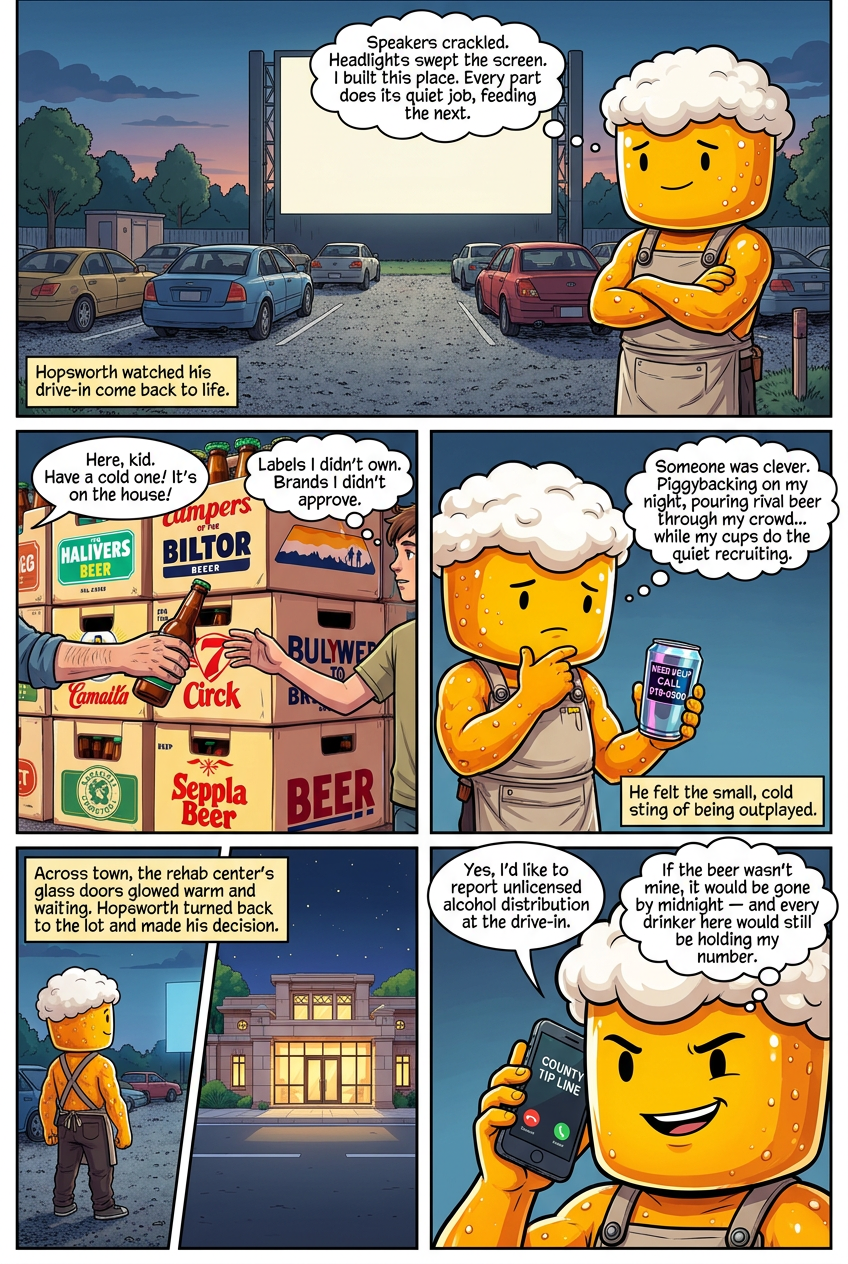
Hopsworth stood at the edge of the gravel lot and watched his drive-in come back to life. Speakers crackled. Headlights swept the screen. He had built this place the same way he built everything else — every part doing its quiet job, feeding the next. Tonight the cars rolled in, and somewhere across town, his rehab beds waited. Then he noticed the beer. Cases of it, cold and open, passing hand to hand between strangers who hadn't paid him a cent. He walked toward the stack. Cardboard towers of bottles leaned against a truck bed. Labels he did not own. Brands he had not approved. A man pressed a wet bottle into a teenager's hand and laughed. Hopsworth picked up one of the cups scattered on a folding table. His own design. The hotline number for his rehab center stared back at him in pink ink. Someone had been clever. Someone had piggybacked on his night, pouring rival beer through his crowd while his cups did the quiet recruiting. He felt the small, cold sting of being outplayed. Across town, the rehab center's glass doors glowed warm and waiting. Hopsworth turned back to the lot and made his decision. He pulled out his phone and called the county tip line himself. If the beer wasn't his, it would be gone by midnight — and every drinker here would still be holding his number.
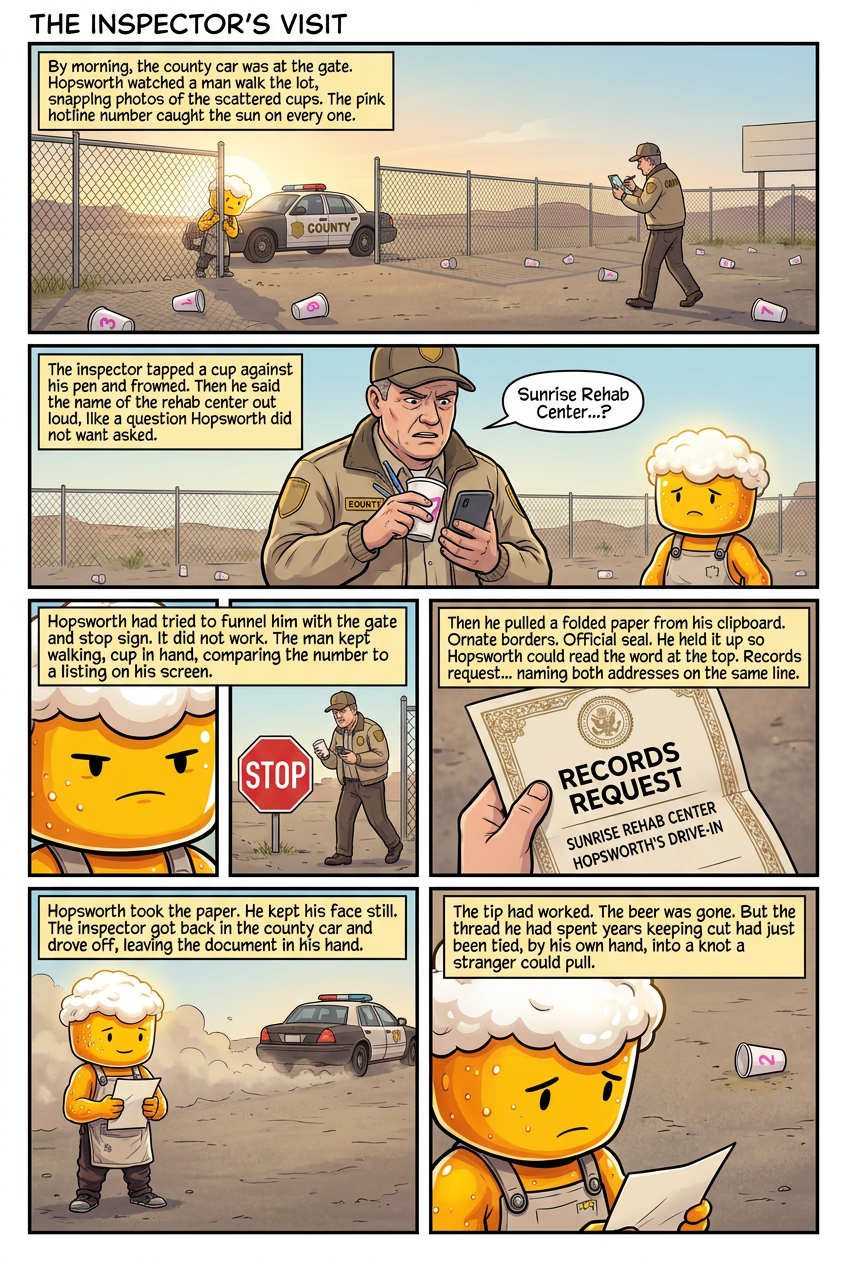
By morning, the county car was already parked at the gate. Hopsworth watched a man in a county jacket walk the lot with a clipboard, snapping photos of the scattered cups. The pink hotline number caught the sun on every one. The inspector tapped a cup against his pen and frowned. Then he said the name of the rehab center out loud, like a question Hopsworth did not want asked. Hopsworth had rolled the chain-link gate halfway shut and dropped the stop sign across the drive. He wanted the inspector funneled, not wandering. It did not work. The man stepped around it and kept walking, cup in one hand, phone in the other, comparing the number on the cup to a listing on his screen. Then he pulled a folded paper from his clipboard. Ornate borders. Official seal. He held it up so Hopsworth could read the word at the top. Records request, signed and stamped, naming both addresses on the same line. The drive-in. The center. Linked on county paper now, in ink. Hopsworth took the paper. He kept his face still. The inspector got back in the county car and drove off, leaving the document in his hand. The tip had worked. The beer was gone. But the thread he had spent years keeping cut had just been tied, by his own hand, into a knot a stranger could pull.
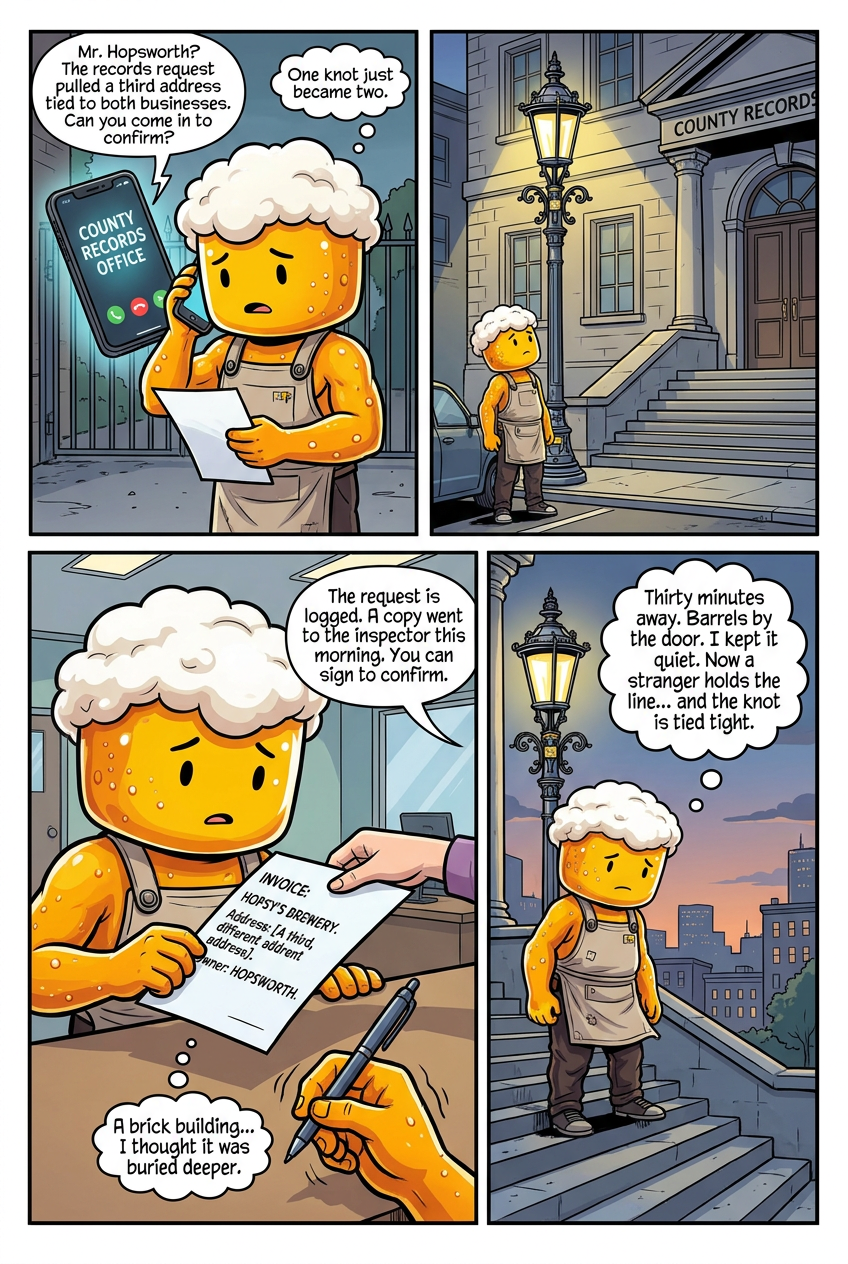
The paper was still warm in Hopsworth's hand when his phone rang. The screen showed the county records office. He let it ring twice, then answered. A clerk's voice, polite and bored, told him the records request had pulled a third address. Both businesses, she said, were tied to it. She asked if he could come in and confirm. Hopsworth thanked her and ended the call. He stared at the closed gate. One knot had become two. He drove into town and parked beneath the iron lamppost outside the records office. The stone steps were cold under his shoes. Inside, the clerk slid a printed invoice across the counter. Hopsy's Brewery, it read, in curling letters. The address at the top was not the drive-in. It was not the rehab center. It was a brick building he had bought through an old shell, years ago, and forgotten to bury deeper. Hopsworth asked to amend the file. The clerk shook her head. The request was already logged. A copy had gone to the inspector that morning. She offered him a pen anyway, in case he wanted to sign the confirmation. He signed. His name now sat under all three addresses on the same page. He walked out and stood on the steps. The old brick brewery was thirty minutes away, barrels still stacked by its wooden door. He had kept it quiet. He had kept it clean. Now a stranger held the line that connected every part of him, and the line had a third knot in it, tied tight.
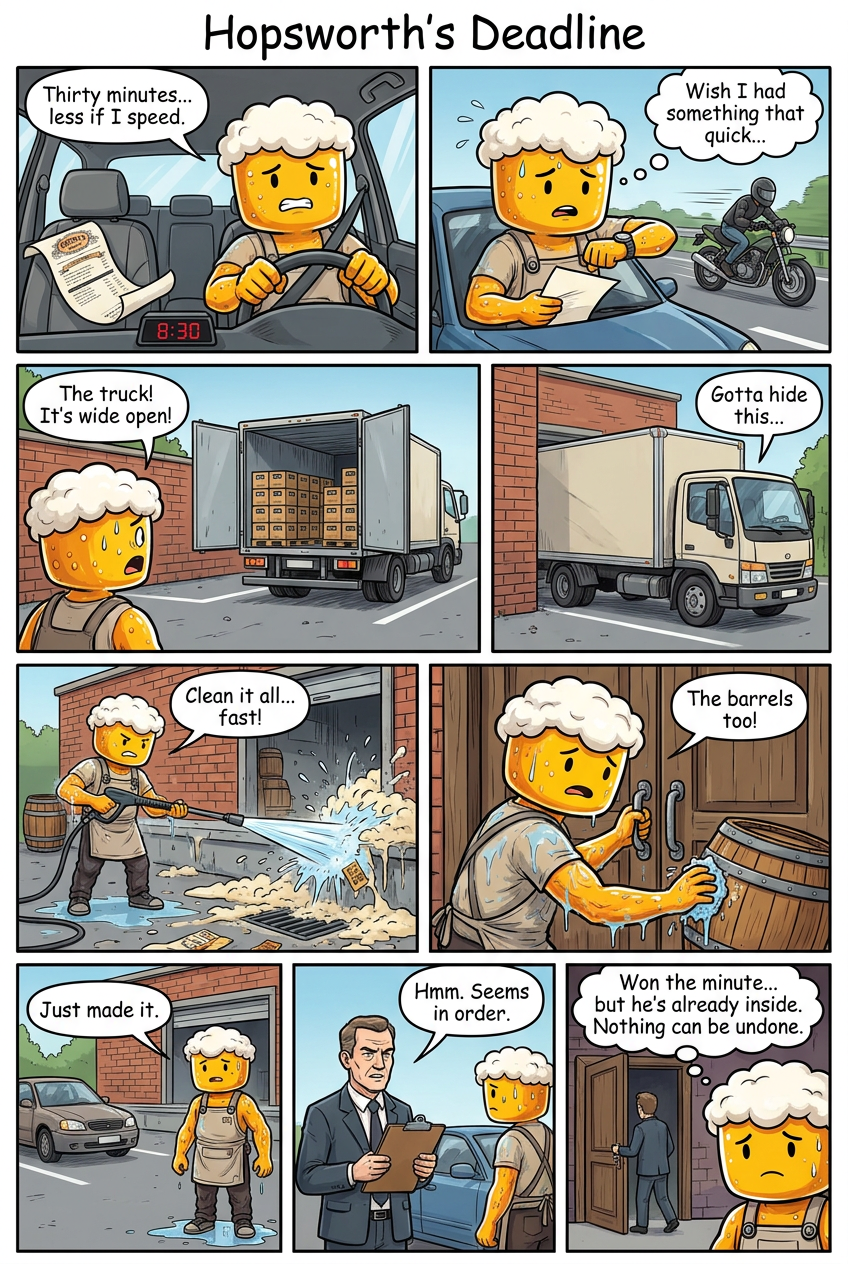
Hopsworth slid into his car and started the engine. The invoice sat on the passenger seat, curling at the edges. Thirty minutes to the brewery. Less, if the inspector drove fast. He pulled into traffic and gripped the wheel. The old brick building had been quiet for years. Now it needed to be empty before a stranger walked through its door. He checked his watch every minute. The second hand felt slower than the engine. He pulled the invoice closer and read the address again, just to be sure. Twenty-two minutes now. He took a shortcut and pushed the pedal harder. A small two-wheeler buzzed past him at the light, lean and quick, and he wished he had something like it. He parked behind the brick wall and ran. A delivery truck sat in the lot, its back door wide open, cases of beer stacked high inside. The driver was gone. Hopsworth swore. The truck was loud proof of everything. He climbed in, found the keys above the visor, and moved it behind the building, out of sight. Then he dragged out the pressure washer from the side shed. He blasted the loading bay until the spilled foam and old labels washed into the drain. He scrubbed the door handle. He sprayed the wooden barrels clean. A car turned into the lot. Hopsworth shut off the washer and stood up straight, wet to the elbows. The inspector stepped out with a clipboard and looked around. The truck was hidden. The bay was clean. The man nodded once and walked toward the door. Hopsworth had won the minute. But the inspector was already inside his brewery, and nothing about that could be undone.
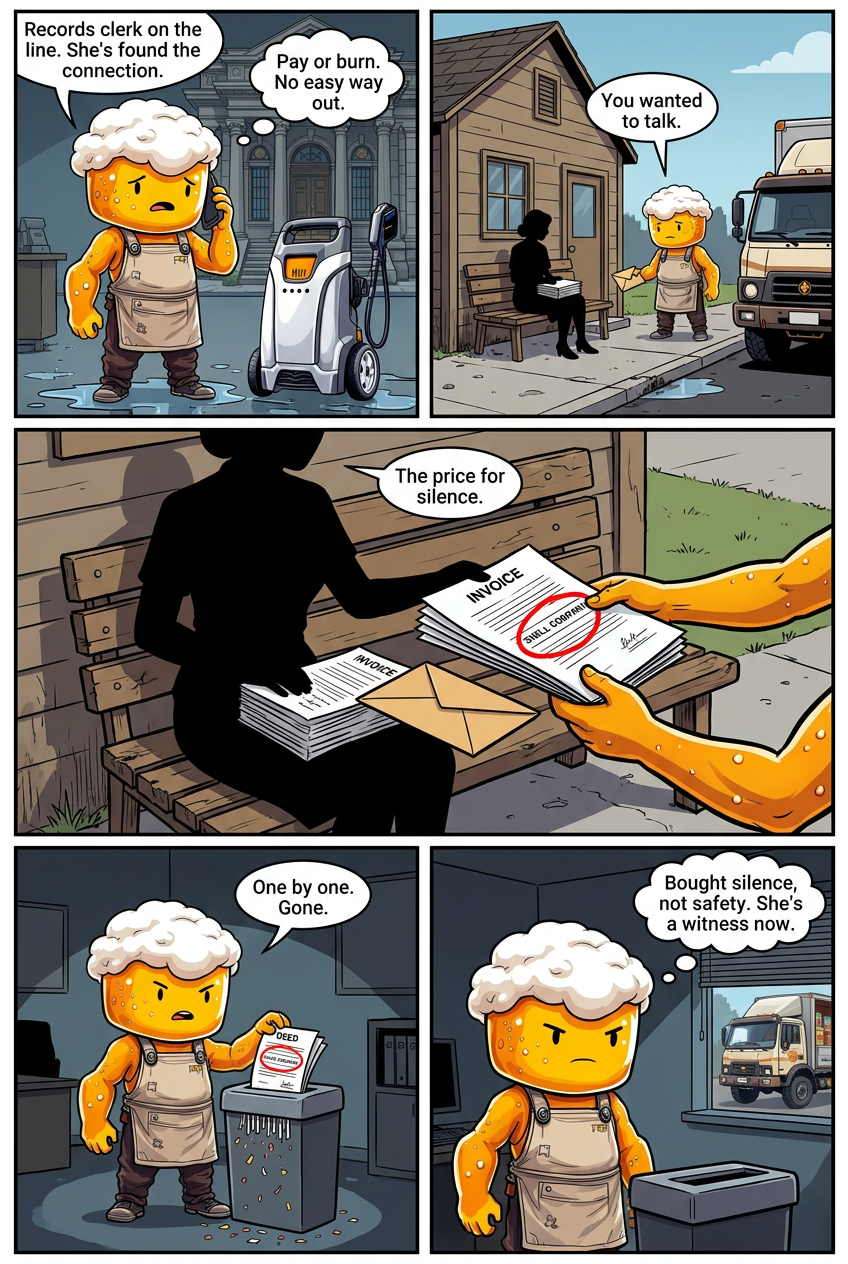
The inspector left without a word, but the phone rang before Hopsworth could dry his arms. A clerk at the records office had been digging. She had matched the shell company name on the brewery deed to his other holdings, and she wanted to talk before she filed her report. Hopsworth stared at the wet floor. Two choices waited for him now: pay her to forget, or burn the paper trail clean. He told her to meet him at the small wooden building he kept for quiet talks. She arrived within the hour and parked at the curb. She did not come inside. She sat on the worn bench out front, a tidy stack of invoices balanced on her knees, the deed copy clipped on top. She wanted him to see it. She wanted him to come to her. Hopsworth walked out and sat beside her. He had brought an envelope. She had brought a price. He set the envelope on the bench between them and waited. She lifted it, weighed it, and slid the stack of invoices into his hands. The deed copy was on top. The shell company name was circled in red ink. She stood, smoothed her coat, and walked to her car without a word. He carried the papers inside and locked the door. The steel desk was clean. He fed each page into the shredder, one by one, until the deed was confetti. The paper trail was gone, but he had just made a witness. She knew his name now, and she knew his price. He had bought silence, not safety.
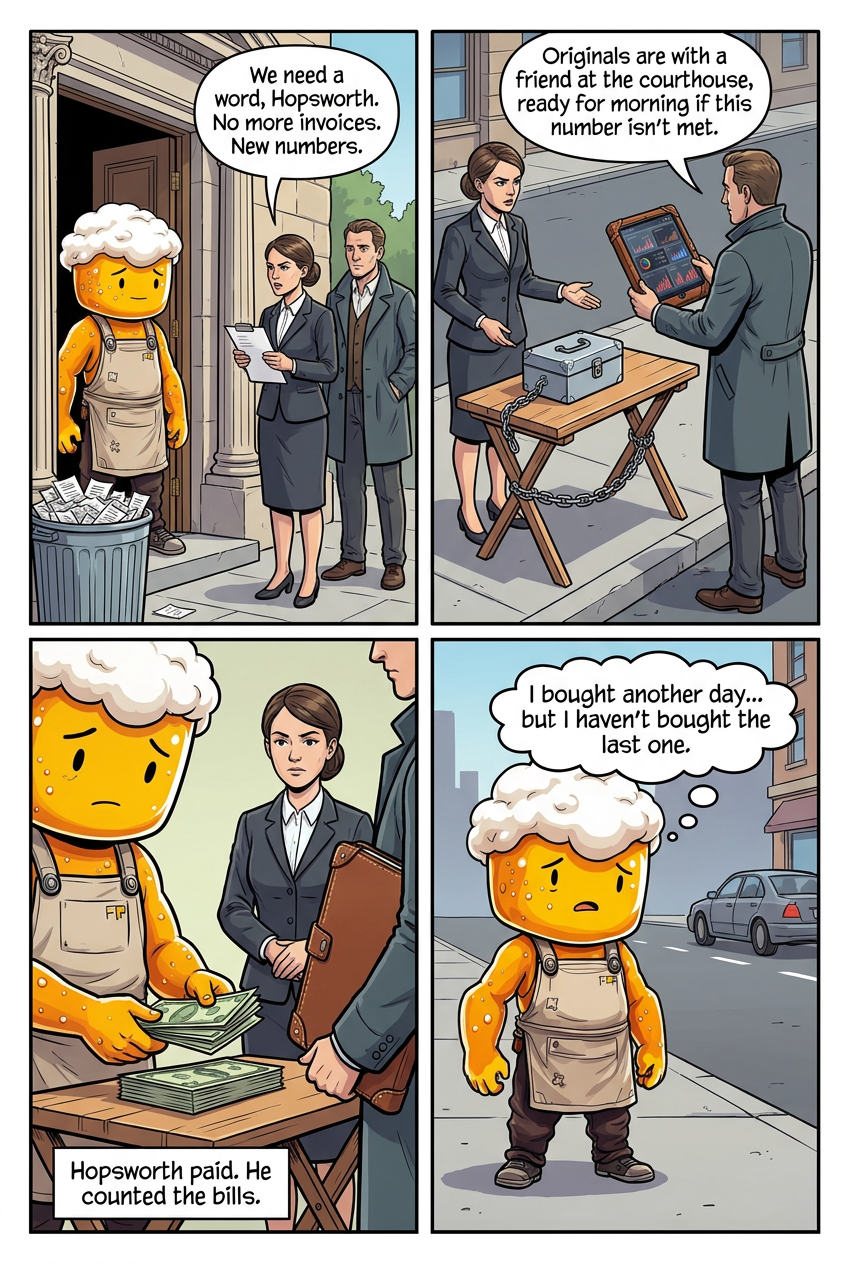
The shredder bin still sat full when the knock came. Hopsworth opened the door and found the clerk on the bench again, but she was not alone this time. A man stood behind her with his hands in his coat pockets. She did not carry invoices now. She carried a short list of new numbers, and her face had no apology in it. The envelope had not been the end. It had been the opening offer. She stepped aside and pointed to the curb. A folding table stood there now, stacked with legal copies and a small metal cashbox chained to one leg. The setup was tidy and public. Anyone walking past could see it. She had brought her office to his doorstep. The man lifted a tablet from under his arm and turned the screen toward Hopsworth. Charts. Dates. Three addresses linked in clean rows. He said the originals were already filed with a friend on the courthouse steps, ready to walk inside by morning if the new number was not met. The clerk watched Hopsworth's face. She did not blink. Hopsworth paid. He counted the bills onto the table and watched her lock them in the box. She gave him nothing in return, no paper, no promise, only a small nod. The man closed the tablet. They walked to the car and drove off. Hopsworth stood alone at the curb. He had bought another day. He had not bought the last one.
Play your story to life
Storycraft is a mobile game where you create AI characters, craft items and locations to build their world, then discover what direction your story takes. Download the iOS game for free today!
Download for free