

Me at 30's Arc
7 Chapters
Me at 30's dream is raising my two kids the best way I know how.

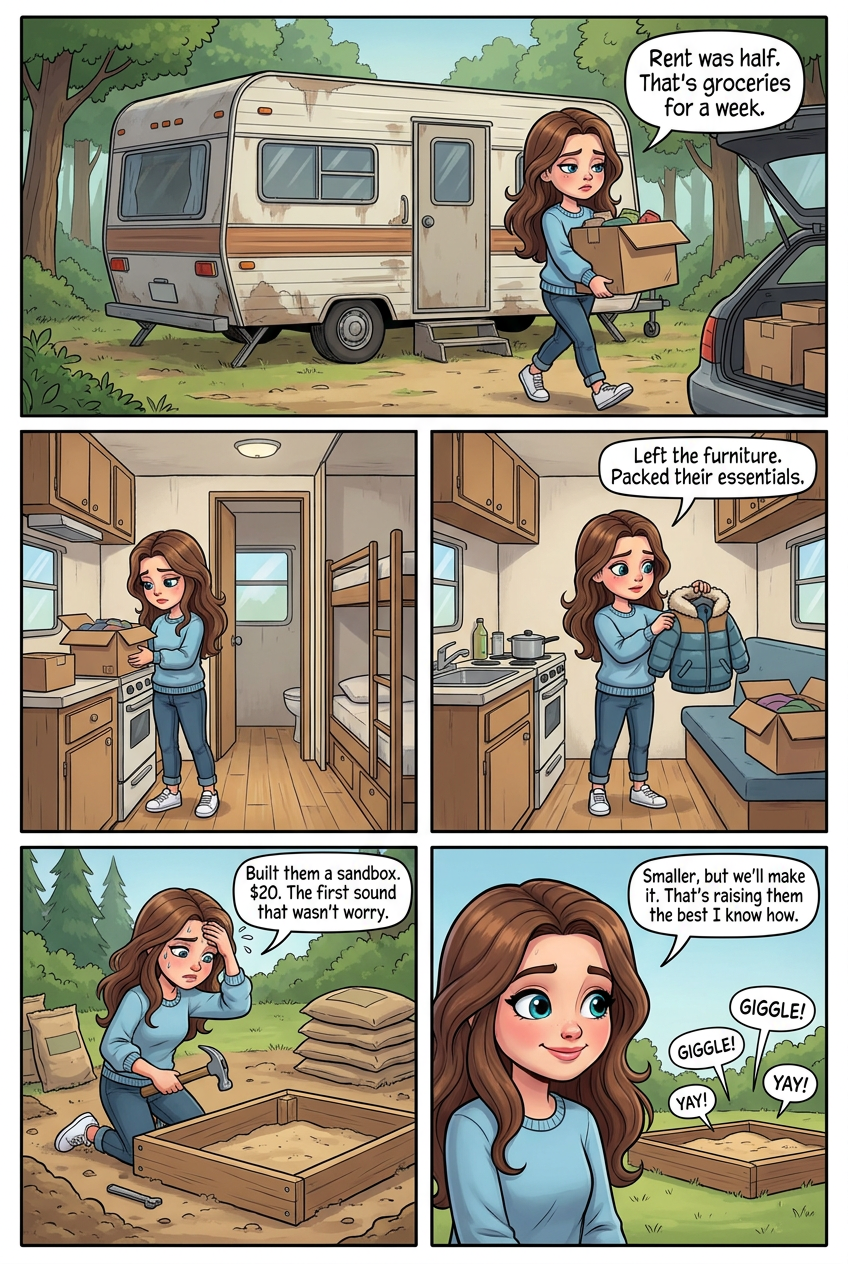
The trailer sat on bare dirt surrounded by trees. I carried the last box inside and set it on the floor. Two bedrooms, one bathroom, and a kitchen barely big enough to turn around in. The kids would share the smaller room. I'd take the other. Rent here was half what we'd been paying, and that difference meant groceries for a whole week. I unpacked the car in three trips. Everything we owned fit in the trunk and back seat. I'd left behind the couch, the dining table, the bookshelf. Furniture cost nothing compared to starting over. The kids' beds came in pieces I could carry. Their clothes filled two boxes. I'd packed their schoolbooks, their winter coats, and the stuffed animals they slept with. That was enough. Outside, I built them a sandbox using spare boards I found stacked behind the trailer. I hammered the corners together and filled it with sand from the hardware store. Twenty dollars. The kids came running when I called them over. They kicked off their shoes and climbed in. Their laughter was the first sound I'd heard all day that wasn't worry. I stood watching them dig and pour and build. The trailer was smaller than our old apartment. The land was raw and unfamiliar. But the budget was finally going to work. I could pay rent and still feed them. That was raising them the best way I knew how.
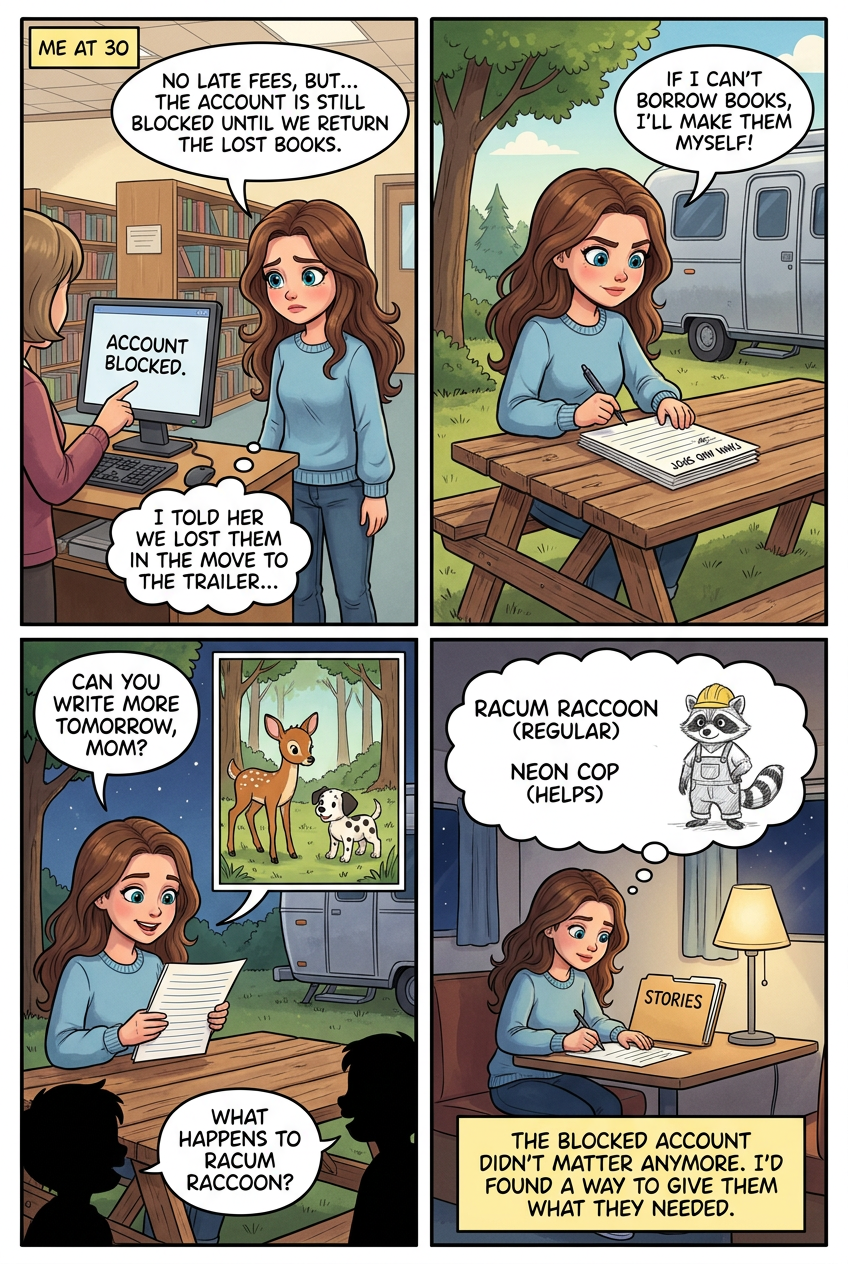
The library didn't charge late fees anymore, but they still wouldn't let us check out books until we returned the ones we'd lost in the move. I'd explained to the woman at the desk that we'd left them behind when we moved into the trailer. She said it didn't matter. The account was blocked. I walked back to the trailer and sat at the cedar picnic table we'd found left behind by the previous tenants. It sat under the trees near the sandbox. The kids were inside doing homework. I pulled out a stack of lined paper from their school supplies and wrote "Fawn and Spot" at the top. If I couldn't borrow books, I'd make them myself. I wrote about a fawn who got lost in the woods and a puppy named Spot who helped her find her way home. Then I started another one about a raccoon in overalls and a hard hat who built things and solved problems. The kids came outside when they finished their homework. I read them both stories at the picnic table. They asked if I could write more tomorrow. That night I made a list of new characters. Racum Raccoon became a regular. The Neon Cop showed up to help when things got dangerous. I kept the lined paper in a folder on the table. Every evening after work, I wrote another story. The kids stopped asking about the library. They wanted to know what happened next in the stories I was writing. The blocked account didn't matter anymore. I'd found a way to give them what they needed.
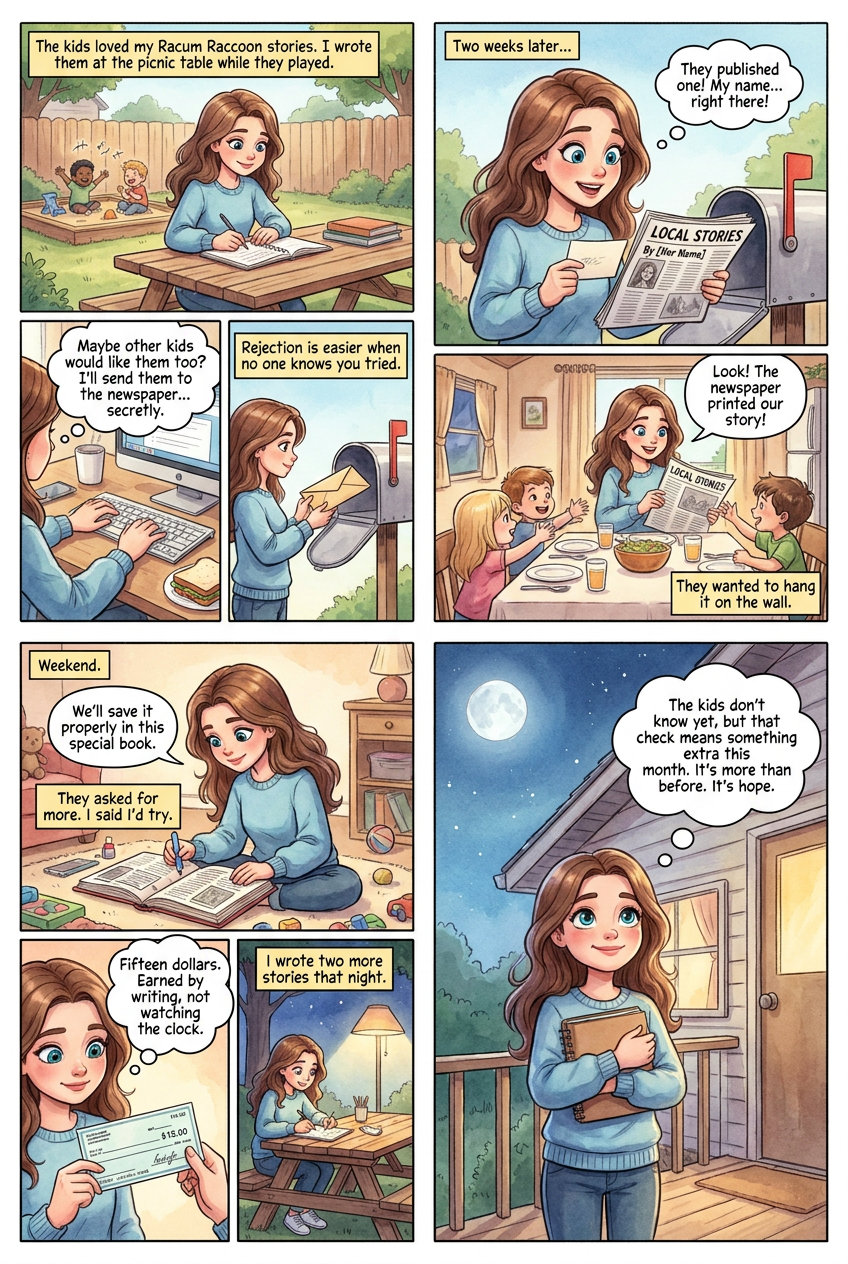
The kids asked for a new story about Racum Raccoon every night now. I wrote them after work, sitting at the picnic table while they played in the sandbox. But I started wondering if other kids might like them too. I typed out three stories on the computer at work during my lunch break and mailed them to a local newspaper that ran a children's section. I didn't tell anyone. The rejection would be easier to handle if no one knew I'd tried. Two weeks later I opened the mailbox and found a copy of the paper with a note clipped to it. They'd published one of my stories. My name was printed right there under the title. I showed the kids at dinner. They wanted to cut it out and hang it on the trailer wall. I said we should save it properly instead. That weekend I bought a scrapbook at the dollar store and glued the clipping onto the first page. The kids asked if I'd write more stories for the newspaper. I said I'd try. The newspaper sent a check three days later. Fifteen dollars. It wasn't much, but it was something I'd earned by writing instead of watching the clock at work. I deposited it and wrote two more stories that night. The kids didn't know yet, but that fifteen dollars meant I could give them something extra this month. Maybe not much. But more than before.
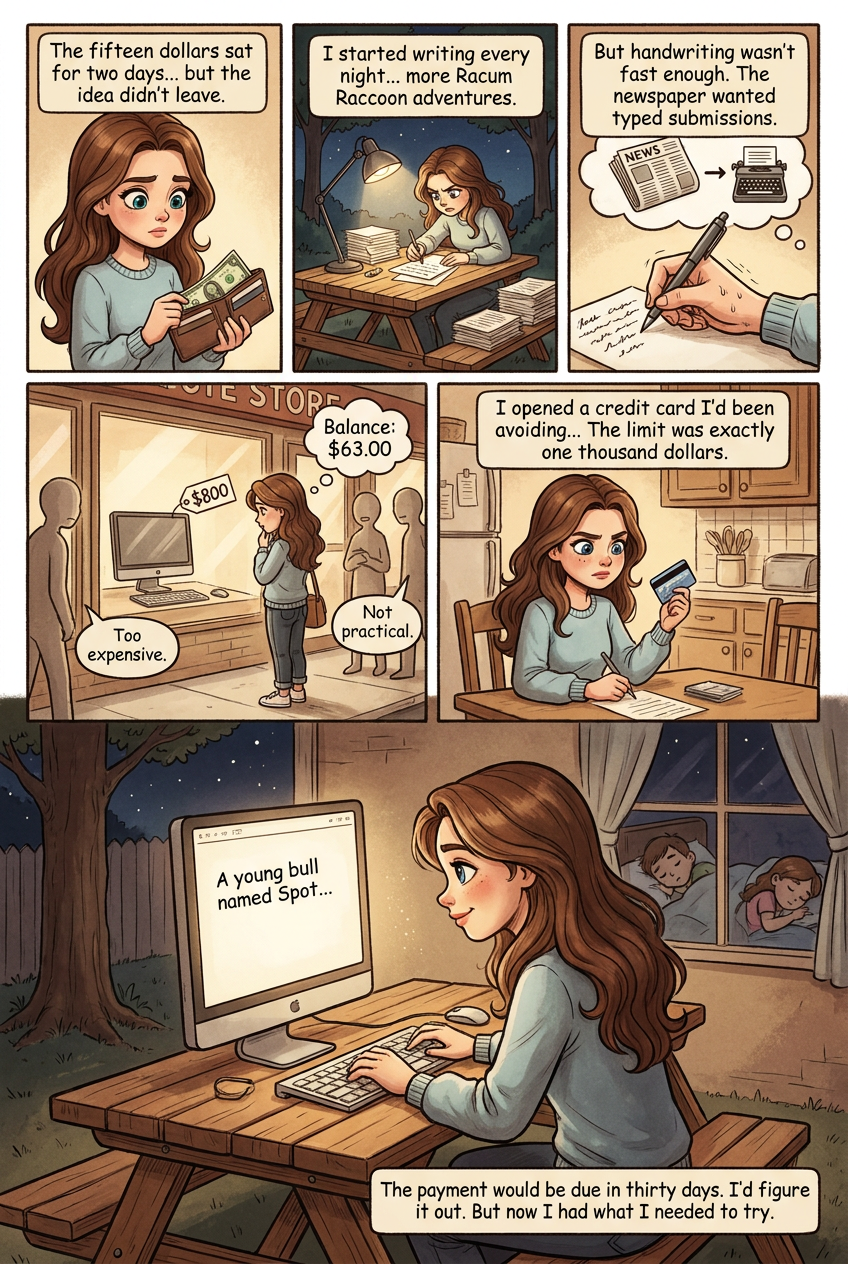
The fifteen dollars from the newspaper sat in my wallet for two days before I spent it on groceries. But the idea didn't leave. If one story could earn fifteen dollars, more stories could earn more. I started writing every night after the kids went to bed, filling pages with new adventures for Racum Raccoon and his friends. The stories piled up on the picnic table. But handwriting wasn't fast enough. The newspaper wanted typed submissions. At work I could only use the computer during lunch, and that wasn't my time to take. I needed one at home. The cheapest model I found cost eight hundred dollars. I had sixty-three dollars in my account after rent. Everyone I mentioned it to said the same thing. Too expensive. Not practical. Wait until you can afford it. I stopped mentioning it. I opened a credit card I'd been avoiding for two years. The limit was exactly one thousand dollars. I drove to the store on Saturday morning and bought the computer before I could talk myself out of it. The box barely fit in the back seat. The kids asked what it was. I said it was for writing stories. They wanted to see it right away. That night I set it up on the picnic table and typed my first story straight from my head. A young bull named Spot who got separated from his herd and had to find his way home. The keys clacked under my fingers. The words appeared on the screen faster than I could ever write by hand. I saved the file and turned off the machine. The payment would be due in thirty days. I'd figure it out the same way I always did. But now I had what I needed to try.
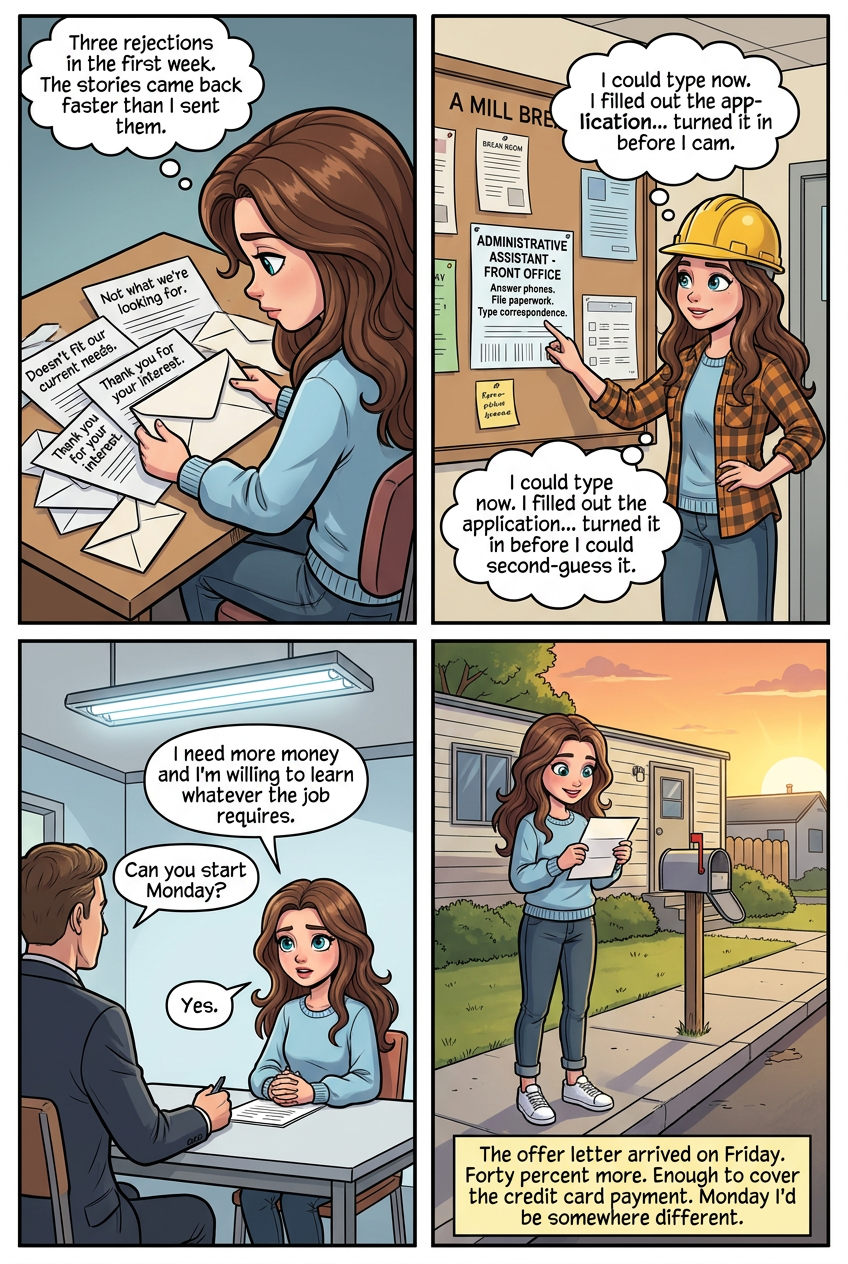
The stories came back faster than I sent them. Three rejections in the first week. The newspaper wanted more Racum Raccoon adventures, but the bigger magazines sent form letters. Not what we're looking for. Doesn't fit our current needs. Thank you for your interest. I kept my lunch break job at the mill, but I started watching the bulletin board near the break room. They posted openings every week. Most required experience I didn't have. Then I saw one for an administrative assistant in the front office. Answer phones. File paperwork. Type correspondence. I could type now. I filled out the application during my break and turned it in before I could second-guess it. The interview happened three days later in a small room with fluorescent lights and a table between us. The manager asked about my current position. I told him I worked the floor but wanted something different. He asked why. I said I needed more money and I was willing to learn whatever the job required. He looked at my application. He asked if I could start Monday. I said yes. The offer letter arrived in my mailbox on Friday. Forty percent more than I made now. Enough to cover the credit card payment and still have money left over. I read it twice standing by the curb. The kids were at daycare. The trailer was empty. I folded the letter and put it in my pocket. Monday I'd be somewhere different. Not on the floor. Not where I'd been stuck. I walked inside and started packing lunches for the week.
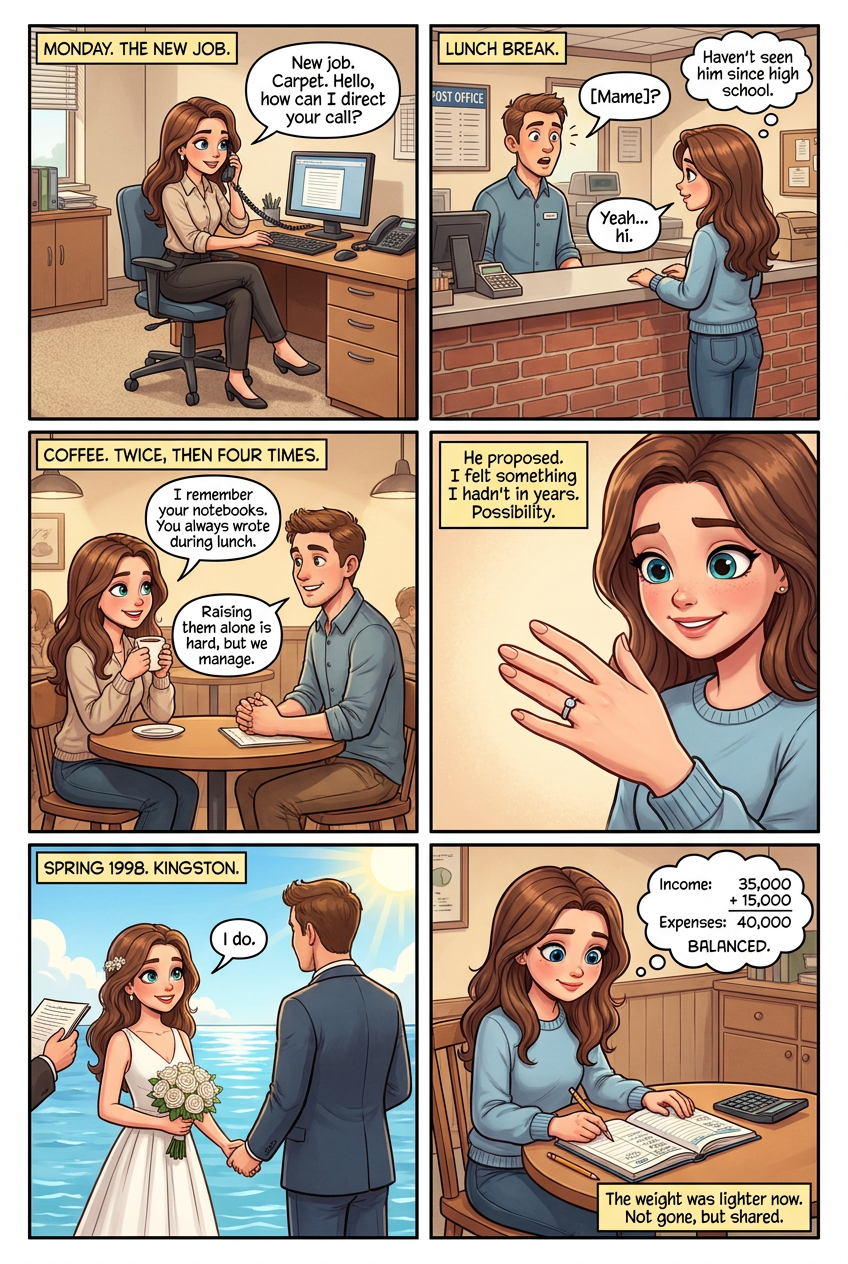
The new job started the following Monday. I wore clean pants and a button-up shirt I'd ironed the night before. The front office had carpet instead of concrete. A desk with a phone. A computer that wasn't mine. The manager showed me where to file papers and how to transfer calls. I sat down and answered the phone when it rang. I walked to the post office during my lunch break that first week. The brick building sat two blocks from the mill. I needed to mail a story submission to a magazine in Toronto. The line moved slowly. When I reached the counter, the clerk looked up and stopped. He said my name like a question. I hadn't seen him since high school. He worked here now. We talked for three minutes while the line grew behind me. He asked if I wanted coffee sometime. I said yes before I thought about it. We met twice that month. Then four times the next. He remembered things about me I'd forgotten. The way I used to write in notebooks during lunch. The year I won the writing contest at school. He asked about my kids. I told him the truth—that I was raising them alone and it was hard. He didn't look away. He said he thought I was doing something brave. When he proposed six months later, he gave me a small ring with a single stone. I put it on and felt something I hadn't felt in years. The possibility that I wasn't carrying everything by myself anymore. We married in Kingston in the spring of 1998. The ceremony was outside near the water. I carried white roses. My kids stood beside me in their best clothes. When the officiant asked if I took him, I said yes and meant it. The ring felt solid on my finger. That night I wrote in my budget book and added his income to mine. For the first time in three years, the numbers balanced. I closed the book and put it away. I wouldn't need to cut the phone plan this month. I wouldn't need to choose between rent and groceries. The weight I'd been holding alone was lighter now. Not gone, but shared.
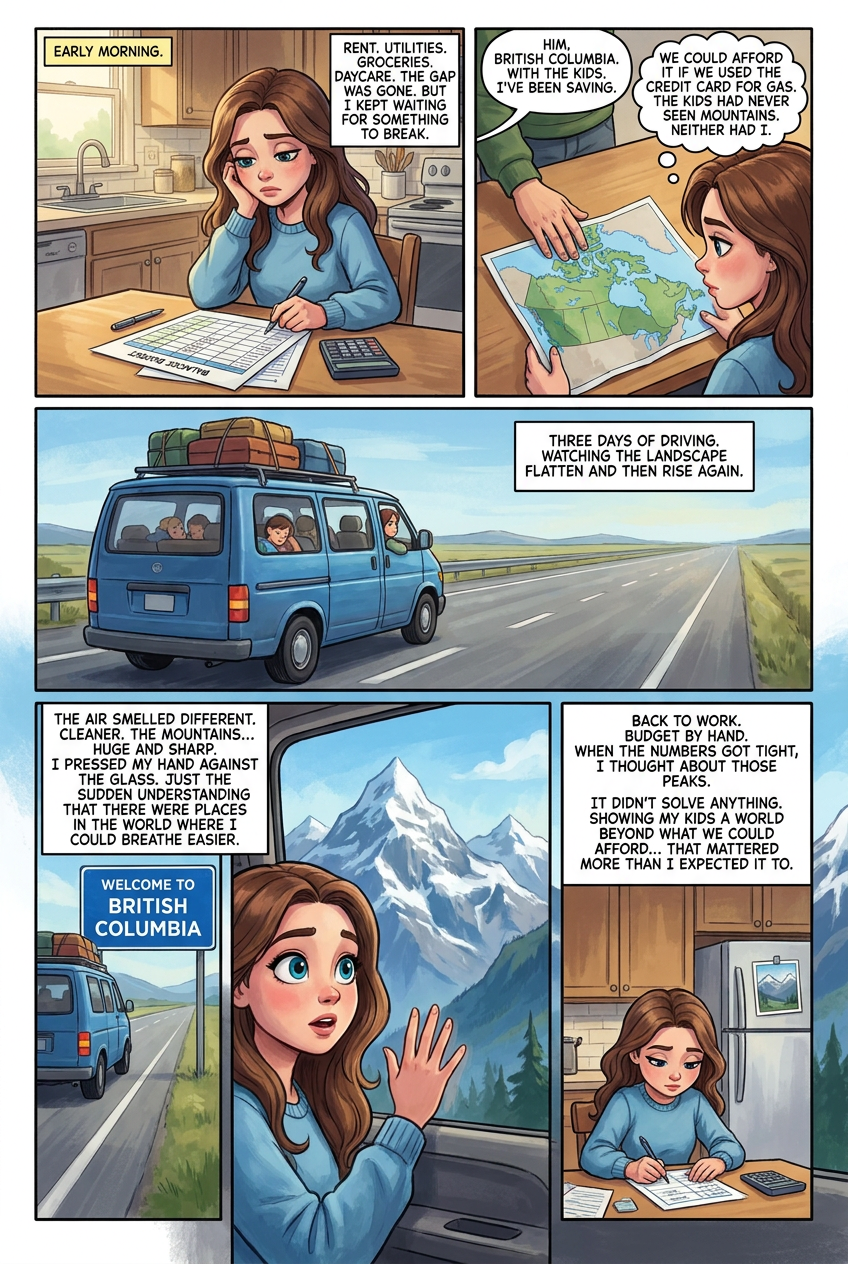
The budget balanced for the first time in years, but it didn't feel like I thought it would. I still woke up at six every morning and checked the numbers in my head before my feet hit the floor. Rent, utilities, groceries, daycare. His paycheck covered what mine couldn't. The gap was gone. But I kept waiting for something to break. He proposed the trip in early summer. A drive west to British Columbia with the kids. He'd been saving for it since the wedding. I looked at the budget and saw we could afford it if we used the credit card for gas. The kids had never seen mountains. Neither had I. I said yes because the money was there and because he wanted to give us something that wasn't just survival. We loaded the blue van with luggage strapped on top and drove for three days. The kids slept in the back seat. He drove while I watched the landscape flatten and then rise again. When we crossed into BC and saw the welcome sign, I rolled down the window. The air smelled different. Cleaner. The mountains appeared an hour later—huge and sharp against the sky, nothing like the flat stretches of Ontario. I pressed my hand against the glass and felt something shift inside me. Not relief. Not escape. Just the sudden understanding that there were places in the world where I could breathe easier. We stayed for a week and then drove home. The kids talked about the mountains for months. I went back to work and wrote the budget out by hand like always. But now when the numbers got tight, I thought about those peaks and the way the air felt in my lungs. I hadn't known I needed to see something bigger than my own small corner until I did. It didn't solve anything. The bills still came. The daycare costs didn't drop. But I'd proven to myself that raising my kids the best way I knew how could include showing them a world beyond what we could afford. That mattered more than I expected it to.
Play your story to life
Storycraft is a mobile game where you create AI characters, craft items and locations to build their world, then discover what direction your story takes. Download the iOS game for free today!
Download for free