

Skylar Cooper's Arc
6 Chapters
Skylar Cooper's dream is establishing a world-renowned wildlife bird rehabilitation and research center.

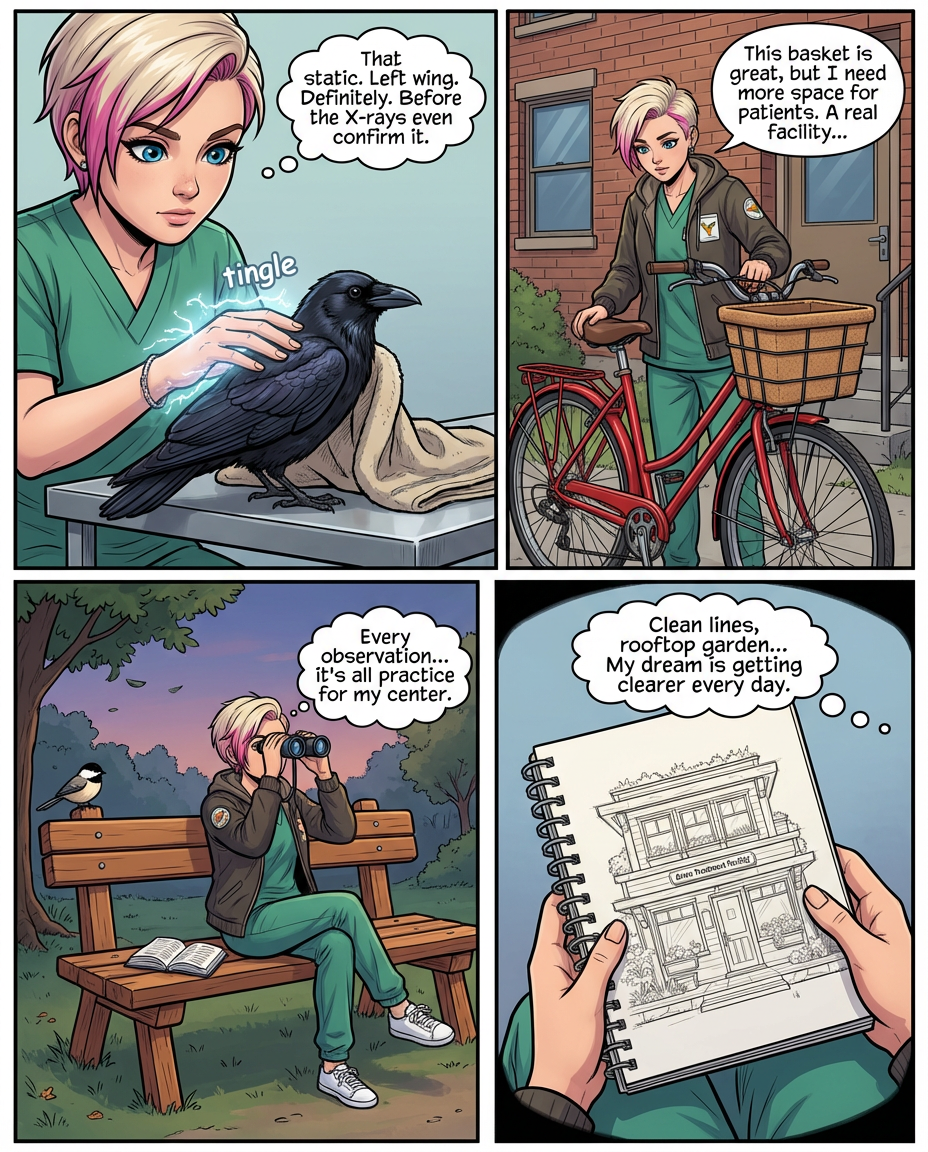
Skylar Cooper pressed her palm against the examination table and felt the familiar tingle crawl up her arm. The injured crow in front of her shifted its weight, and that static-before-a-storm sensation bloomed across her shoulders. Left wing. Definitely the left wing. She'd felt it the moment the bird arrived, before anyone unwrapped it from the towel. Her supervisor called it luck, but Skylar knew better. This gift, this strange ability to sense pain in birds, was exactly why she'd build her own rehabilitation center someday. A place where intuition mattered as much as blood tests. Where she could trust what her body told her and save lives three days before the lab results came back. She grabbed her pen and wrote down her diagnosis, grinning as the crow clicked its beak at her. After her shift ended, Skylar wheeled her bicycle outside and checked the basket mounted on the handlebars. The mesh panels let air flow through while the cork padding protected against bumps. She'd already used it twice this week to transport injured birds from calls around town. Soon she'd need something bigger. A real facility with proper equipment and space for dozens of patients at once. She rode to the park and settled onto a wooden bench with her binoculars and bird book. A chickadee landed on the backrest behind her head. She spent the next hour watching finches and sparrows, taking notes on their flight patterns and behaviors. Every observation was practice. Every detail mattered for the center she'd run one day. The sun dipped lower as Skylar sketched the building in her notebook. Clean lines, big windows, a garden on the roof where recovering birds could test their wings. Her avian treatment facility would become the best in the world. She'd hire people who understood that medicine wasn't just what you could see on an X-ray. Marcus already believed in her methods, and there would be others. She closed the notebook and smiled. The dream was getting clearer every day.
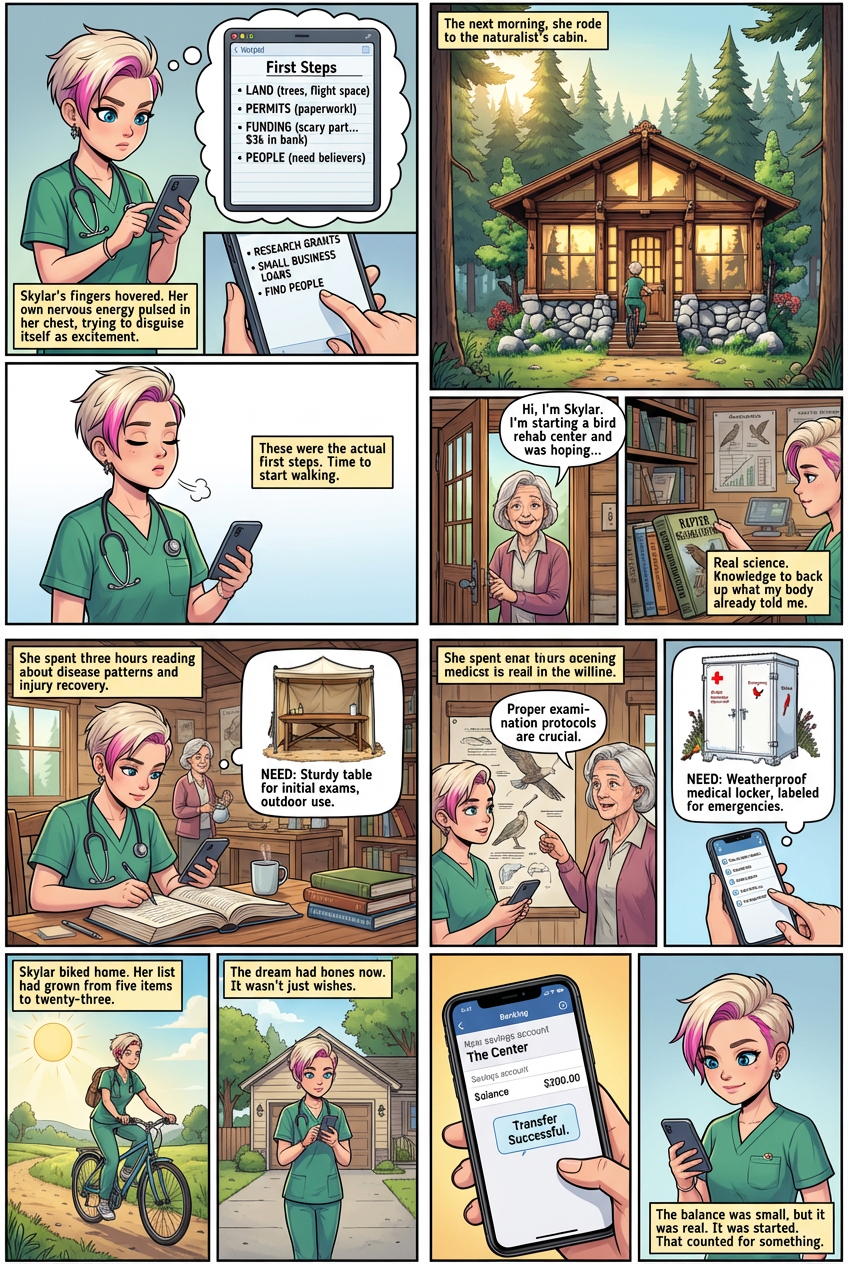
Skylar pulled out her phone and opened a new note titled "First Steps." Her fingers hovered over the screen for a moment before she started typing. She needed land first—somewhere with trees and open space for flight cages. She needed permits, which meant paperwork and meetings with people who'd probably think she was crazy. She needed funding, which was the scary part because her bank account had maybe three thousand dollars in it. The static feeling pulsed in her chest, but this time it wasn't from a bird in pain. This was her own nervous energy, her own fear trying to disguise itself as excitement. She typed "research grants" and "small business loans" into her list. Then she added "find people who believe in this" because she couldn't do it alone, no matter how stubborn she wanted to be about it. She stared at the words on her screen and took a breath. These were the actual first steps, not dreams sketched in a notebook. Time to start walking. The next morning, Skylar rode her bike to the address she'd found online. A naturalist's cabin sat among the trees, its stone foundation solid and old. Wide windows caught the morning light. She knocked on the door and explained what she needed to an older woman who invited her inside. Shelves lined every wall, packed with bird encyclopedias and journals. Research stations filled the corners with preserved specimens and anatomy charts. Skylar ran her fingers along the spine of a book about raptor rehabilitation. This was knowledge she needed—real science to back up what her body already told her. She spent three hours reading about disease patterns and injury recovery rates. The woman made tea and answered questions about setting up proper examination protocols. Skylar took notes in her phone, adding items to her list. She'd need a wooden examination table for initial assessments—something sturdy she could use outside before moving birds to treatment areas. She'd need a medical supply locker too, something weatherproof with clear labels for emergencies. The Red Cross symbol popped into her head, paired with a cardinal for easy identification. Skylar biked home as the sun climbed higher. Her list had grown from five items to twenty-three. She knew what equipment to buy first now. She knew which permits to file and which organizations gave grants to new rehabilitation projects. The dream had bones now, not just wishes. She pulled into her driveway and checked her phone one more time, reading through everything she'd written. Then she opened her banking app and started a new savings account labeled "The Center." She transferred two hundred dollars into it—money she'd saved for new headphones. The balance looked small on the screen, but it was real. It was started. That counted for something.
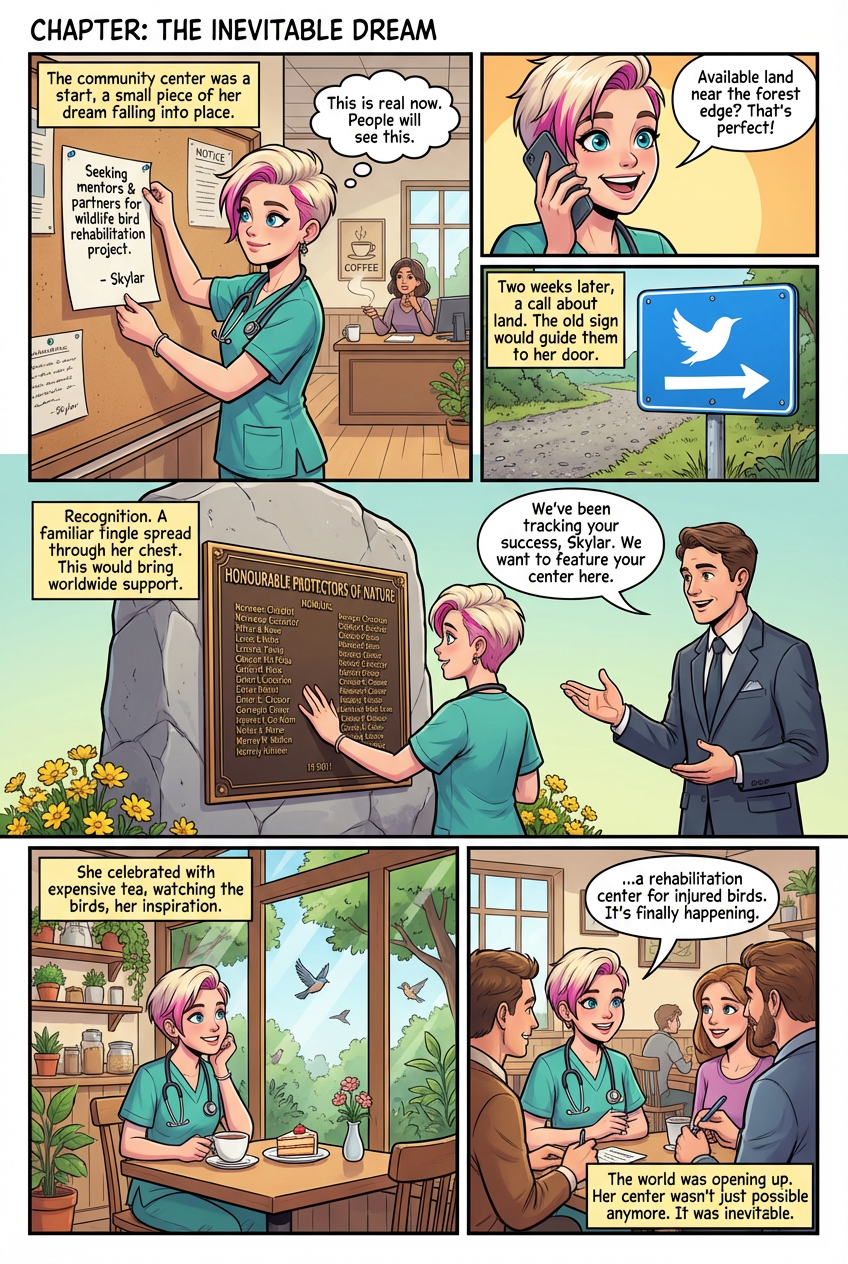
Skylar knocked on the glass door of the community center and watched a woman inside look up from her desk. The building smelled like coffee and old carpet when she stepped through. She'd found this place online—a hub where local groups met to share resources and ideas. The woman pointed her toward a bulletin board covered in flyers about fundraisers and volunteer opportunities. Skylar pinned up her own handwritten notice: "Seeking mentors and partners for wildlife bird rehabilitation project." Her phone number dangled at the bottom on tear-off strips. She stepped back and stared at it, her heart doing that static-electric thing again. This was real now. People would see this. Maybe someone would actually call. She touched one of the paper strips and smiled. The center was coming together, one small piece at a time. Two weeks later, her phone rang with the first real lead. A county official told her about available land near the forest edge, perfect for flight cages and recovery spaces. Skylar drove out the next morning and found the blue metal sign at the turnoff—a white bird silhouette with an arrow pointing down a gravel road. Someone had installed it years ago for a failed project. Now it could guide people to her center when they found injured birds. She stood beside it and pictured cars pulling over, worried hands carrying cardboard boxes full of broken wings. The sign would bring them straight to her door. The woman at the community center called three days after that. A wildlife conservation group wanted to meet Skylar at the monument downtown. She walked there during lunch and found the bronze plaques mounted on stone, surrounded by yellow flowers and white clover. The plaques honored people who'd made real differences in protecting nature. A representative explained they'd been watching her work at the clinic, tracking her diagnostic success rate. They wanted to feature her center here once it opened. Skylar ran her fingers over the bronze surface and felt that familiar tingle spread through her chest. Recognition like this would bring donations and attention from researchers worldwide. She celebrated that night at the Verdant Retreat Cafe, treating herself to expensive tea and a slice of cake. Through the glass panels, she watched birds land in the trees outside. The wooden shelves inside held plants that reminded her of the rooftop garden she'd sketched months ago. A couple at the next table discussed starting a birdwatching group and asked if she wanted to join. She told them about the rehabilitation center instead, and they wrote down her number. By the time she left, four more people knew her name and her dream. The world was opening up for her project—signs to guide the lost, monuments to inspire donors, and spaces where believers gathered to support what mattered. Her center wasn't just possible anymore. It was inevitable.
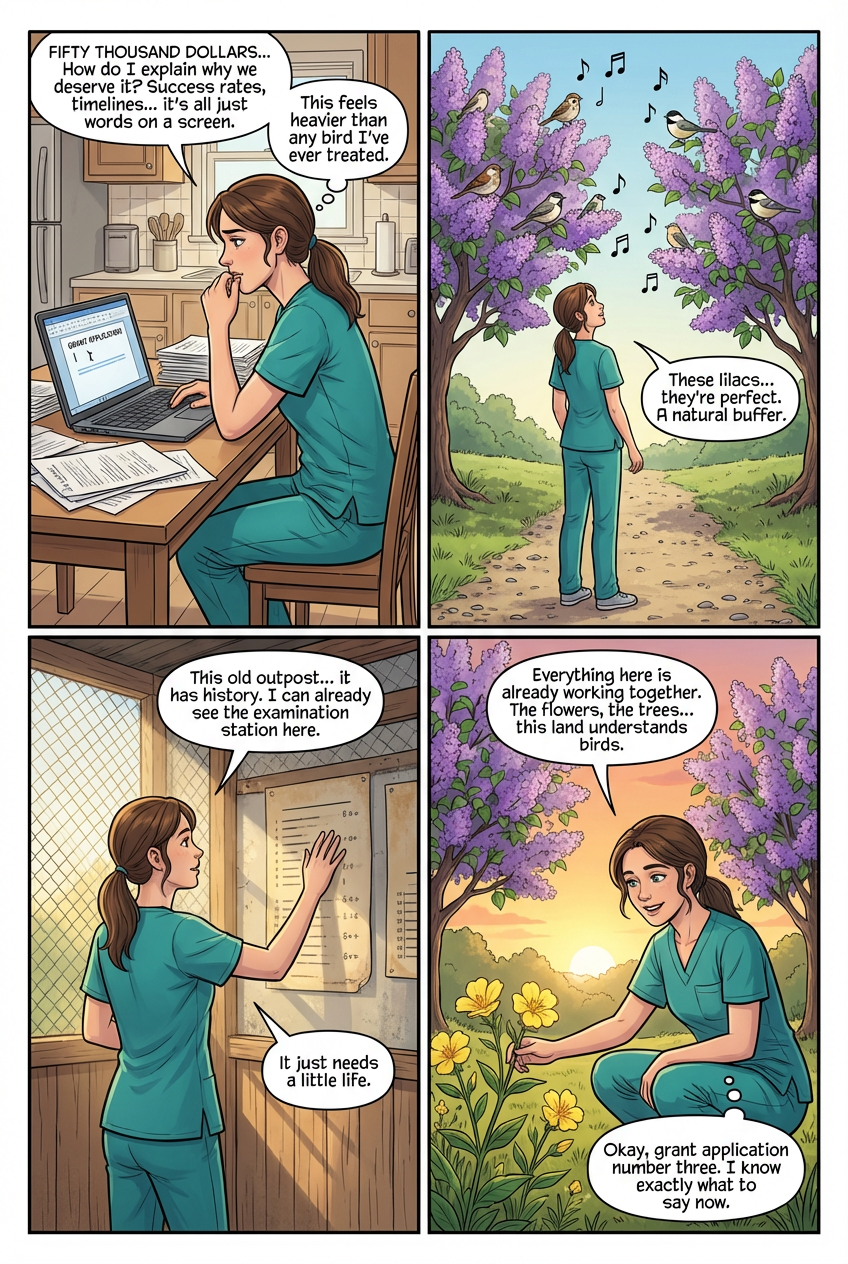
Skylar sat at her kitchen table with her laptop open and three grant applications spread across the surface. The cursor blinked on the screen, waiting for her to explain why her rehabilitation center deserved fifty thousand dollars. She chewed her bottom lip and started typing about diagnostic success rates and recovery timelines. Her fingers moved fast, filling in boxes about projected costs and facility specifications. The static feeling hummed under her skin—not from bird pain this time, but from the weight of asking strangers to believe in her dream. She saved the first application and clicked submit before she could second-guess herself. The confirmation screen appeared with a reference number she immediately copied into her notes. Two more applications to go. She cracked her knuckles and pulled the next form closer, already planning what she'd say differently this time. The next afternoon, Skylar drove out to scout the land the county official had mentioned. A gravel road led her past two massive lilac trees in full bloom. Sparrows and chickadees hopped between the branches, their songs filling the air. She parked and walked closer, breathing in the sweet smell. The trees would be perfect for wild birds to observe rehabilitation activities—a natural buffer between her center and the forest. She pulled out her phone and took photos from three angles, already imagining flight cages positioned nearby where recovering birds could watch their healthy cousins. Beyond the lilacs stood an old wooden structure with metal mesh panels. Faded measurement charts clung to the interior walls. Skylar stepped inside and found rust on the hinges but solid bones underneath. Someone had done bird research here decades ago, back when this spot mattered to scientists. She ran her hand along a chart marking wing spans and felt that familiar tingle spread through her chest. This building could be her examination station—a place with history, with proof that studying birds here made sense. She'd need to replace the mesh and add a proper roof, but the foundation was already laid. Walking back to her car, she noticed evening primrose growing along the path. The pale yellow flowers were closed tight in the afternoon sun. They'd open at dusk, drawing moths and beetles that would feed the birds hunting at twilight. Skylar crouched down and touched one of the stems. Everything here worked together—the trees, the old research building, the flowers timed to feed the food chain. This land understood birds already. She didn't have to force her dream onto empty space. She just had to bring it back to life. She stood up and looked at the lilacs one more time, then climbed into her car with her third grant application half-finished in her mind. Now she knew exactly what to write.
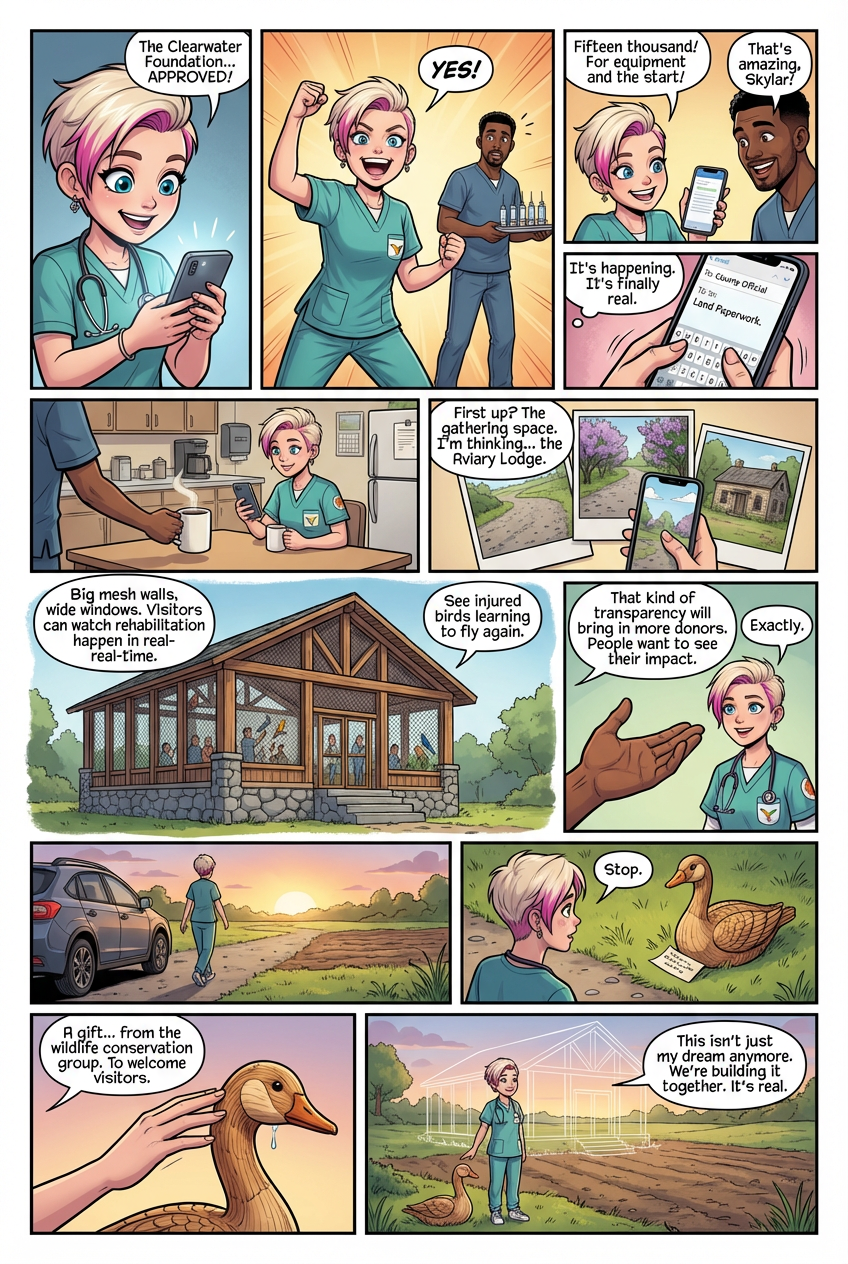
Skylar watched the email notification pop up on her phone and felt her breath catch. The Clearwater Foundation had approved her grant—fifteen thousand dollars for equipment and initial construction. She pumped her fist in the air, startling Marcus as he walked past with a tray of syringes. He raised an eyebrow, and she showed him the screen. His grin matched hers. One grant down, two still pending, but this was proof that people with money believed in her center. She forwarded the email to the county official and typed a quick message about moving forward with the land paperwork. Her fingers shook as she hit send. The static feeling under her skin had shifted from nervous energy to something brighter, something that felt like wings catching wind for the first time. Marcus brought her coffee an hour later and sat down across from her in the break room. He asked what she'd build first with the grant money. Skylar pulled out her phone and showed him photos of the land—the lilac trees, the old research building, the gravel road leading in. She explained her idea for a gathering space with mesh walls and wide windows where people could watch rehabilitation work happen in real time. Visitors could sit inside and see injured birds learning to fly again. She'd give public talks there, show before-and-after videos, teach kids about wing anatomy. Marcus nodded and said that kind of transparency would bring more donors. He was right. People wanted to see their money making a difference, not just read about it in reports. That evening, Skylar drove out to the land and found a wooden sculpture waiting near where the entry path would go. Someone had carved a Canadian goose from a single piece of lumber, the wood grain flowing through its wings like real feathers. A note tucked underneath said it was from the wildlife conservation group—a gift to welcome visitors when the center opened. She ran her fingers over the carved head and felt tears sting her eyes. This wasn't just her dream anymore. Other people were building it with her, adding their own pieces to something bigger than any of them alone. She set the goose back down and looked at the land stretching out before her. The center was real now. Not just plans and emails, but wood and stone and belief.
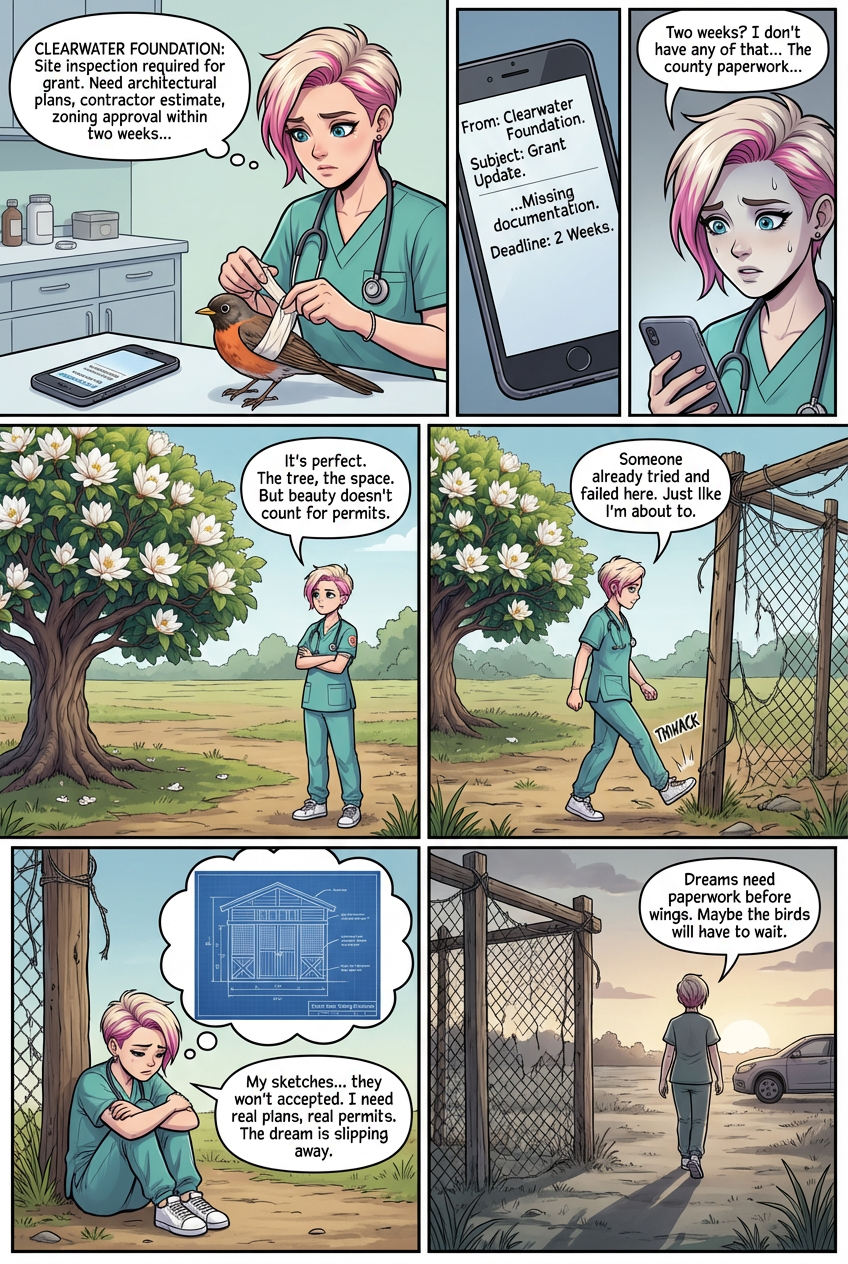
The email arrived on Tuesday morning while Skylar was treating a robin with a fractured wing. The Clearwater Foundation wanted to schedule a site inspection before releasing the grant funds. She read the message three times, her stomach sinking with each pass. They needed detailed architectural plans, a licensed contractor's estimate, and proof of proper zoning approval—all within two weeks. She didn't have any of those things yet. The county official had promised the land paperwork was moving forward, but she hadn't received final approval. Without that, no contractor would give her a real estimate. Without the estimate, the foundation wouldn't release the money. Without the money, she couldn't hire the contractor. The static feeling under her skin turned sharp and cold. She set down her phone and returned to the robin, wrapping its wing with steady hands even as her dream felt like it was slipping through her fingers. She drove out to the land that afternoon anyway, needing to see the space where her center should be. The magnolia tree near the front caught her attention first—white flowers opening wide, branches spreading like welcoming arms. It was beautiful, the kind of tree that would make visitors stop and look. But beauty didn't matter without permits. Past the tree, she spotted an old netting enclosure she hadn't noticed before. Torn mesh hung from wooden posts, wire twisted and sagging. Someone had tried something here once and failed. The structure looked forgotten, useless. Skylar kicked at the base of one post and felt splinters catch against her shoe. The wooden testing enclosure she'd planned to build sat unfinished in her mind. It would have mesh panels and perches at different heights. Birds recovering from injuries could practice flying there, building strength before release. She'd sketched it out last week, measured the dimensions, picked the exact spot between the magnolia and the forest edge. But sketches weren't architectural plans. Her drawings wouldn't satisfy the foundation inspectors. She needed blueprints stamped by a professional, permits signed by the county, numbers that added up on official letterhead. She had none of that. Skylar sat down on the ground and pulled her knees to her chest. The static feeling had settled into a dull ache now. She'd rushed ahead, imagining buildings and visitors and recovered birds taking flight. She'd forgotten that dreams needed paperwork before they needed wings. The foundation would schedule their inspection, find nothing ready, and give the money to someone more prepared. Her rehabilitation center would stay trapped in her head where it couldn't help a single bird. She stood up slowly and walked back to her car, leaving the torn netting behind.
Play your story to life
Storycraft is a mobile game where you create AI characters, craft items and locations to build their world, then discover what direction your story takes. Download the iOS game for free today!
Download for free