

Lovelock's ArcChapter 5 of 13
Lovelock's dream is building a thriving farm market that showcases her handmade crafts..

Click to expand
Chapter 5
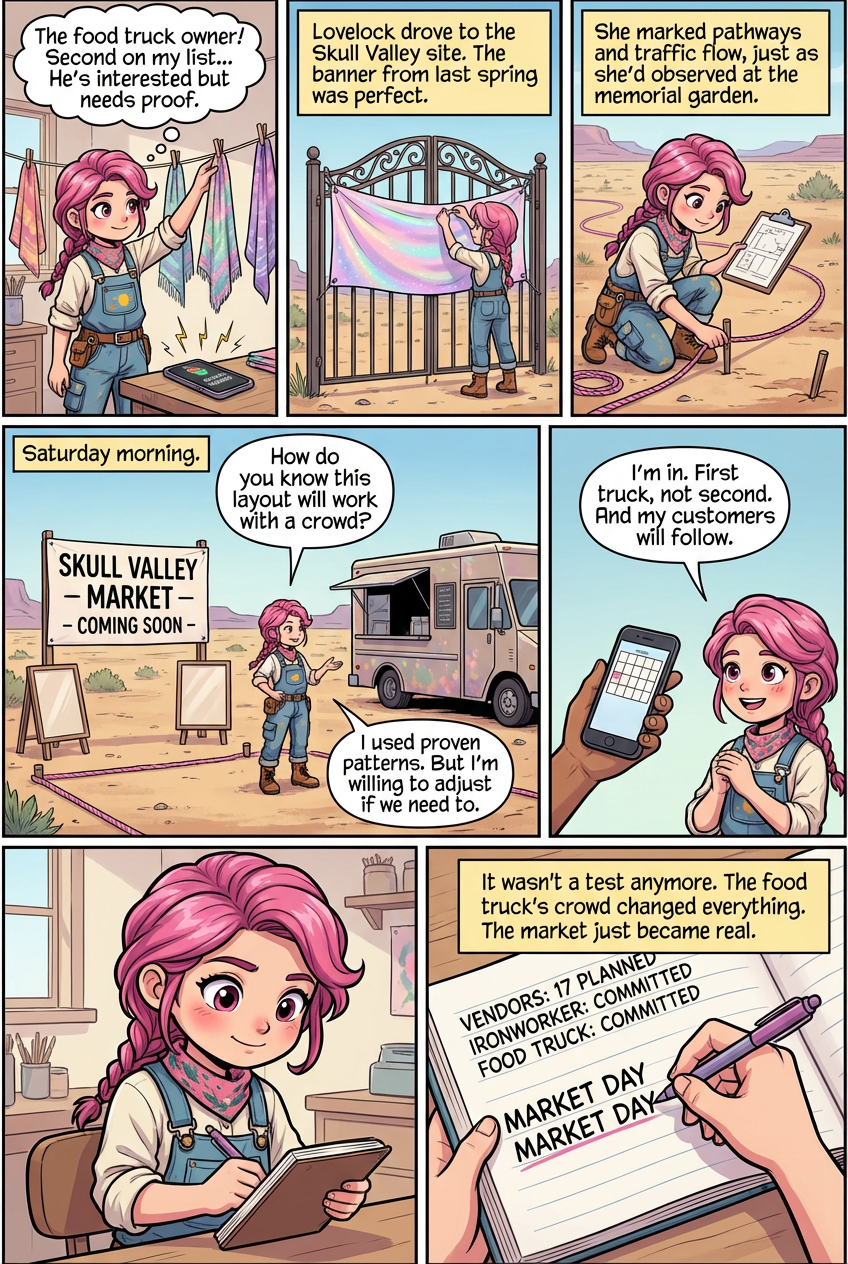
The food truck owner calls on a Wednesday, right after Lovelock finishes dyeing a batch of scarves with the cultivated roses. His name is on her vendor list, second food truck, and his answer is maybe. He's heard about the Skull Valley market idea from someone at the Prescott setup, and he's interested—but only if she can prove the site can handle crowds.
Lovelock drives to the market site that afternoon with a roll of pink rope, twelve stakes, and the iridescent banner she dyed last spring using three different rose batches layered over each other. She hangs it on the ironworker's finished gate—the one he left installed as a marker for the entrance—and steps back to see if it catches light the way she needs it to. It does. The pastels shift in the desert wind, visible from the road. She walks the perimeter next, marking pathways with the rope and stakes, measuring traffic flow the way she learned by watching the memorial garden woman manage her own weekend crowds. She takes photos from six angles, then calls the food truck owner and sends them with a message: flow plan attached, entrance visible from highway, room for fifty cars and foot traffic separation. He texts back in four minutes. He wants to see it in person on Saturday.
Saturday morning, Lovelock sets up the full simulation. She plants a bright pink events sign at the entrance, positions three of her own display frames where vendor stalls will go, and ropes off the pathways she planned. The food truck owner arrives at nine with his partner, and they walk the site twice—once following the customer flow, once checking truck access and turnaround space. He asks how she knows the layout will work under pressure. Lovelock tells him the truth: she doesn't, but she built it using patterns from venues that do work, and she's willing to adjust after the first real market day if the flow breaks. He looks at the banner still hanging on the gate, at the clean pathways, at the events sign catching morning light. Then he pulls out his phone and adds the date to his calendar. He's in—first food truck committed, not second. And he'll bring his own crowd, he says, because his customers follow him anywhere.
Lovelock takes down the simulation after he leaves, but she keeps the banner hanging. It's not a test anymore. It's a promise the site just kept. That night she updates her vendor list: seventeen vendors planned, one ironworker committed, one food truck committed. She runs the numbers with her bookkeeper the next morning and realizes the food truck's built-in crowd changes everything—it means she doesn't need to fill all seventeen slots before opening day. She can start smaller, let the truck draw people in, and grow from there. The market just became real in a way it wasn't before, and Lovelock writes the date in her notebook three times to make sure it stays that way.
Play your story to life
Storycraft is a mobile game where you create AI characters, craft items and locations to build their world, then discover what direction your story takes. Download the iOS game for free today!
Download for free