

Amiya Wil's Arc
8 Chapters
Amiya Wil's dream is building a fashion and music empire that uplifts survivors and proves the overlooked can become unforgettable..

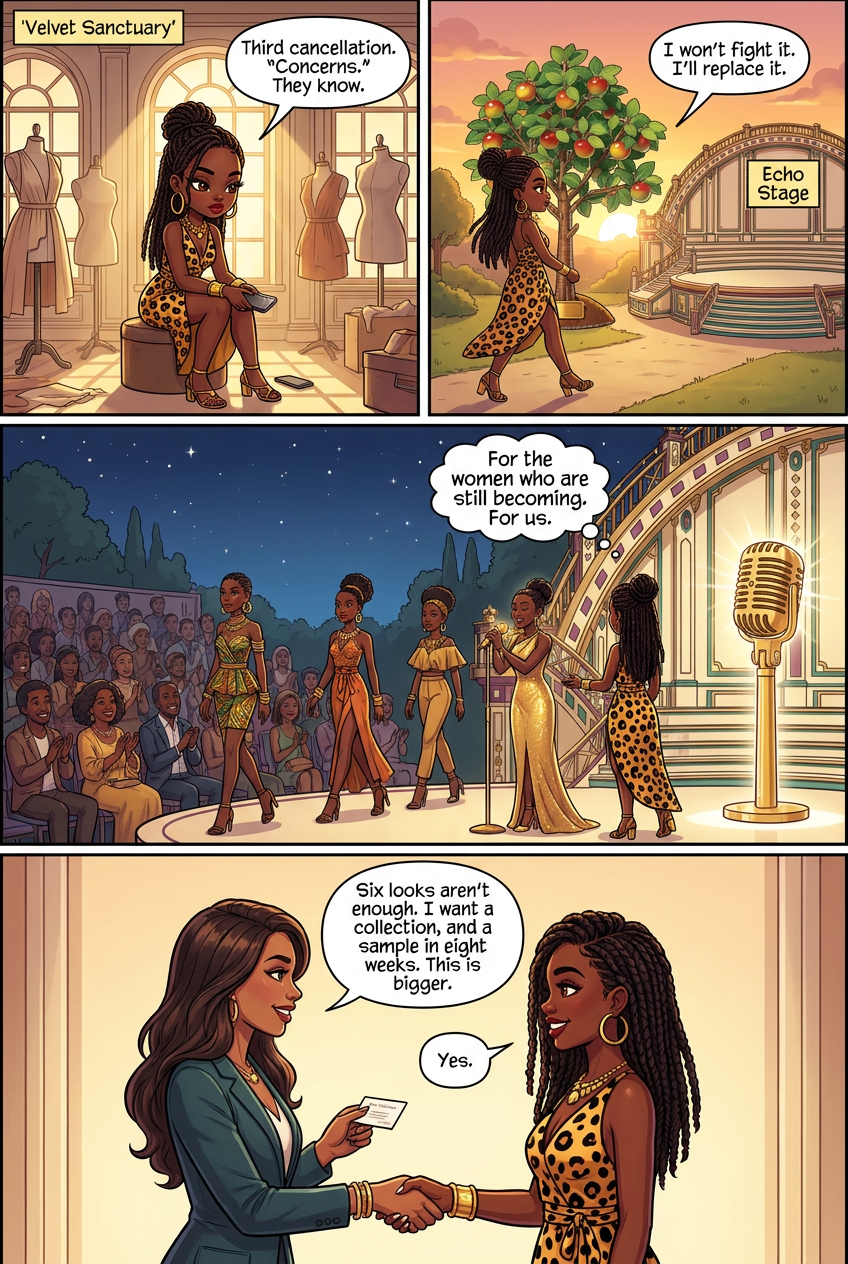
Amiya Wil read the third cancellation email of the morning and set her phone face down on the cutting table. The boutique buyer in the south district was the one she had courted for eight months. The email used the word "concerns." Amiya knew what that meant. Somewhere across town, the woman who used to braid her hair in middle school was telling a podcast host about the night Amiya got arrested, and the version she told did not include the four years after. Amiya stood up and walked the floor of the studio she rented above a closed bakery. Arched windows let in a clean yellow light. Two dress forms wore the first samples of her debut line, pinned and unfinished. A pair of studio monitors sat on a low desk beside her laptop, where the demo track for her label's first artist had been looping since dawn. She had signed the lease here six months ago with money her mother lent her from a retirement account. The plan was simple. Clothes on the racks by spring. A showcase by summer. Her mother in the front row, in a seat with her name on it. Now three buyers had pulled their orders in a week. She could fight the story or she could replace it. Fighting meant calling the podcast, calling the friend, dragging the arrest back into the light to argue over details. Replacing it meant the outdoor amphitheater four blocks away, the one the city rented by the hour for community events. Amiya opened her laptop and booked the slot for Friday night. She wrote a short post and pinned it to every account she had. Free show. Her artist on the microphone. Six looks from the spring line, worn by women she had met in the recovery program she still attended on Tuesdays. She invited every buyer who had pulled back by name. Then she called her mother and asked her to come. By Friday the amphitheater held about two hundred people. Amiya stood at the back with a small potted apple tree she had carried from the studio, a gift from her sponsor with a gold plaque at the base that read "still becoming." She kept one hand on the trunk while her artist sang and the models walked the curve of the stage under the tall golden microphone. Her mother sat in the second row because the first was full of strangers, and that was fine. Two of the buyers came. One stayed after to reorder. The other handed Amiya a card and said she wanted to talk about a bigger placement, the kind that required a real collection, not six looks, and she wanted a sample in eight weeks. Amiya said yes before she counted the days.
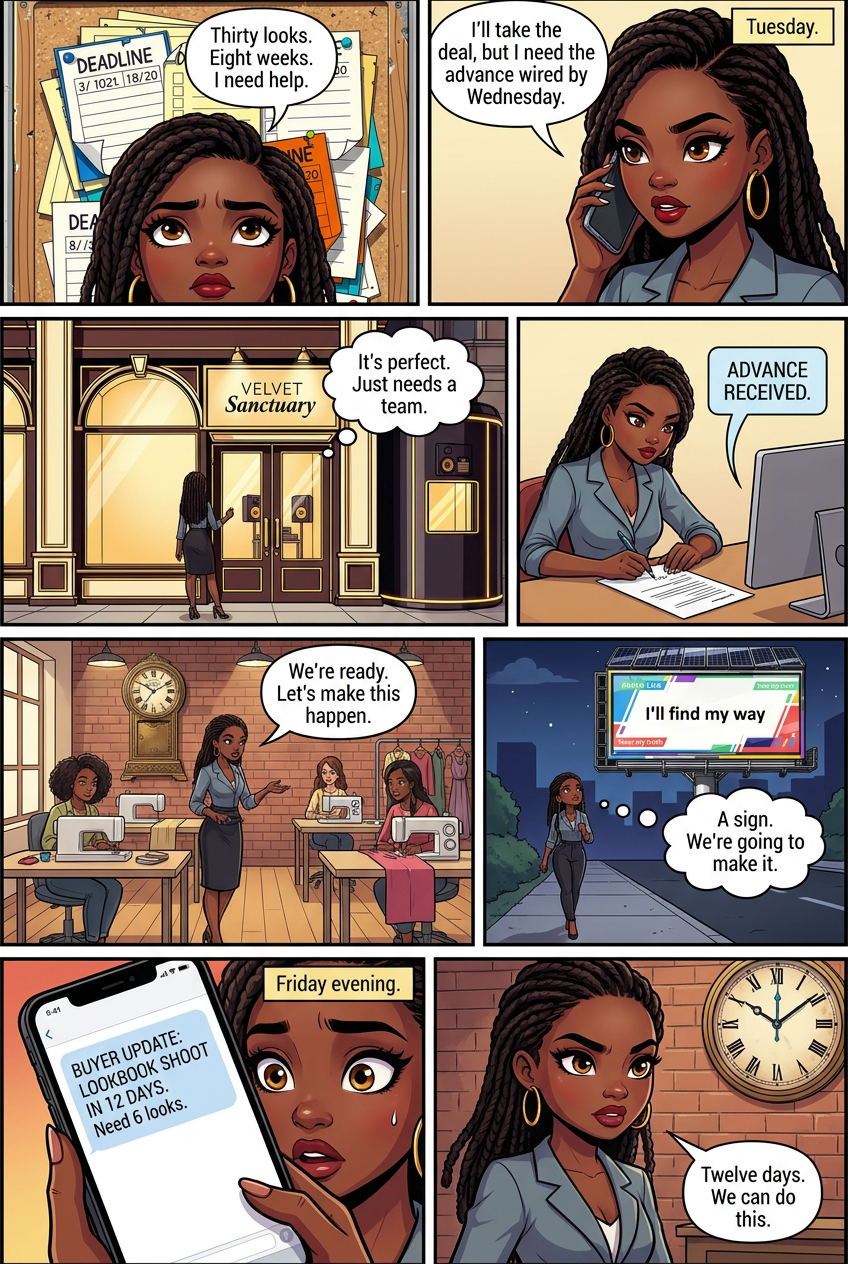
Amiya counted the days on the corkboard above her cutting table Monday morning. Eight weeks. Fifty-six days. The buyer wanted thirty full looks, sized and finished, with lookbook samples by week six. Amiya was one seamstress with one machine. She did the math on a scrap of muslin. Even working sixteen hours a day, she would finish twelve looks. She pinned the muslin to the board under a red tack and stared at it until the numbers stopped moving. She called the buyer first and asked for nothing. She would not lose the deal by flinching. Then she opened a spreadsheet and listed every woman from her recovery program who had sewn, hemmed, or run a serger in a past life. The list ran to nine names. Four of them had asked her for work in the last year. She had said no every time because she could not pay a wage and a rent at once. She closed the laptop and walked four blocks to look at the empty storefront under her studio, the one the bakery owner had been trying to lease since winter. The space had arched windows, a wide back room, and a sink that worked. The owner wanted two months up front. Amiya did not have it. She walked back upstairs, opened the placement contract, and read the advance clause she had skipped on Friday night. Thirty percent on signing. She emailed the buyer and asked for it wired by Wednesday. The buyer wrote back in an hour and said yes if Amiya signed a penalty rider. Miss the eight-week date and she owed the advance back at double. Amiya signed it and sent it before she could count the days again. The money cleared Wednesday morning. By Thursday she had keys to the storefront and a name painted on the glass in gold letters. She called the four women from her list and offered them eight weeks of work at a fair rate, with a bonus if they hit the date. Three said yes that night. The fourth came in Friday with her own shears. Amiya set up four stations along the back wall, a cutting table by the windows, and an old clock she had bought at an estate sale, its archive drawer empty, ticking against the brick. On the way home Friday she passed the solar billboard on the avenue and saw her artist's face on the screen, a lyric from the demo scrolling under it. The label had bought the slot for the month. Amiya stopped on the sidewalk and watched the words cycle. The shop had a team now. The collection had a chance. Then her phone buzzed. The buyer had moved up the lookbook shoot. She needed six finished looks photographed in twelve days, not twenty-one. Amiya read the message twice and walked faster.
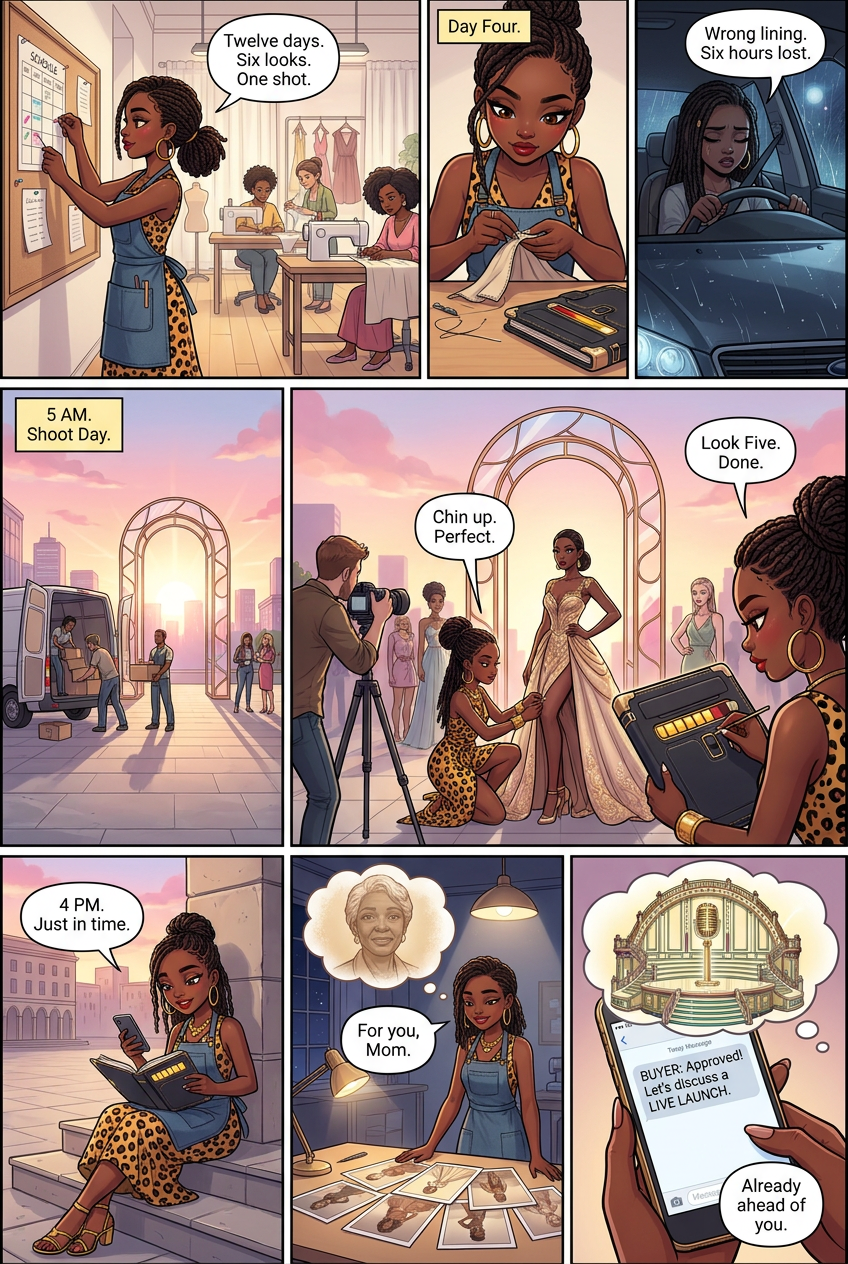
Twelve days became eleven by the time Amiya finished the first cut Saturday morning. She pinned the new schedule above the cutting table and worked backward from the shoot date. Six finished looks. One photographer she could afford. One outdoor location she could book for free. She picked a public plaza with a tall reflective archway the city had installed last spring. The panels caught dusk light and threw it back in soft ribbons. She emailed the permit office before she opened her shears. The four women came in at seven each morning and stayed past dark. Amiya sewed beside them. She kept a leather folder on the corner of the cutting table with a thin display along its spine. Each finished look ticked one bar from red to gold. By day four, two bars were gold. By day seven, four. The studio smelled like steam and coffee. The gold letters on the front glass caught the streetlight every night when Amiya locked up alone. On day nine a shipment of lining came in the wrong weight. Amiya drove across the city, paid retail for the right bolt, and lost six hours. She slept on the cutting room floor that night and woke at four to finish the sixth hem herself. The seamstress who came in at seven found her at the machine and took the needle from her hand without a word. Amiya let her. She went upstairs and washed her face and put on her grandmother's gold hoops. They loaded the van at five on the morning of the shoot. The plaza was empty. The archway stood at the center, panels already catching the first light. The photographer set marks. The four women dressed the models, two of them from the recovery program, two booked from an agency that still answered Amiya's calls. Amiya pinned each look herself. She watched through the lens between shots and checked the folder after every change. One bar gold. Two. Three. They finished the sixth look at four in the afternoon, an hour before the permit ran out. Amiya sat on the stone step and opened the folder. Every bar was gold. She forwarded the proofs to the buyer from her phone before she stood up. The reply came in twelve minutes. Approved. Move to production on the remaining twenty-four. She read it twice and put the phone face down on her knee. That night she walked the proofs back to the studio and laid them out on the cutting table in a wide spread, the six looks fanning open like petals under the lamp. Six down. Twenty-four to go in thirty-eight days. The four women had gone home. Amiya stood alone at the table and thought of her mother's face. Then her phone buzzed. The buyer wanted a meeting Monday about adding a live launch event, and she had already booked the venue.
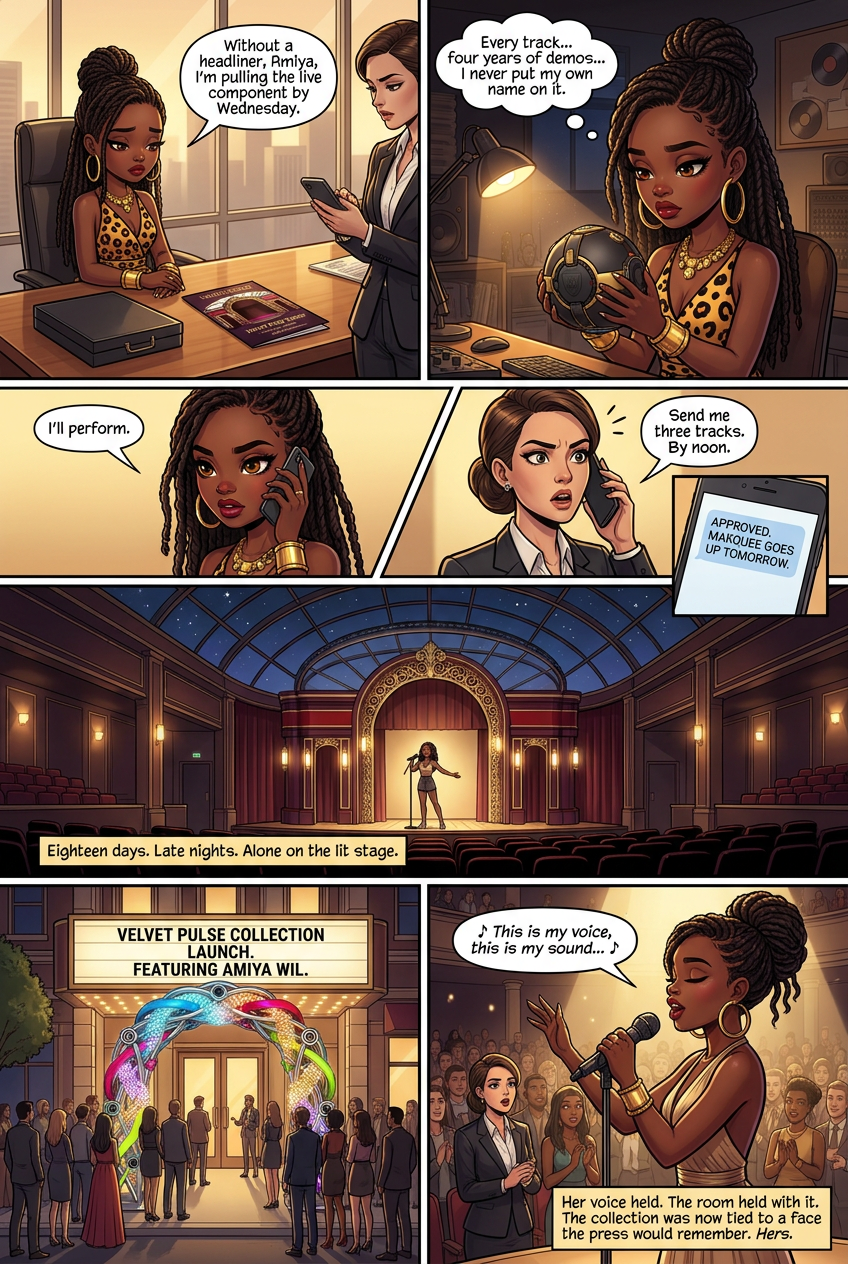
Monday morning Amiya walked into the buyer's office with the proofs in a flat black case. The buyer slid a venue brochure across the desk before Amiya sat down. A small theater with a glass roof and gold trim, already booked for a Friday three weeks out. The buyer wanted a live launch tied to the collection drop. She wanted a name on the marquee that would pull press. Amiya had pitched an artist she had been developing for a year, a singer who could carry the room. The buyer said she had passed. Two other names had passed. Without a headliner the event pitch fell flat, and the buyer would pull the live component by Wednesday if no one was confirmed. Amiya took the brochure home and put it on the cutting table. She called three managers that afternoon. Two did not call back. The third quoted a fee that would eat the advance and half the placement money. She hung up and sat in the storefront with the lights off. Upstairs in her studio she kept a matte-black sphere on the shelf above the speakers. It held every track she had recorded over four years. Demos she had written for other voices. Hooks she had cut at two in the morning when no one was awake to hear them. She had never put her own name on any of it. She had always been writing for a singer she would hire. She pulled the sphere down and set it on the desk. She played the first track. Then the second. By the fourth she was standing. She called the buyer at seven the next morning and said she would perform. The buyer was quiet for a long beat. Then she said, send me three tracks by noon. Amiya sent four. The buyer wrote back at one. Approved. Marquee goes up tomorrow. She had eighteen days. She booked the theater's stage for night rehearsals and brought in a sound engineer from her recovery program's wider circle. She practiced after the seamstresses went home, alone on the lit stage with the glass roof above her. She missed cues. She forgot a verse twice. The engineer made her run it again. On the ninth night she got through the set clean. On the twelfth she got through it twice. Friday the line wrapped the block before the doors opened. The promoter had set a tall lit archway outside the entrance, its woven panels flickering as people pressed in around it. Amiya stood backstage in her grandmother's gold hoops and watched the room fill through a gap in the curtain. The buyer was in the third row. Her mother was not. Amiya had not asked her yet. She stepped to the mic and the first track started. Her voice held. The room held with it. When she finished, the buyer was already typing on her phone. The collection was now tied to a face the press would remember. Hers.
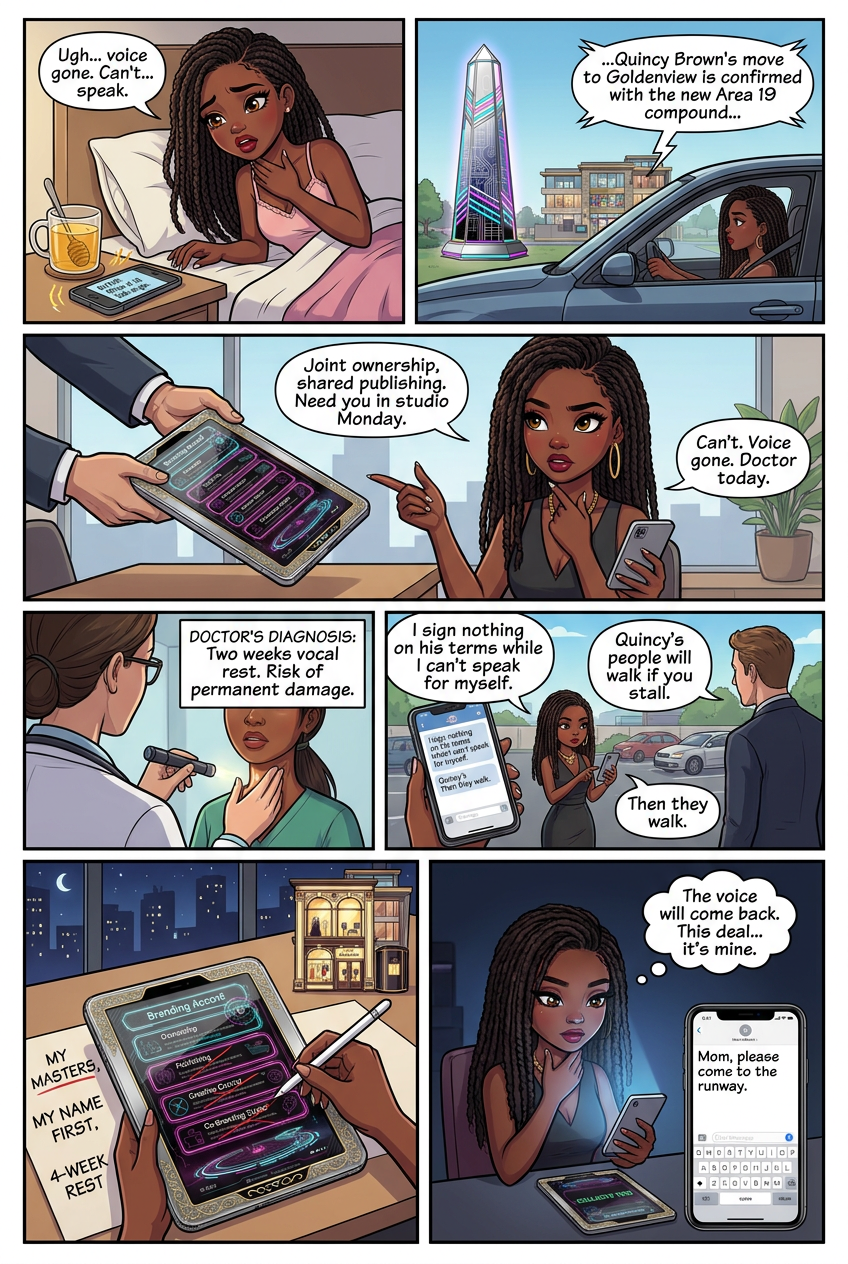
Saturday morning Amiya woke up unable to speak above a whisper. She drank hot water with honey and tried a scale at the piano. Her voice cracked on the third note. Her phone buzzed on the cutting table. The buyer wanted her in the office at ten to talk about a single. Amiya wrote back yes with one thumb and got in the car. Driving in, she passed a new structure rising at the edge of the district. A mirrored obelisk, three stories tall, lit from inside. A crest at the top held two marks side by side. Hers, and one she recognized from every magazine rack for the last five years. Quincy Brown had moved to Goldenview. The radio confirmed it before she reached the buyer's building. He had set up a compound a few blocks from her studio. Glass front, gold trim, a sign that read Area 19. The buyer slid a gilded tablet across the desk. A branding accord. Joint ownership, shared publishing, co-branding rights. Quincy's team had sent it over at six that morning. The buyer wanted Amiya in the studio with him Monday to cut a single off the launch tracks. She wanted it on streaming in two weeks to ride the press from the show. Amiya tried to answer and the words came out scraped. She pointed at her throat. The buyer said the doctor was already booked for that afternoon. The doctor looked down her throat and told her two weeks of vocal rest or she would tear something that did not grow back. Amiya wrote the words on her phone and showed the buyer in the parking lot. The buyer's jaw moved. Then she said they would push the single four weeks and lock the collab. Amiya shook her head. She typed: I sign nothing on his terms while I can't speak for myself. The buyer read it twice. She said Quincy's people would walk if Amiya stalled. Amiya typed: then they walk. She went back to her studio that night and sat at the desk with the tablet beside her. She crossed out the ownership clause and the publishing split. She wrote in the margin: my masters, my name first on the credit, four-week rest before any session. She sent the marked version to the buyer at eleven. The buyer forwarded it. At two in the morning Quincy's manager wrote back. He accepted the rest period. He countered on publishing at sixty-forty her favor. She wrote yes and put the phone face down. She sat in the dark of the storefront and pressed her fingers to her throat. The collection was still hers. The voice would come back. The deal she had just made was the first one she had signed without flinching. She thought of her mother and wrote a message asking her to come to the runway. She did not send it yet. She saved the draft and turned out the light.
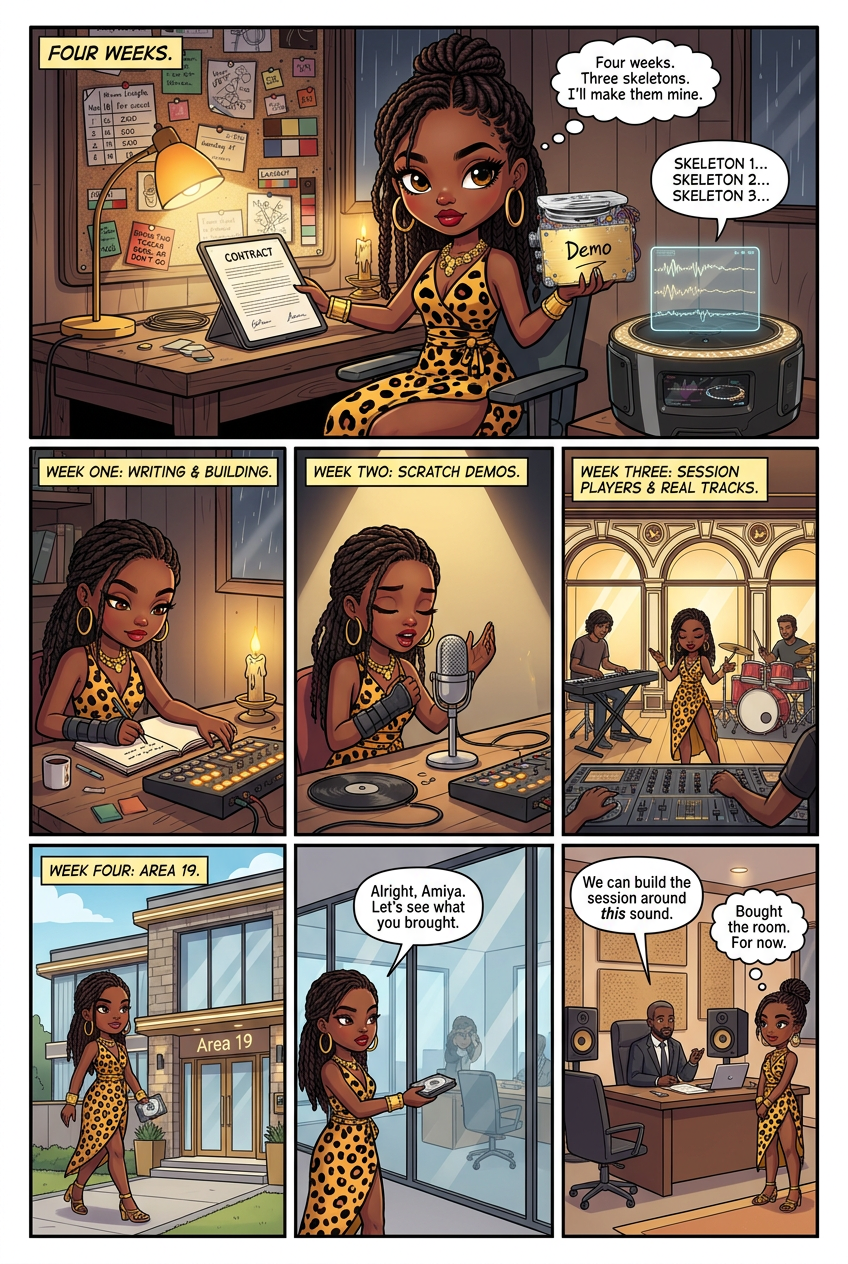
Sunday morning Amiya sat at the desk in the back of her studio with the marked contract still open on her tablet. The Quincy sessions began in four weeks. She had no finished song to bring. If she walked in with nothing, his producers would hand her their beats and call them hers. She wrote one line on a sticky note and pressed it to the pinboard above the desk lamp: bring two tracks done, or don't go. She pulled out the small gold-faced demo box from the bottom drawer. Four reels inside, labeled by year. These were the rough cuts she had performed at the launch. Rough was the word. The vocals were live takes through a cracked mic. The drums were borrowed loops. None of them were hers on paper. She could not sing for two weeks. She could still write, and she could still build. She set the small black console on the desk and powered it on. The amber ring lit. The display showed three half-songs she had started after the showcase and abandoned. She played the first. Eight bars of piano, a hook hummed under her breath, then silence. The second was a drum pattern with no melody. The third was only a bassline. Three skeletons. She had four weeks and one working hand on the keys. She made a plan on paper. Week one: finish the writing on all three. Week two: cut the demos clean at her desk with the mic, voice or no voice, using the scratch hum tracks she already had. Week three: bring in a session keys player and a drummer from the recovery program's cousin network and track real parts. Week four: mix two of the three to release quality and leave the third as a bargaining piece. She wrote the buyer at noon and asked for an advance against the collab to cover the players. The buyer wrote back in an hour. Approved. She worked every night that week alone at the desk. The candle burned down twice. She wrote lyrics in a notebook and tapped melodies into the console with two fingers. By Friday she had three finished songs on paper and two rough instrumentals locked. She booked the keys player for the following Tuesday. She moved the demo box to the center of the desk where she could see it. Four weeks later she walked into the glass-fronted compound a few blocks from her studio with a drive in her pocket. Two mixed tracks. Her name on the files. Her publishing. Quincy's manager met her at the door and asked what she had brought. She handed him the drive and watched him load it. The first track played through the room speakers. He listened to the whole thing without speaking. Then he said they would build the session around her sound. Amiya nodded. She did not trust him yet. She had bought the room anyway.
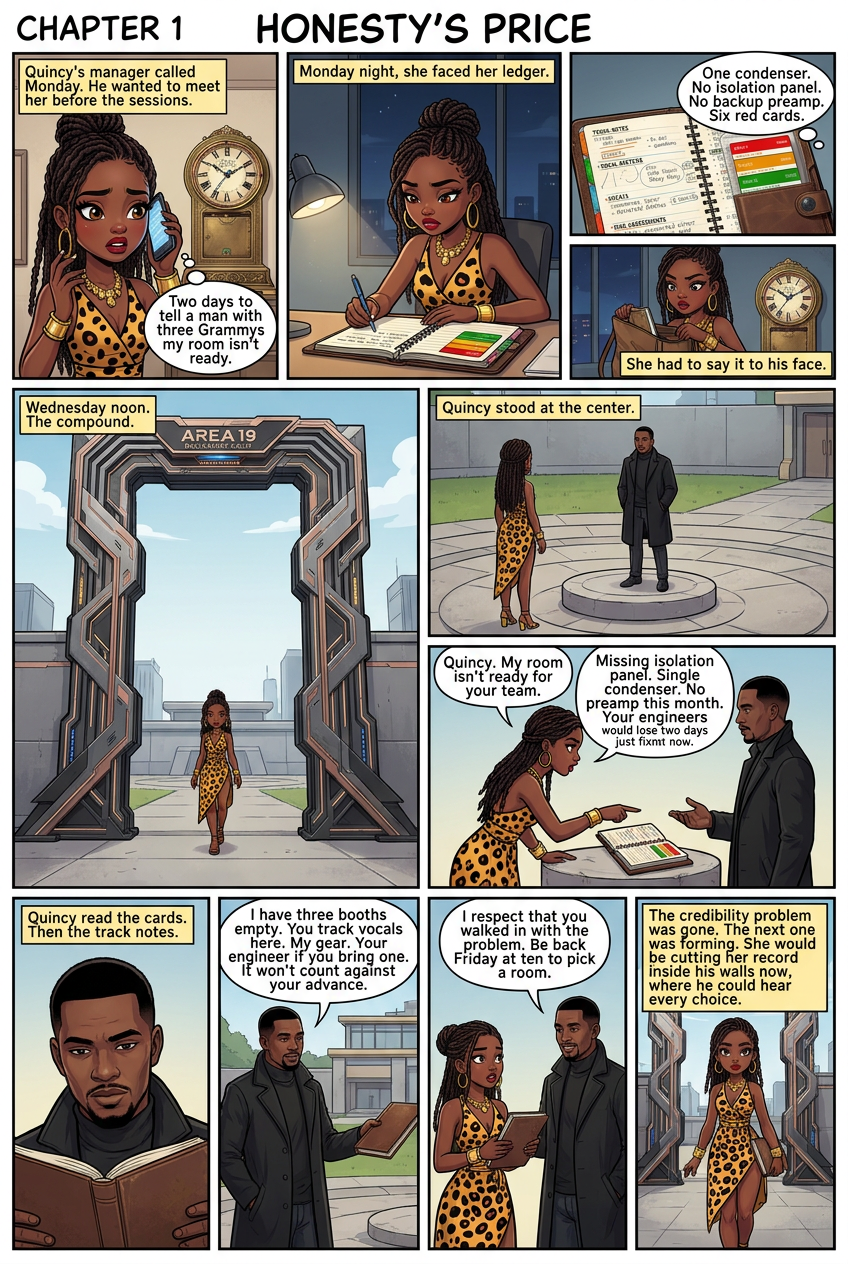
Quincy's manager called Monday morning and asked Amiya to come to the compound in person. Quincy wanted to meet her before the sessions started. He named a time two days out. Amiya hung up and stared at the clock on her studio shelf. She had two days to walk in and tell a man with three Grammy walls that her room was not ready for his team. If she said nothing, his engineers would arrive next week and find a vocal booth built for one woman with a cracked mic. She needed to say it to his face first. She spent Monday night at her desk with a leather ledger she used for production notes. She wrote every track in progress on the left page. On the right, she wrote what her studio could do and what it could not. Her booth had one good condenser. No isolation panel. No backup preamp. No engineer chair. She slid red status cards into the back pocket for the gear she was missing, amber for the gear that needed repair, green for what worked. Six red cards. Four amber. Three green. She closed the ledger and put it in her bag. Wednesday at noon she walked up to the compound. A tall boundary gate stood at the entrance, dark metal with copper inlays, a small crest at the top that read the date and the house mark. A guard checked her name and waved her through. Past the gate, a wide circular plaza opened up, paved in interlocking stone with a mirrored ring at the center. Quincy stood at the edge of the ring in a black coat, hands in his pockets, watching her cross. She did not wait for small talk. She pulled the ledger from her bag and opened it on the raised center stone between them. She turned it so he could read. She walked him through the red cards first. The missing isolation panel. The single condenser. The preamp she could not afford this month. She told him plainly that if his engineers came to her room next week, they would lose two days fixing it before they cut a single take. She said she wanted him to know now, from her, not from a tech on day one. Quincy read the cards. He flipped two pages back and read the track notes. Then he closed the ledger and handed it back. He said his compound had three booths sitting empty most days. He said she could track vocals here for the run of the project, on his gear, with her engineer if she brought one, and the time would not count against her advance. He said he respected that she walked in with the problem instead of hiding it. Then he told her to be back Friday at ten to pick a room. Amiya walked back through the gate with the ledger under her arm. The credibility problem was gone. The next one was already forming. She would be cutting her record inside his walls now, on his clocks, and every choice she made in there would be made where he could hear it.
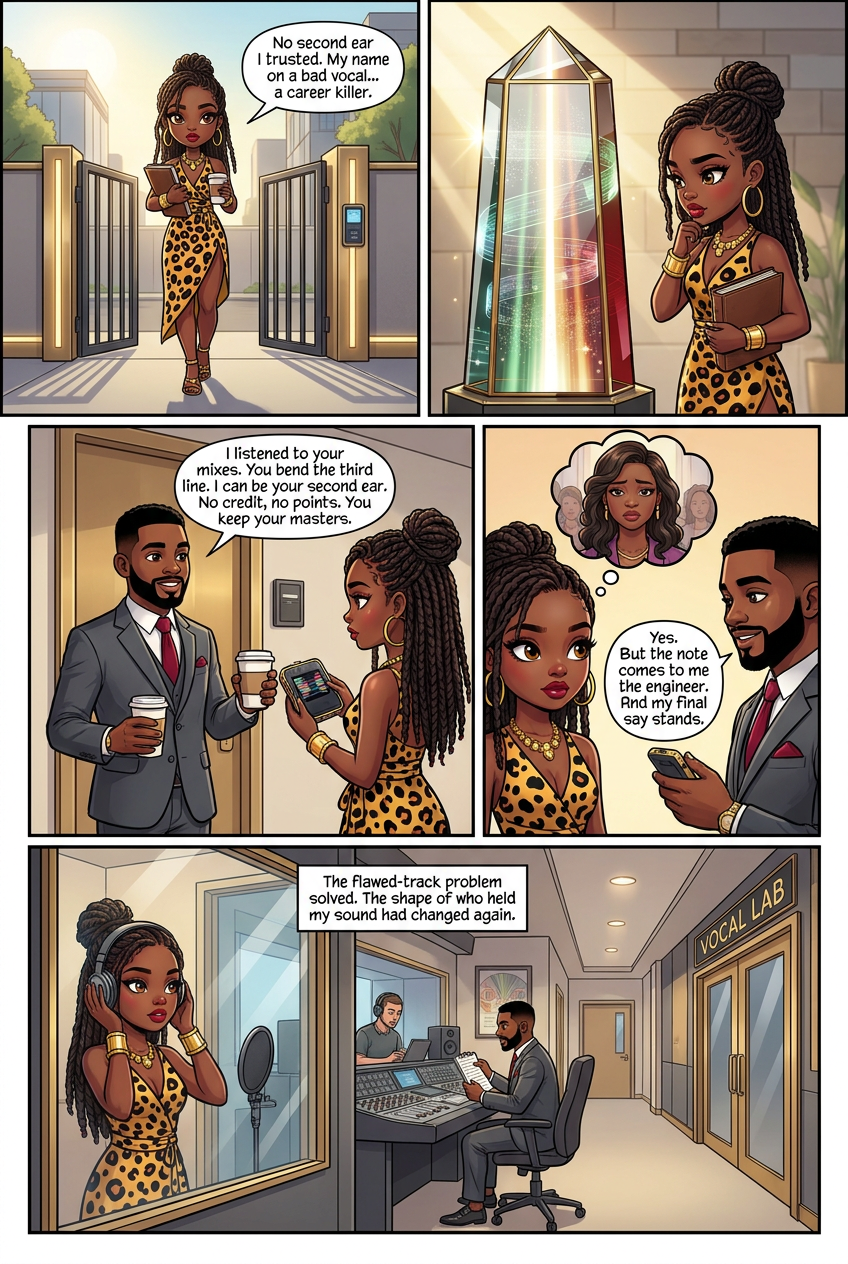
Friday at ten, Amiya walked back through the compound gate with her ledger under her arm and a coffee going cold in her free hand. She had picked a booth the day before. Now she had to start cutting takes inside walls that were not hers, with no one in the room she trusted to tell her when a line was wrong. Her engineer was good with levels, not with her voice. If a flat take shipped under her name, the buyer would push it. Her face was already on the campaign. A bad vocal would travel further than any good one. She crossed the open courtyard between the residence and the studio block. A tall crystal pillar stood at the center, edged in gold, catching the morning sun in long bars. Inside the glass she could see the faint print of a stage, a runway, her own name in small type. The pillar held everything attached to that name. She stopped in front of it for a second and made herself look. Then she kept walking. Quincy was waiting outside the booth door with two coffees of his own and a small black device in his palm, gold-rimmed, screen lit with waveforms and tagged notes. He held it out so she could see. "I listened to your two mixes again last night," he said. "You bend the third line on the second track. Pulls the whole verse flat." He tapped the screen. The note was already written. "You don't have a second ear in the room. I can be that. For this project only. No credit, no points. You keep your masters." Amiya set her coffee on the ledge. The offer was clean on paper. It was not clean underneath. He would hear every weak take. He would hear her doubt every choice. The dependence she had clocked walking out of here on Wednesday would double by the end of the week. She thought about shipping a flat verse under her face. She thought about her mother in the front row of a show that came after a record nobody respected. "Yes," she said. "On two conditions. You give me the note before the engineer hears it. And if I disagree, the take stays." Quincy nodded once. "Fair." He pocketed the device and opened the booth door for her. Down the corridor, a sign above a second wing read vocal lab. He pointed at it with his chin. "We'll move there next week. Quieter rooms. Better for what you're building." She stepped into the booth and put the headphones on. Through the glass she watched Quincy take the chair beside her engineer and pull a pad toward him. The second voice she had needed was now sitting six feet from her console, paid in nothing, owed nothing, listening to every breath. The flawed-track problem was solved. The shape of who held her sound had changed again.
Play your story to life
Storycraft is a mobile game where you create AI characters, craft items and locations to build their world, then discover what direction your story takes. Download the iOS game for free today!
Download for free