

Delphine Silt's Arc
3 Chapters
Delphine Silt's dream is opening a rescue shelter where every displaced amphibian in Hemlock Swamp can safely be rehomed..

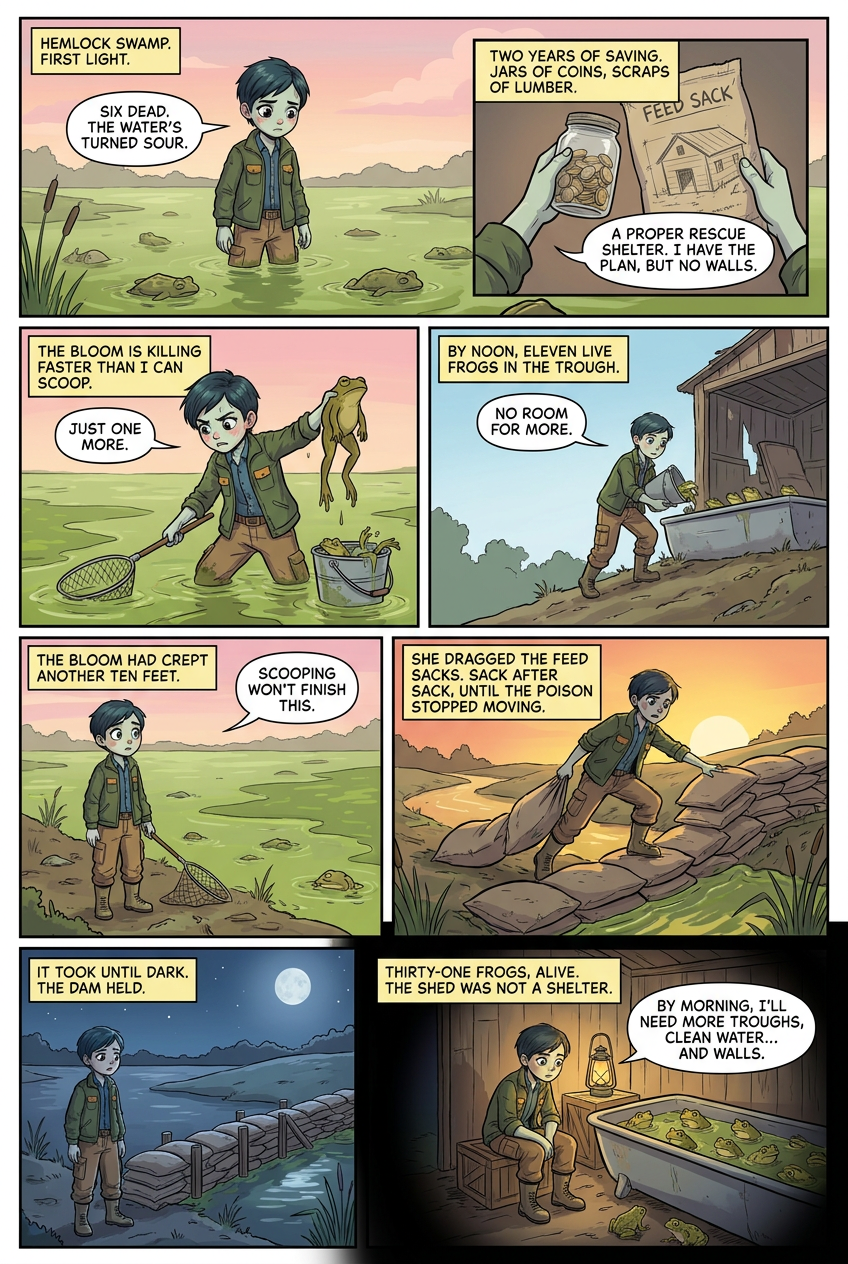
Delphine Silt waded into the shallows at first light and counted six dead frogs before she reached the bend. The water had turned the color of pea soup overnight. She knew the smell already, sour and green, and she knew what it meant for anything breathing through wet skin. For two years she had been saving jars of coins and scraps of donated lumber toward one thing: a proper rescue shelter for every displaced amphibian in Hemlock Swamp. She had drawn the floor plan on the back of a feed sack. She did not have walls yet. She had a bucket, a net, and a bloom that was killing faster than she could scoop. She worked the shallows until her arms shook. She lifted a slouched olive-green tree frog off a floating log, its spotted back already going slack, and dropped it into the clean rainwater in her bucket beside four others still kicking. The dying ones she could not save she laid on the bank in a row so she would not step on them twice. By noon the bucket held eleven live frogs and no room for more. She hauled it up the slope to her shed, tipped the frogs into the old cattle trough she had scrubbed the night before, and ran back down. The bloom had crept another ten feet toward the deeper pools. She understood then that scooping would not finish this. She left the net in the mud and went for the feed sacks stacked behind the shed. She dragged them to the narrow mouth where the shallows fed the main channel and packed them across it, sack after sack, until the poisoned water stopped moving into the rest of the swamp. It took her until dark. When she straightened up, the dam held. Thirty-one frogs sat in her trough, alive, with nowhere else to go. The shed was not a shelter. It was a shed with a trough in it, and by morning she would need more troughs, more clean water, and walls.
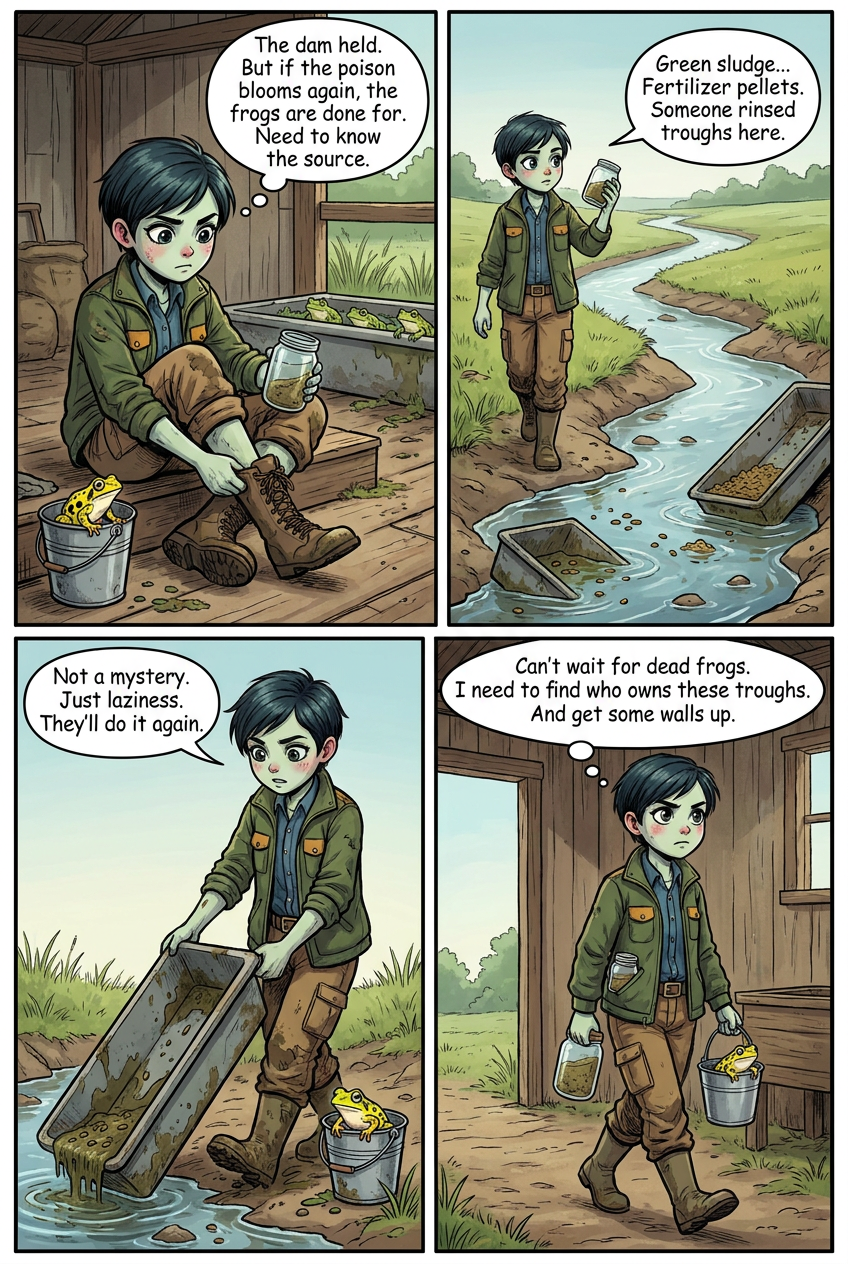
Delphine slept two hours on the shed floor and woke to the frogs shifting in the trough. The dam had held through the night, but the dam only stopped what was already here. If the bloom started again upstream, the poisoned water would slide past her sacks before she knew it was coming, and every frog in the trough would breathe it in through their skin. She needed to know what had fed the bloom. She pulled on her boots and took a clean jar from the shelf. Then she lifted one of the spotted tree frogs from the trough, an olive-green one with dark markings and slack back legs, and set it in a smaller pail with fresh rainwater. She would carry it with her. If it went sick before she did, she would know the water she was testing was bad. She walked the channel upstream past the dam, dipping the jar every hundred paces and holding it to the light. For an hour the water stayed clear. Then she came around a low rise and saw the cause. A row of feed troughs sat tipped in the shallows where someone had rinsed them out and left them. Green sludge crusted the rims. Fertilizer pellets, half dissolved, lay scattered in the mud. The runoff pooled in a shallow bend and ran straight into the channel that fed the swamp. Delphine set the pail down and watched the tree frog. Its throat pumped steady. The water in the pail stayed clean because she had drawn it before this bend. She waded in and righted the troughs one by one, dragging them onto the bank above the waterline. She scraped the wet pellets into her jar and capped it. The source was not a mystery anymore. It was a chore someone had done badly, and it could be done badly again tomorrow by the same hand or another. She could not sit at her shed and wait to scoop the dead. She needed to find who owned these troughs, and she needed walls up before the next rain washed a new batch of pellets into the channel. She picked up the pail. The spotted frog blinked at her once. She turned back toward the shed with the jar in her pocket and a name she did not have yet at the front of her mind.
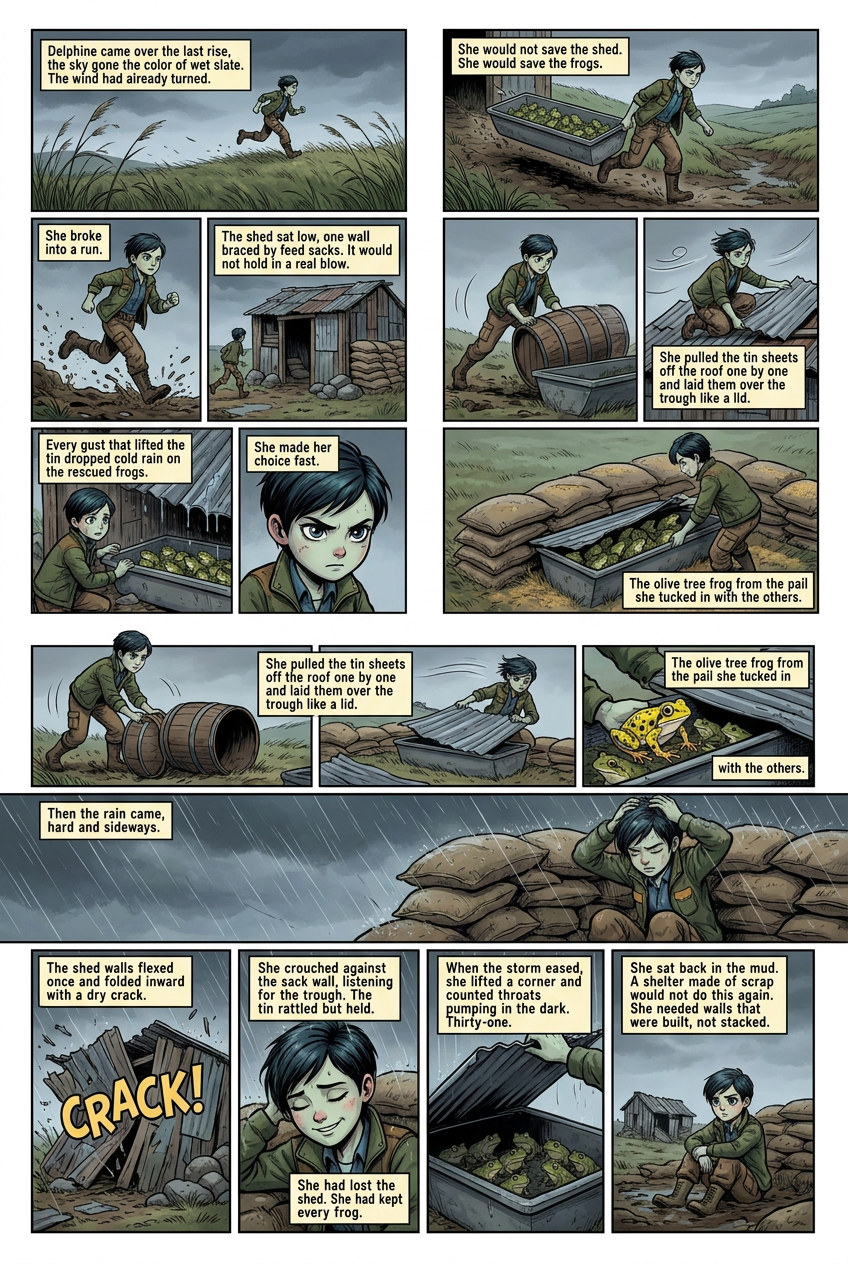
Delphine came over the last rise with the jar in her pocket and saw the sky had gone the color of wet slate. The wind had already turned. It pushed the reeds flat and carried the smell of rain off the far end of the swamp. She broke into a run. The shed sat low on its posts with one wall braced by a stack of feed sacks and a roof of tin held down by rocks. It would not hold in a real blow. Inside, the trough of rescued frogs waited, and every gust that lifted the tin would drop cold rain straight onto them. She set the pail down by the door and looked at what she had. Two tarps. A coil of rope. The dam sacks she had not used. A shed that would come apart before the storm did. She made her choice fast. She would not save the shed. She would save the frogs by taking the shed apart before the wind did it for her. She dragged the trough out and pushed it against the low bank where the ground dipped, then rolled two empty barrels beside it as a windbreak. She pulled the tin sheets off the roof one by one and laid them over the trough like a lid, weighted with rocks and lashed down through the handles with rope. She stacked feed sacks along the upwind side until the trough sat inside a low wall of grain. The olive tree frog from the pail she tucked in with the others under the tin. Then the rain came, hard and sideways. The shed walls flexed once and folded inward with a dry crack. She crouched against the sack wall with her arms over her head and listened for the trough. The tin rattled but held. When the first pass of the storm eased, she lifted a corner and counted throats pumping in the dark. Thirty-one. She had lost the shed. She had kept every frog. She sat back in the mud and understood that a shelter made of scrap would not do this again. She needed walls that were built, not stacked, and she needed them before the next storm found her.
Play your story to life
Storycraft is a mobile game where you create AI characters, craft items and locations to build their world, then discover what direction your story takes. Download the iOS game for free today!
Download for free